Why Am I So Tired? My Journey Back to Hope
Why the H-E-Double-Hockey-Sticks Am I So Tired?
The Question That Changed My Life
There are some questions that don't arrive all at once. They quietly settle into your life, unpack their suitcase, and make themselves at home before you even realize they're there. By the time you finally ask them out loud, they've already been living with you for years.
For me, that question was simple.
Why am I so tired?
I wish I could tell you exactly when it started because it would make for a much cleaner story. I'd love to point to one Tuesday morning, stretch dramatically, put my feet on the floor, and announce, "Well...there it is. That's the day everything changed."
Unfortunately, life rarely gives us moments that are quite so neatly wrapped.
Looking back now, I don't think fatigue arrived with fireworks. It slipped into my life the way so many things do. Quietly. Patiently. Almost politely. It asked for so little at first that I barely noticed it. An afternoon nap here. Sleeping a little later there. Another cup of coffee because I'd had a busy week. None of it seemed unusual, and because it happened so gradually, I never stopped to ask whether anything had really changed at all.
The truth is, my story didn't begin at fifty.
It didn't even begin in my thirties.
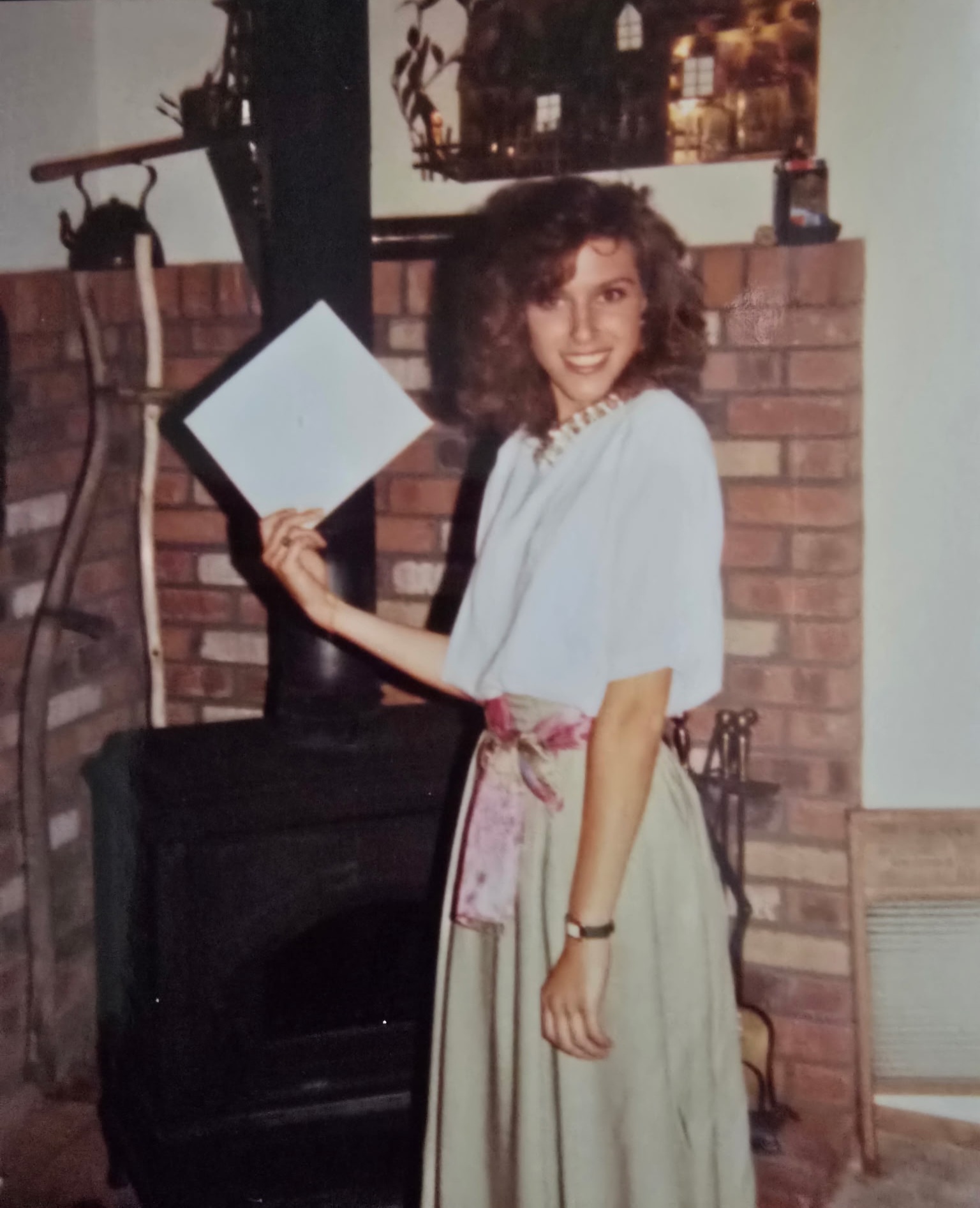
If I'm honest, it probably began when I was twenty-three years old.
I was in a terrible car accident that changed my life in ways I couldn't possibly understand at the time. For the next two years, the entire left side of my body was numb. I dragged my left leg when I walked. I couldn't hold a coffee cup in my left hand without worrying I'd drop it. Some days I looked in the mirror and barely recognized myself. My skin had taken on this strange grayish color that reminded me of stainless steel, and between all the medications I was taking and the pain I was living with, I felt toxic inside and out.
The doctors genuinely wanted to help me, and I was grateful for every one of them. They prescribed medication after medication, hoping something would finally break the cycle. But despite everyone's best intentions, I wasn't getting better. I was surviving. There is a difference, and when you're twenty-three years old, surviving doesn't feel nearly as noble as people make it sound. It just feels exhausting.
Then one afternoon, something happened that I still can't explain.
My dad was a contractor, and we were working a home show together. During a break, my husband at the time and I walked over to grab something to eat. As we passed one of the booths, a chiropractor was in the middle of giving a presentation. There were people gathered around listening to him speak, and I never imagined he'd even notice me in the crowd.
But he did.
He stopped talking.
Actually stopped his presentation.
He stepped off the stage, walked straight over to me, looked me in the eye, and asked one simple question.
"How can I help you?"
I don't know why he picked me out of that crowd. To this day, I couldn't tell you. Maybe I was limping more than I realized. Maybe the pain was written all over my face. Maybe God simply decided it was time for our paths to cross.
Whatever the reason, I told him my story.
I told him about the accident. About the numbness. About dragging my leg. About the medications that didn't seem to be changing anything. He listened without interrupting, handed me his card, and asked me to come see him.
That appointment changed my life.
Not because he waved a magic wand or gave me one adjustment that instantly fixed everything. If only healing worked that way. It didn't. Healing turned out to be a series of tiny victories strung together over months and years. But before any of that happened, there was one adjustment I'll never forget for as long as I live.
Like every chiropractor I'd seen before him, he started with an examination. The difference was that he wasn't nearly as interested in where it hurt as he was in why it hurt. After listening to my story and watching the way I moved, he explained that he wasn't going to touch my neck that day. That surprised me because my neck was where I had the most pain, and every chiropractor before him had focused almost exclusively on that area.
Instead, he pointed to my sacrum.
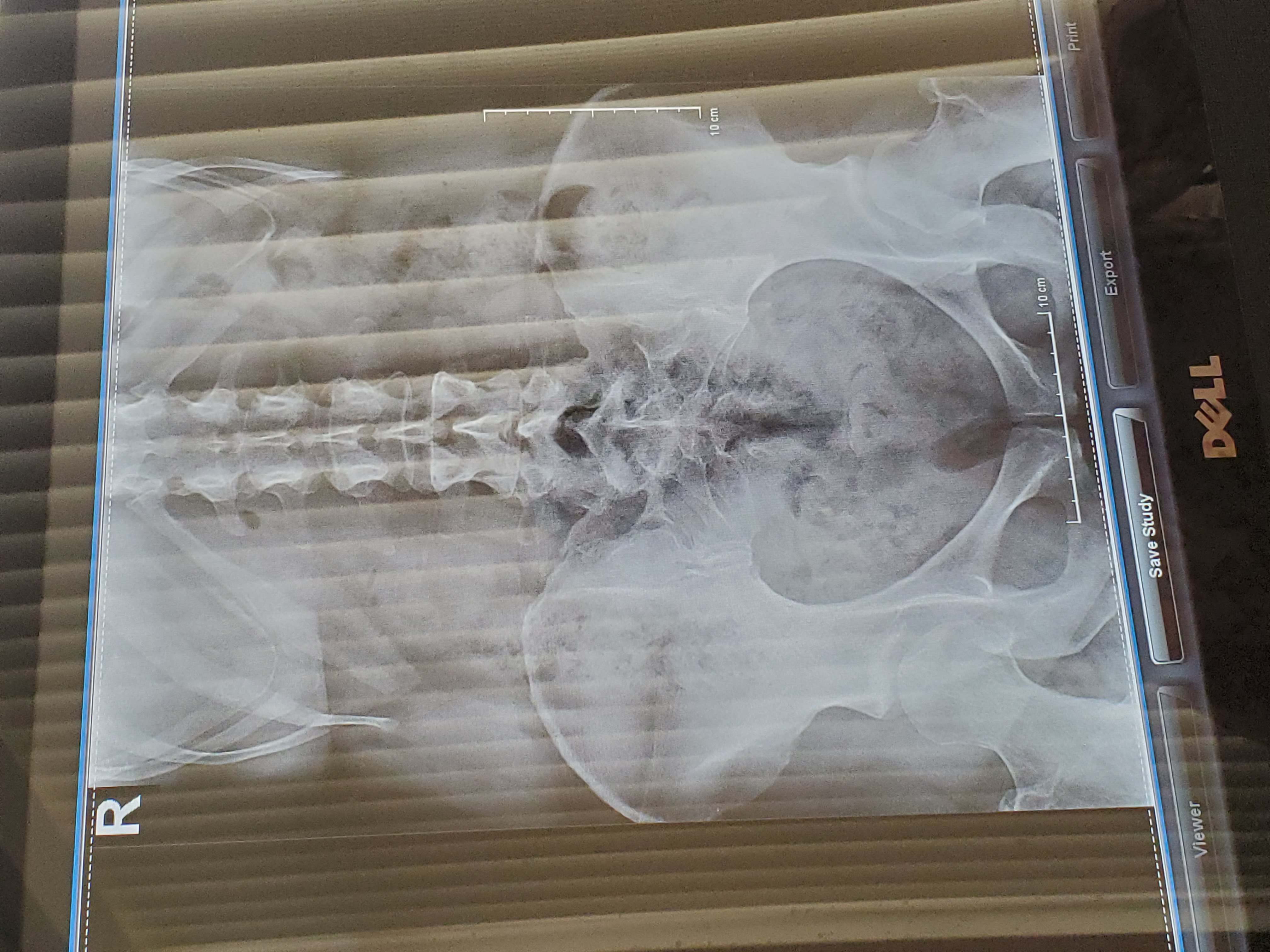
He explained that after the accident, it had twisted and locked out of place. For more than two years my entire body had been compensating for that one injury. My muscles had tightened to protect me. My posture had changed. My gait had changed. My body had become incredibly good at surviving, but surviving had come at a cost.
Then he made the adjustment.
To this day, I can still hear it.
The sound echoed through the room so loudly that I was convinced he had broken something. I screamed. Not because he had hurt me, but because
after living in the same broken pattern for more than two years, my body suddenly experienced movement it hadn't felt in a very long time.
Within minutes, I felt something I hadn't experienced since before the accident.
Pins and needles.
They started in my left arm and slowly worked their way down into my leg. Most people complain when they get that tingling sensation. I wanted to cry. Those pins and needles meant something was waking up. My nerves were beginning to communicate again, and for the first time in more than two years, I allowed myself to believe that maybe—just maybe—this wasn't going to be the rest of my life.
I didn't walk out of his office completely healed that afternoon. Hollywood loves endings like that, but real life usually asks for a little more patience. What I walked out with was something even more valuable.
Hope.
That first adjustment wasn't the end of my journey. In many ways, it was the beginning of one that I'm still on more than thirty years later. What changed that day wasn't just my body. It was the way I started thinking about my body. For the first time, someone had looked beyond the place where I hurt the most and asked a different question. Instead of chasing my symptoms, he went looking for the reason they existed in the first place. I didn't realize it then, but that single shift in perspective would eventually shape every health decision I'd make for the rest of my life.
Over the next several months, he became more than my chiropractor. He became one of my teachers. He explained why my muscles had stayed locked in protective patterns for so long after the accident and why simply adjusting my spine wasn't going to undo two years of compensation. He recommended I see a rolfer because my muscles needed far more than a relaxing massage. They needed to learn it was safe to let go. He also encouraged me to work with a Chinese herbalist who was an acupuncturist. Looking back now, I realize he wasn't trying to be the hero of my story. He was building a team around me, and that lesson has stayed with me ever since.
At the time, I was working for physicians at Blue Cross Blue Shield. They had been trying to help me the best way they knew how, and I genuinely believed they wanted me to get better. Between the accident and everything that followed, I had been prescribed medication after medication. Muscle relaxants. Pain medication. You name it, I was probably taking it. At one point, exploratory surgery on my neck was even suggested. I remember sitting there thinking, There has to be another way. Something deep inside me simply wasn't ready to let someone operate before I understood why my body had unraveled in the first place.
Working closely with my herbalist, I began coming off those medications. There was nothing easy about it. The withdrawal from the muscle relaxants was one of the hardest physical experiences I've ever endured, and I hope I never have to repeat it. But little by little, the fog that had settled over my life began to lift. The strange silver-gray color that had taken over my skin slowly disappeared. I could think clearly again. I wasn't sleeping my way through every day, and for the first time in years, I felt like I was participating in my own life instead of watching it through a haze.
Not everyone celebrated those changes.
Word eventually spread that I was seeing what some people jokingly called the "quacks." I still smile when I think about that because those "quacks" were the first practitioners who had looked at me as a whole person instead of a collection of disconnected symptoms. The atmosphere at work gradually changed. Whether it was skepticism, misunderstanding, or simply a difference in philosophy, I could feel it. The place where I'd once enjoyed going to work no longer felt like home. Eventually, I made the difficult decision to leave.
At the time, I thought I was simply changing jobs.
Looking back, I think I was changing the trajectory of my life.
For a while, things were genuinely better. I got stronger. I regained my confidence. I stopped dragging my leg. I could hold a coffee cup in my left hand again without worrying it would slip through my fingers. I remember feeling profoundly grateful because I honestly wasn't sure, during those darkest days after the accident, if I'd ever get that version of myself back.
Then life happened.
As I moved through my thirties, my body began whispering again. The whispers sounded different this time. It wasn't numbness or weakness. It was fatigue. It was brain fog. It was the kind of exhaustion that seemed to settle into my bones no matter how much sleep I got. My periods had always been unbelievably painful, but I'd grown up believing that was simply part of being a woman. Month after month, year after year, I planned my life around them without ever stopping to ask if that level of pain was actually normal.
It wasn't until my late thirties that I was finally diagnosed with endometriosis.
I remember feeling two completely different emotions at the same time. There was relief because I finally had an explanation for years of suffering. But there was also frustration. How had I spent so many years believing this was something I simply had to endure? Once again, my body hadn't suddenly betrayed me. It had been trying to get my attention for years. I just didn't know how to interpret the language it was speaking.
Looking back now, I think that's one of the biggest lessons my body has ever taught me.
Common and normal are not the same thing.
Millions of women are exhausted. Millions struggle with crushing periods, brain fog, stubborn weight gain, anxiety, poor sleep, and feeling like strangers in their own bodies. That makes those experiences common. It doesn't necessarily mean they're normal. Somewhere along the way, many of us stopped asking questions because everyone around us seemed to be living the same story.
I know I did.
For a while, I simply kept living my life.
That's probably the best way I know how to describe it. I wasn't constantly thinking about my health anymore. I wasn't spending my evenings reading medical journals or trying to connect symptoms that didn't seem to belong together. Life had become...life again. I worked. I laughed. I traveled. I built businesses. I celebrated. Every now and then my body would remind me it had been through a few things...Doctors gave me more pills...and the results of that are for another story...cuz it's a doozy. But for the most part, I had learned to coexist with whatever quirks it decided to throw my way.
The funny thing about healing is that it can fool you into believing the story is over.
When you've climbed out of one difficult season, you naturally assume you've reached the top of the mountain. You stop looking over your shoulder because you're finally busy looking ahead. That's where I found myself in my mid-forties. I wasn't perfect by any stretch of the imagination, but I genuinely felt better than I had in years. My energy had improved. I was working out hard again. I felt hopeful again. Quietly, without making a big announcement to anyone—including myself—I started believing I had finally turned a corner.
Hope is a beautiful thing.
It has a way of making you dream about tomorrow again instead of constantly trying to survive today. I remember feeling excited about the future instead of worrying about whether my body was going to cooperate. After everything I'd been through in my twenties and thirties, that felt like a gift I wasn't about to take for granted.
Then my dad was diagnosed with melanoma.
There are sentences you write that still hurt, even years later.
That's one of them.
One day he was my dad—the guy who could build anything, fix just about everything, and somehow always knew exactly what to say. The next day we were sitting in his office having a virtual meeting with his doctor's office learning a vocabulary no family ever wants to learn. Suddenly our calendar revolved around appointments, scans, treatments, and quietly trying to memorize moments that we somehow knew would never happen again.
A year later, he was gone.
People often describe grief as though it's an emotion.
I don't think that's giving it nearly enough credit.
Grief is physical.
It settles into your muscles. It changes the way you sleep. It steals your appetite one day and hands it back the next. It makes simple decisions feel complicated and ordinary errands feel exhausting. It wakes you up at three o'clock in the morning because your mind suddenly remembers something your heart isn't ready to let go of.
I expected my heart to ache.
I wasn't prepared for my body to ache too.
When my dad died, I wasn't just grieving.
I was trying to survive.
At the time, I didn't realize there was a difference.
The weight I'd worked so hard to lose slowly found its way back. My energy disappeared almost overnight. The brain fog returned with a vengeance, and there were mornings when I honestly wondered how it was possible to sleep eight or nine hours and still wake up feeling like I hadn't slept at all. Looking back now, I don't think I was just carrying grief. I think grief was carrying me.
If I'm being completely honest, I was trying to numb as much of it as I could.
Wine became part of that story. It wasn't glamorous, and it certainly wasn't something I planned. One glass in the evening became two, then more. I told myself I was relaxing after a difficult day, but the truth is I was trying to quiet a mind that wouldn't stop racing and a heart that couldn't figure out how to exist in a world without my dad in it. For a little while, it worked.
Until it didn't.
Then I turned fifty, and something inside me quietly changed. There wasn't a dramatic movie moment. I still got up, went to work, smiled when people asked how I was doing, and kept moving through my life. But I had become tired of negotiating with exhaustion. For years I'd told myself that if I had enough energy to get through the workday, that was good enough, and that needing a nap afterward was probably just part of getting older.
Somewhere around my fiftieth birthday, I stopped believing that.
I've joked that my give-a-darn meter quit working when I turned fifty, but really, I think I finally cared enough to ask for more from my life.
I wanted my life back.
Not the version of my life I had at twenty-three before the accident. Not even the version I had before losing my dad. Life changes us, and I wouldn't erase those chapters even if I could. I simply wanted to wake up feeling like I was participating in my own life again instead of watching it pass by from the sidelines. I wanted enough energy to enjoy the people I loved, to build my business, to travel, to laugh, and to say yes when opportunities came along instead of secretly wondering whether I'd have enough energy to make it through the day.
That decision sent me down one of the biggest rabbit holes of my life. I started listening differently, reading more, asking harder questions, and paying much closer attention to the connections between hormones, inflammation, muscle, metabolism, sleep, and the way I actually felt. The more I learned, the more fascinated I became by the complexity of the human body.
Around that same time, my naturopath was helping me rebuild my health from the inside out. At one point, I found myself taking like twenty-five different supplements every single day, faithfully checking them off as though the next capsule might finally be the missing piece. My physician was working just as hard to help me, and eventually I was taking medications for my thyroid, anxiety, ADHD, depression, and a handful of other issues we were trying to manage. Every practitioner I worked with genuinely wanted me to get better, and I appreciated each one of them for that. But despite everyone's best intentions, I still didn't feel like myself.
It would have been easy to become discouraged during that season. Honestly, there were days when I wondered if I was simply chasing my tail, running from one appointment to another, hoping someone would eventually hand me the answer I'd been looking for all along. Instead, something unexpected happened. The frustration slowly gave way to curiosity. Instead of asking, "What else can I take?" I found myself asking, "What is my body trying so desperately to tell me?"
It was right about then that life did something it has done for me more than once over the years.
It placed the right people in my path at exactly the right time.
Only this time, they weren't really "new" people at all. My cousin along with his wife...and she's been part of my life for as long as I can remember. When I was growing up in town, our backyards touched. Later, when my dad built our house on the edge of town, we ended up living catty-corner from my cousin's grandmother's farm. Some of my earliest memories have little pieces of their family woven into them, so when they went live, I wasn't hearing from strangers. I was hearing from people I'd trusted for most of my life.
We had worked together before, and over the years I'd watched them make thoughtful decisions about the businesses and companies they chose to partner with. They were never the kind of people who chased the newest trend simply because everyone else was excited about it. If they believed in something enough to put their names behind it, I knew they had asked a lot of the same questions I would have asked myself. That didn't guarantee anything, of course, but it earned my attention.
When they told me they were launching a new wellness company, I listened.
Not because I was desperately searching for another answer, but because they weren't calling me as salespeople. They were looking for beta testers. At that point, there were only two products—Rise and Source—and they wanted honest feedback from people they knew would tell them the truth. No polished testimonials. No dramatic promises. Just, "Try them and tell us what you honestly think."
There was something refreshing about that.
By then, I'd become pretty skeptical of big claims and flashy marketing. I'd lived through enough disappointments to know that hope needed to be grounded in something more substantial than clever advertising. But curiosity? Curiosity had never let me down. So I smiled, thanked them for thinking of me, and agreed to give the products a try.
I honestly didn't expect much when I agreed to become a beta tester. By that point in my life, I'd learned to be careful with my expectations because I'd spent enough years hoping that the next doctor, the next supplement, or the next recommendation would finally be the thing that made everything click. Hope is a beautiful gift, but disappointment has a way of teaching you to hold it with an open hand. So when I received my Rise and Source, I thanked them, promised I'd give them an honest opinion, and simply went back to living my life. There were still emails waiting to be answered, groceries that somehow never bought themselves, laundry that continued multiplying when I wasn't looking, and work that didn't particularly care whether I felt energetic or exhausted. Like most women, I just kept putting one foot in front of the other.
A few days later, I was standing in the salon breakroom when something happened that caught me completely off guard. Actually, that's not quite true. It wasn't something that happened at all. It was something that didn't happen. I hadn't spent the entire morning thinking about how tired I was. That might sound like the smallest observation in the world, but when you've measured every day by how much energy you have left in the tank, it's impossible not to notice when your mind suddenly stops keeping score. I stood there for a moment with my coffee that i actually didn't need in my hand, almost laughing at myself because the only thought running through my head was, Well...that's interesting.
Most people probably would've smiled, appreciated feeling a little better, and gone right back to living their lives. Apparently, I have never been "most people." Feeling better wasn't enough for me because I needed to understand why I felt better. I'd spent too many years watching my body change in ways I couldn't explain to simply shrug my shoulders and move on. If something had shifted, I wanted to know what had shifted. If my body was responding differently, I wanted to understand what it was responding to. That single question, as it has done so many times throughout my life, quietly opened another door I couldn't resist walking through.
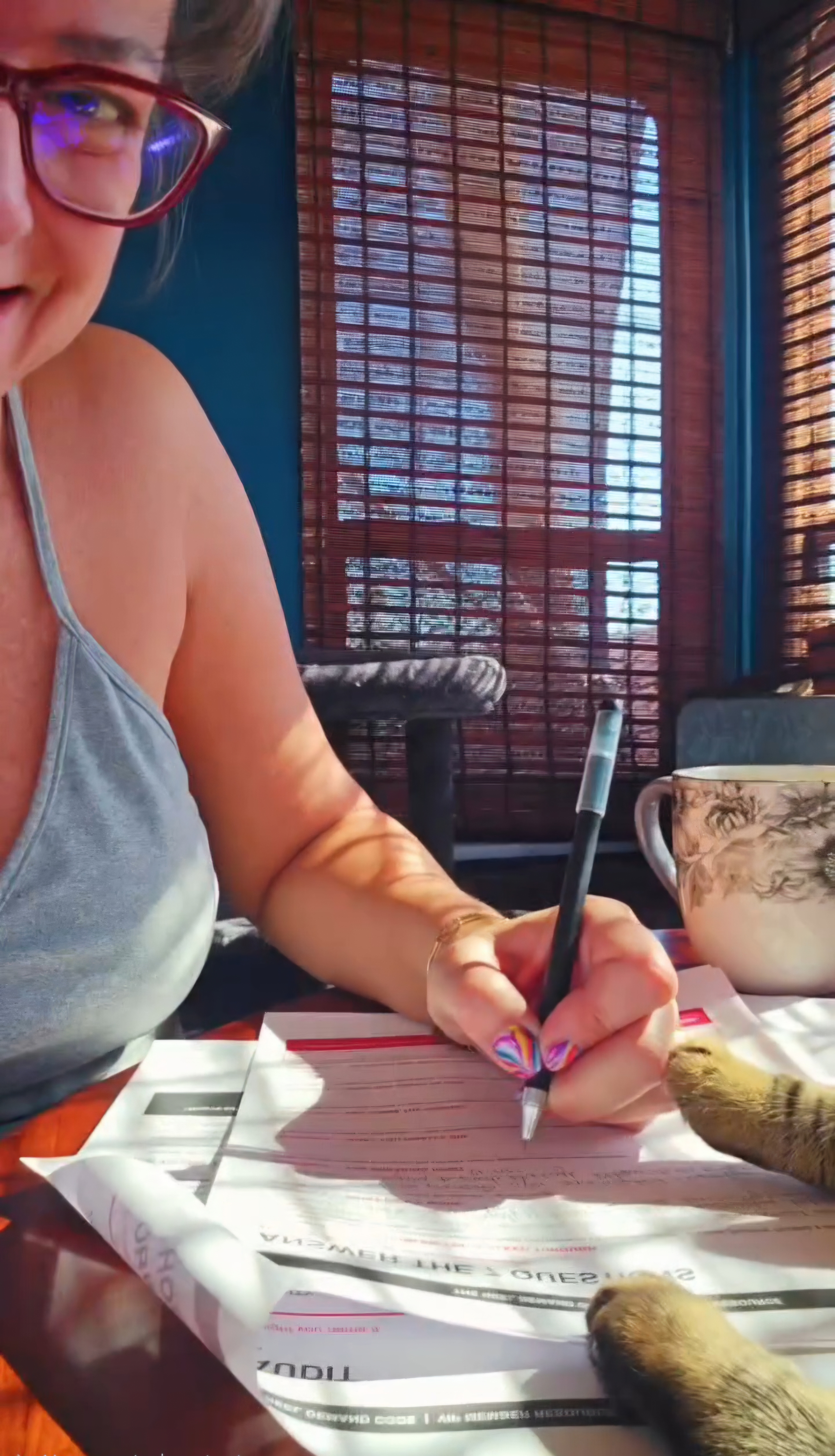
Before long, my dining room table disappeared beneath stacks of books, notebooks filled with handwritten thoughts, highlighted research papers, and enough sticky notes to make it look like I was preparing for final exams or preparing to defend a doctoral dissertation on the human body instead of trying to understand my own health. I'd listen to a podcast while making dinner, hear a physician mention a study I'd never read, and immediately pause everything so I could look it up. One article would reference another researcher, who would lead me to another interview, who would recommend another book, and before I knew it, midnight had quietly slipped past while I was still happily scribbling notes in the margins. My browser eventually reached the point where opening another tab felt almost comical, and I'm fairly certain my laptop began questioning my life choices right along with me.
What surprised me most wasn't how much I was learning. It was how much joy I found in the learning itself. Years earlier, I'd searched for answers because I was frightened. Every article carried the weight of desperation because I wanted someone—anyone—to explain why my body seemed to be fighting me. This felt completely different. I was researching because I had become fascinated by the incredible way the human body was designed. The fear that had fueled so much of my searching had quietly been replaced by something far more beautiful.
Curiosity.
The more I listened, the more I realized that every physician, researcher, and scientist I respected seemed to be describing the same masterpiece from a different angle. One would spend an hour explaining hormones while another became almost giddy talking about muscle. Someone else believed sleep was the foundation of everything, while another couldn't stop talking about inflammation, mitochondria, or cellular health. At first, I thought they were all having completely different conversations. Then one afternoon, somewhere between page after page of notes and one too many cups of coffee, I finally realized they were all describing the same body. They were simply standing in different places, admiring different parts of the same extraordinary design.
That realization stayed with me long after I closed my notebook that evening. For years I'd been searching for one answer, one missing piece that would somehow make every symptom disappear. Instead, I discovered something much more beautiful. Our bodies aren't looking for one miracle any more than a garden flourishes because we water only one flower. Health is built one choice at a time, one habit at a time, one conversation at a time, and one question at a time. The more I understood that, the more grace I found for myself, because I finally stopped seeing my body as something that needed to be fixed and started seeing it as something that deserved to be cared for.
The house was quiet. My tea had long since gone cold, and the stack of notes beside me suddenly looked a little less overwhelming than it had a few hours before. For the first time in a very long time, I realized I wasn't studying because I was afraid anymore. I was studying because I had fallen in love with understanding the incredible body God had given me.
That may sound like a small distinction.
It isn't.
For years, my questions had come from frustration. What's wrong with me? Why am I so tired? Why does my body keep changing? Somewhere along the way, the question changed. I stopped asking what was wrong with my body and started asking how I could become a better steward of it.
I still don't have all the answers. The more I learn, the more questions I seem to have—and I've made peace with that. Maybe health isn't something we finally figure out. Maybe it's a lifelong conversation that asks us to stay curious enough to notice when our bodies whisper instead of waiting until they scream.
Looking back, I don't think the greatest gift I received was one practitioner, diagnosis, supplement, or protocol.
It was curiosity.
Because curiosity gave me permission to believe that feeling exhausted didn't have to be the end of my story.
It could be the beginning of another one.
If you're new here...
This is the story behind why I spend so much time researching health, nutrition, mushrooms, creatine, minerals, frequency, and natural wellness. Every Sunday I share another piece of what I'm learning in hopes that it helps someone else ask better questions about their own health.