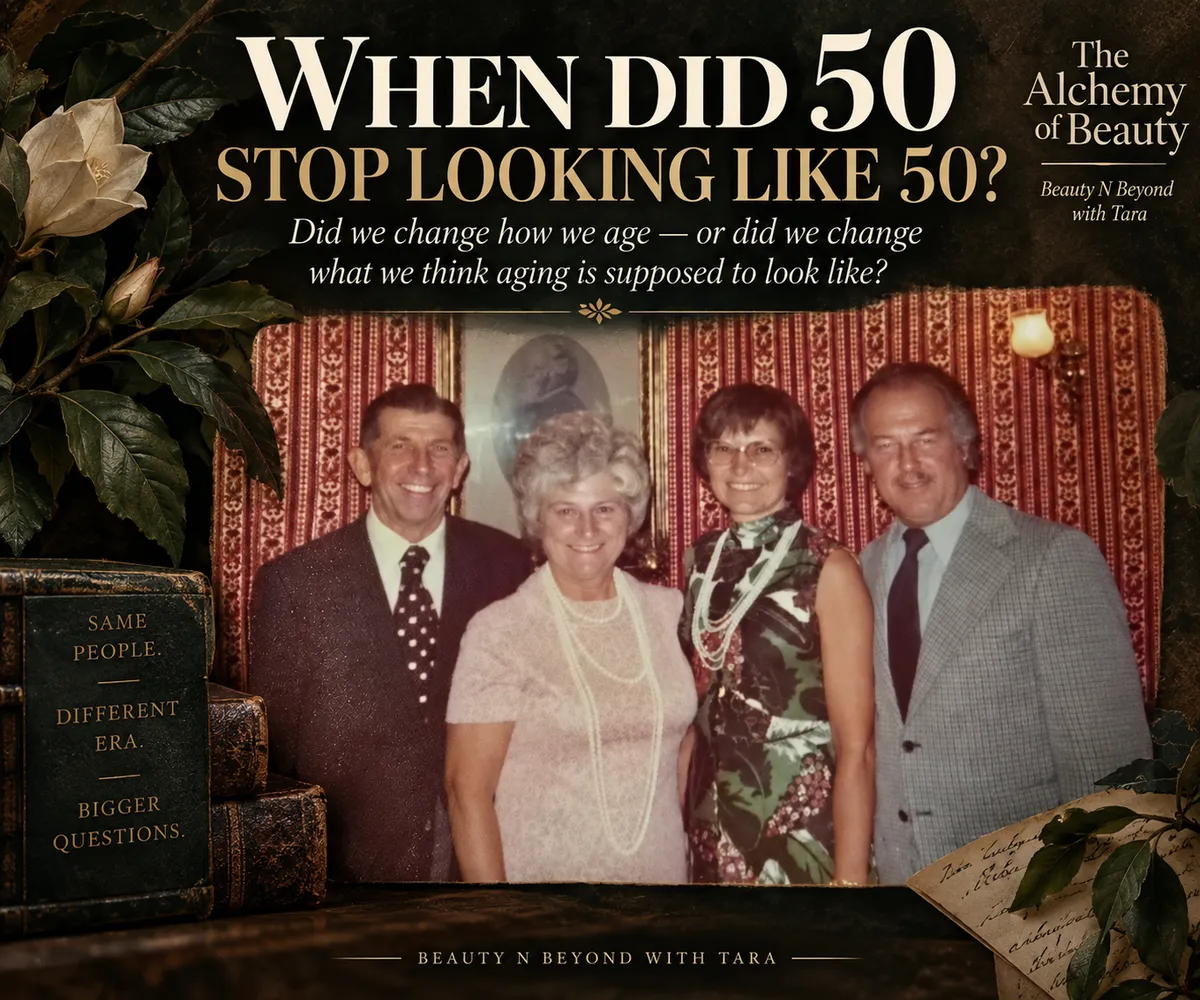
When Did 50 Stop Looking Like 50?
Did we change how we age—or did we change what we think aging is supposed to look like?
I have recently discovered something rather disturbing about turning 54: somewhere along the way, I became the same age as people I distinctly remember being old. Not old in the actual chronological sense of the word, apparently. Old according to the filing system in my childhood brain, where there were kids, parents, grandparents, and people on television who clearly belonged in one of those categories, and I never once thought to ask to see anybody’s birth certificate. Now I’m 54, I have ADHD, I have Google, and this combination has created a problem because I can no longer think about an old television show without wondering, Wait a minute. How old was that person actually? Once you ask that question, there goes the evening. One minute you’re innocently remembering something you watched as a kid, and the next you have seventeen tabs open, you’re doing subtraction with birth dates, and you’re wondering what in the Sam Hill has happened to your entire understanding of middle age.
The Golden Girls is probably the most obvious place to begin because the word golden was right there in the title, telling us exactly which mental file folder to use. When the show premiered in 1985, Rue McClanahan was only 51 years old. Betty White and Bea Arthur were 63, while Estelle Getty, who played Dorothy’s elderly mother Sophia, was 62—actually a year younger than Bea Arthur. Getty was deliberately aged for the role, which makes the whole thing even more entertaining when you realize what our brains were being asked to accept. I am 54. Rue McClanahan was 51. Well, H-E-double-hockey-sticks. I don’t know what to do with that information, because when I watched Blanche, Dorothy, Rose and Sophia as a kid, those women occupied an entirely different universe from the one I currently believe myself to be living in.
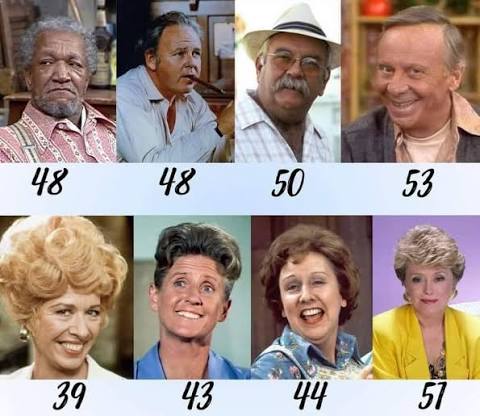
Of course, some of this is simply the perspective of childhood. When you’re ten, 35 is middle-aged, 50 is elderly, and anyone over 70 has presumably been around since electricity was invented. But the more old television I thought about, the stranger the numbers became. Frances Bavier, our beloved Aunt Bee on The Andy Griffith Show, was 57 when the series premiered in 1960. Ann B. Davis was only 43 when The Brady Bunch premiered and she became Alice, the housekeeper who somehow managed six children, a dog, an enormous house and a relationship with Sam the butcher without ever appearing to need a nervous breakdown. Alan Hale Jr., the Skipper on Gilligan’s Island, was about 43 when that show premiered, and Jim Backus, our ascot-wearing Thurston Howell III, was about 51. These weren’t all people in their 70s playing younger. Some of the people I had mentally filed away as decidedly older adults were younger than I am now—or barely older than me.
And that is where I think the television examples become more interesting than a collection of funny birth dates. Aunt Bee didn’t merely have a 57-year-old face. She had the dresses, the coiffed hair, the sensible shoes and the entire social role of the woman who came into Andy and Opie’s home and took care of everybody. Alice had the uniform and the short set hair and an unmistakable grown-up competence. Mr. Howell had the ascot, Lovey and the general air of a man who had never personally carried his own luggage. Blanche and Dorothy had hairstyles, clothes, storylines and life experiences that told my younger brain exactly where to place them. We don’t estimate someone’s age by examining a wrinkle in isolation. We take in the entire picture, and apparently an ascot can do some pretty heavy lifting.
I could have happily spent another three days investigating the ages of every television character I watched between 1975 and 1985, but eventually this stopped being a sitcom experiment because I realized I had a much better example sitting in my own family photographs.
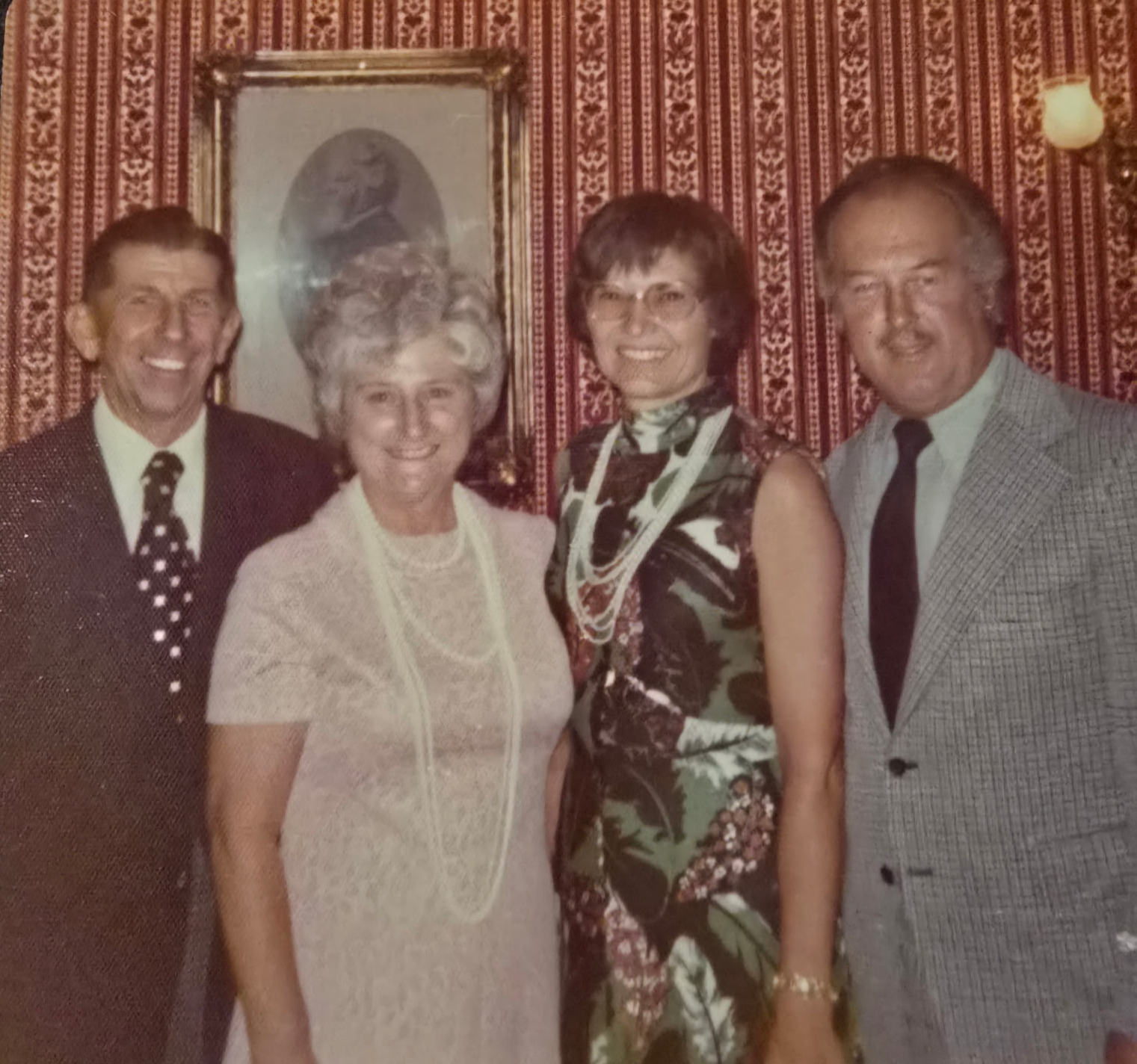
Then I found a photograph from 1974 that made the whole question even stranger. All four of my grandparents are standing together. My paternal grandmother was 53. My paternal grandfather was 54—the exact age I am now. My maternal grandmother was only 47, and my maternal grandfather was 49. Every person in that photograph was between 47 and 54, and if you had shown it to me without telling me their ages, I don't think I would have guessed that.
Maybe I wasn't seeing age alone. Maybe I was seeing 1974.
My Grandma Dumler was born in 1919. I was born in 1972. That means when I was born, Grandma was about 52 or 53 years old. I have done that math more than once because some part of my brain continues to believe the calculator must be malfunctioning. She wasn’t an elderly woman who happened to have a new granddaughter. She was a woman essentially my age who happened to be a grandmother, and somehow those two descriptions create completely different pictures in my head. I’m 54 as I write this. Grandma at 53 is still Grandma in my memory. Me at 54 is just...me.
The more I think about Grandma’s appearance, though, the more I realize that even my memory of her needs a little unpacking. I tend to picture the soft white cotton-ball hair she wore later in life, but Grandma didn’t suddenly reach middle age and acquire “grandma hair.” Grandma had coiffed hair her entire life.
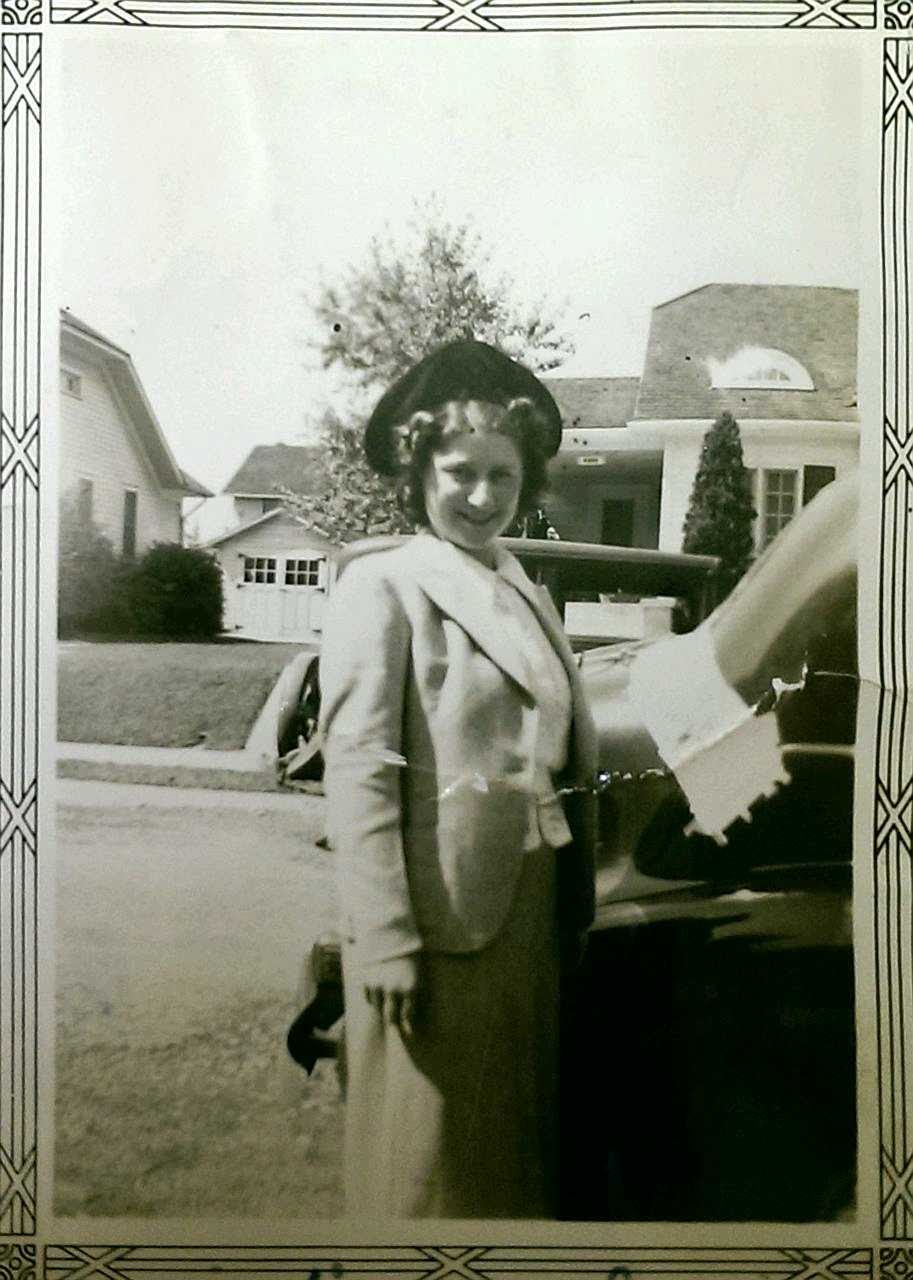
There’s a photograph of her when she was younger with this gorgeous, vibrant auburn hair, and even then it wasn’t hanging loose around her shoulders. It was pulled tightly into something with pin curls arranged on top, every strand apparently informed of its assigned location and expected to remain there. Her hair was always done. There was no messy bun because she was running late and no carefully manufactured beach wave intended to suggest she hadn’t tried too hard. Grandma had tried, thank you very much, and you were going to know it.
Eventually she stopped coloring that auburn hair and cut it shorter. Then came the perms and roller sets and the white cotton-ball shape I remember so clearly. The style changed, but the philosophy didn’t: hair was supposed to be done. Once a week she went to the beauty salon, where it was washed and set, she sat under the dryer, and eventually everything was combed into place and sprayed into submission. Then, through some feat of engineering I still don’t entirely understand, that hairstyle was expected to remain a hairstyle until the next appointment. I can wash my hair and be renegotiating the terms of our relationship before lunch, so I have to respect the commitment involved.
Sometimes I went to the beauty salon with her in the 1970s and ’80s, and that place was an entire world unto itself. The beauticians smoked. The clients smoked. Cigarettes were burning while women sat underneath hood dryers, aerosol hairspray was being sprayed in every direction, perms and hair color and assorted beauty chemicals were being mixed and applied, and apparently nobody looked around and thought, Should we perhaps reconsider this particular combination? I honestly don’t know how those salons didn’t occasionally launch themselves into orbit. Cigarettes, aerosol hairspray, chemicals and heat all occupying the same room? Heavens to Betsy. And yet there everybody sat, smoking and talking and getting beautiful as though this were the most ordinary arrangement in the world.
But it was a vibe. It really was. And Grandma loved her weekly appointment.
That matters because I don’t want to look backward and tell this story as though women of her generation were dragged against their will into matronly hairstyles and sentenced to life under a hood dryer. That wasn’t how Grandma experienced it. Going to the salon was part of how she took care of herself. It was grooming and femininity and socializing all rolled together. She saw people she knew, probably heard everybody’s business, had someone wash and set her hair, sat under the dryer and walked out looking polished according to her definition of polished. What looks “old” through my 2026 eyes wasn’t necessarily old to her. It was done. It was put together. It was beauty.
Maybe Grandma looked older to me because she was older—or maybe she looked older to me because she was Grandma. When you're a child, “grandmother” sounds like an age even though it's actually a relationship. I wasn't studying her face and estimating her birth year. She was Grandma, so my brain put her in the Grandma category and apparently stopped asking questions.
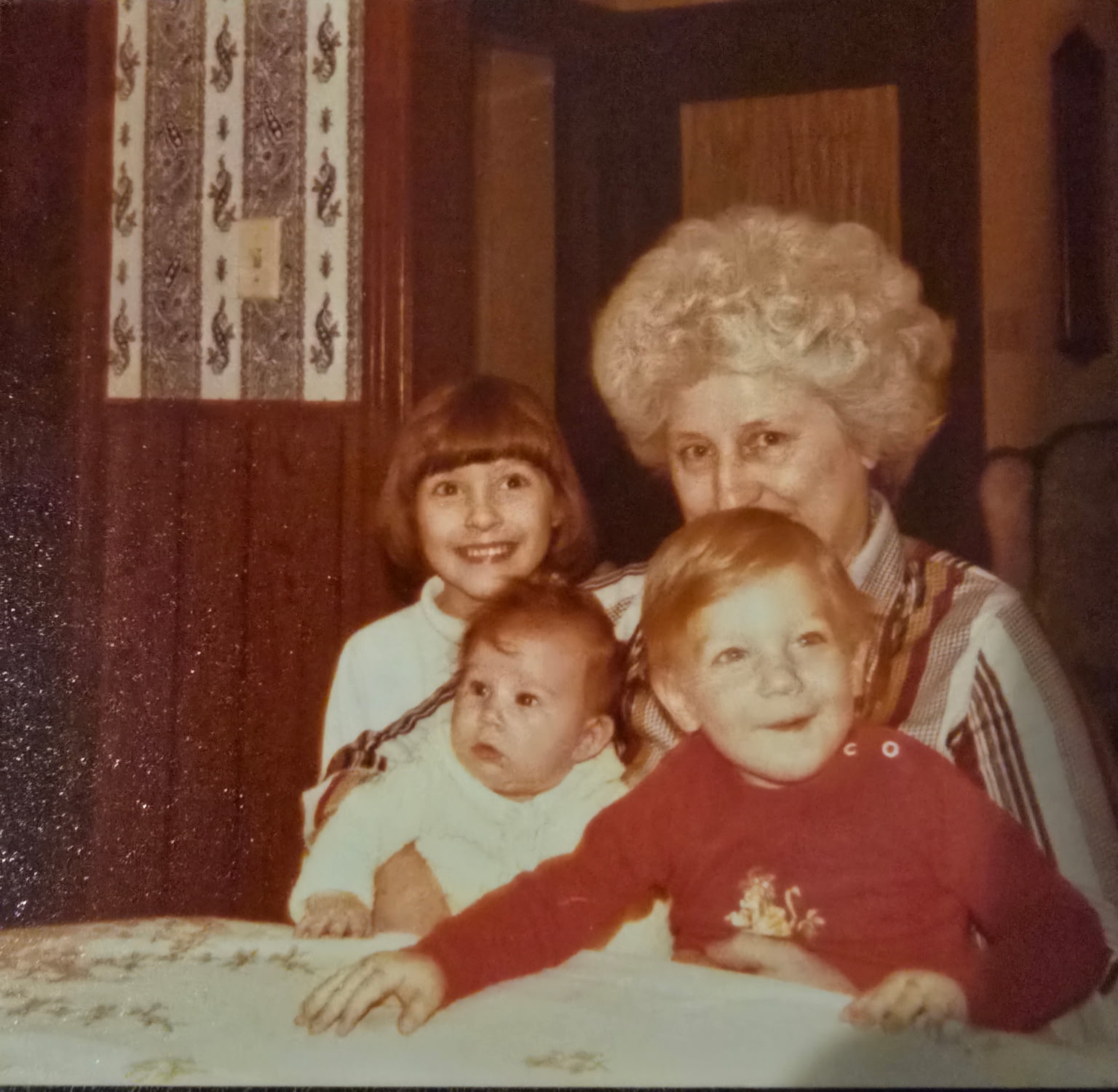
The funniest part is that once Grandma settled into that look, I swear she looked essentially the same for the next 46 years. She apparently reached her final form sometime in her early 50s and thought, Well, that’ll do. Children grew up. Grandchildren grew up. Fashion changed, presidents changed, wallpaper changed, and Grandma continued looking remarkably like Grandma. There’s something kind of wonderful about that now that I think about it. She found her look and remained extremely committed to the assignment.
A girlfriend and I were talking about this recently, because apparently I’ve started recruiting other people into my aging rabbit holes, and she immediately knew what I meant. We both remembered this almost unwritten progression women seemed to move through in the ’60s, ’70s and ’80s. You got married and perhaps your presentation changed a little. You became a mother and things shifted again. Eventually the long hair got cut because somewhere in the cultural ether existed the idea that there came an age when long hair was no longer appropriate. Later it might get shorter still, and there were perms and roller sets and practical styles that could survive for days. Clothes became more conservative or more “mature,” makeup changed, and there seemed to be a recognizable point when a woman moved from one stage of life into another and her appearance moved with her.
Nobody necessarily sat women down on their 47th birthday and handed them a binder labeled RULES FOR NOW BEING MIDDLE-AGED. The rules didn’t need to be written down because they were everywhere. They were in magazines and advertisements, on television, at church, at the grocery store, at the beauty salon and in the women around you. There was a visual vocabulary for being a young woman, a married woman, a mother, a mature woman and a grandmother, and those categories seemed much more distinct than they do now. The more my girlfriend and I talked about it, the more I realized that this might be the thing I had been trying to put my finger on from the beginning.
Maybe women didn’t simply look older sooner.
Maybe there was a point when they were expected to begin looking like older women.
That is a very different idea.
Because I don’t think women like my grandmother stopped caring about beauty as they aged. If anything, her standing salon appointment suggests exactly the opposite. What changed was the culturally desirable version of beauty available to her at each stage of life. Her gorgeous auburn French twist belonged to one part of her life; the shorter set hair belonged to another. Both required intention. Both required maintenance. Both were versions of a woman who cared how she presented herself. The goal wasn’t necessarily to stop being beautiful. The visual language of beauty simply changed as she aged.
And then there’s Gen X.
I’m not sure where our rulebook went, but apparently we lost it.
Nobody contacted me when I turned 50 to schedule the mandatory haircut. I didn’t receive a letter explaining which clothes had now expired or a map directing me toward the beige section of the store. Women my age are walking around with long hair, short hair, gray hair, purple hair, tattoos, sneakers, boots, ripped jeans, bright lipstick, funky glasses and concert shirts. Some are grandmothers. Some are dating. Some are starting businesses, changing careers, lifting weights, traveling, going to concerts, starting over or finally doing something they spent the first half of their lives talking themselves out of.
I don’t think that necessarily means we’re trying to dress young forever. I think a lot of us simply stopped believing that getting older requires us to start dressing old. If I like my hair long, why exactly does my 54th birthday change that? If I like jeans, when does denim revoke my membership? If a woman has spent 30 years loving bright lipstick, boots or tattoos, why should another trip around the sun suddenly require her to become a subdued version of herself? Wearing what we want at 54 isn’t necessarily a desperate attempt to pass for 34. Maybe we just haven’t stopped being ourselves because we got older.
Which leaves me with one thought I keep coming back to:
Maybe Gen X hasn’t figured out how to stay young. Maybe we’ve simply refused to start looking old on schedule.
That would explain quite a bit.
But not all of it.
Because once I stopped looking at hairstyles and started looking at faces, I wanted to know whether my girlfriend and I were imagining the rest. Is this entirely perception and cultural styling, or could there actually be physical reasons some people in their 50s today appear younger than people of the same age did several generations ago?
This is where things get messy, because the answer appears to be a little bit of everything.
Take smoking. In 1965, 42.4 percent of American adults smoked cigarettes. By 2022, that figure had fallen to 11.6 percent. That difference feels almost unbelievable until I remember sitting in Grandma’s beauty salon and watching people smoke while they were actively engaged in their beauty rituals. Smoking wasn’t an unusual habit people discreetly took outside. It was woven into restaurants, homes, cars, workplaces, bars and social life. Researchers studying perceived facial age have found smoking among the lifestyle factors associated with looking older, along with factors involving sun exposure, oral health and some skincare habits. That doesn’t mean we can look at an old photograph, count the cigarettes and calculate someone’s apparent age. It does mean that comparing generations means comparing decades of different exposures along with different hairstyles.
The oral-health part sent me down another little hallway because I hadn’t even thought about teeth when I started this. When we decide someone looks older or younger, we aren’t conducting a dermatology exam. We’re taking in the whole face. Teeth, hair, skin, the area around the mouth, posture, clothing, body composition and expression all contribute to what we perceive. Dentistry and orthodontics have changed enormously over generations, just as skincare and cosmetic treatments have. So the face of 50 hasn't existed in a vacuum while everything surrounding it stayed exactly the same.
Skin itself obviously belongs in the conversation too. There is intrinsic aging—the changes that happen because time passes—and there are environmental influences layered on top of it. Cumulative UV exposure contributes to photoaging and can affect pigmentation, collagen and the appearance of wrinkles. That doesn’t require me to turn the sun into Satan. I enjoy being outside, and I’m not interested in spending the second half of my life terrified of daylight because my face might eventually reveal that I’ve actually lived in it. But “I don’t want to fear the sun” and “excessive cumulative UV exposure can damage skin” are perfectly capable of existing in the same brain at the same time.
Before Gen X congratulates itself too enthusiastically on knowing better, however, we should probably discuss the baby oil.
We had tanning beds. We had reflectors. We had people lying outside deliberately trying to achieve a shade found nowhere in their natural color palette. Some of us spent our youth doing things to our skin that would make a modern esthetician’s eye twitch. I tried to change ethnicity on my summer vacation. So no, I’m not going to announce that our generation unlocked superior wisdom and therefore looks younger. We learned some things. Science learned some things. Beauty learned some things. Our habits changed as the information changed, and some of us are now taking care of ourselves differently at 50 than we did at 20.
Women in midlife also know more now about something our grandmothers weren't necessarily discussing openly at the beauty salon: hormones. Estrogen interacts with skin physiology, and the decline around menopause is associated with changes in collagen, thickness, elasticity and moisture. That doesn’t mean every woman needs hormones for her skin, and it certainly doesn’t mean every change in a woman’s face after 45 is a problem requiring treatment. It simply means that when women notice their skin behaving differently in midlife, there are real biological changes worth understanding. I find that reassuring rather than frightening. I would rather know what my body is doing than stand in front of the mirror thinking, Good grief, when did THAT happen?
And then there are all the things available to us now that Grandma couldn't have imagined while she was sitting under that hood dryer. We have sophisticated skincare formulations, retinoids, professional treatments, lasers, peels, red light, injectables, cosmetic surgery, adult orthodontics, modern dentistry, dramatically different hair-color technology and an entire world of health and beauty information available on a little rectangle we carry around in our pockets. Some of that information is wonderful. Some of it is questionable. Some of it will convince you that the mysterious reason you're tired is a vitamin deficiency, your cortisol, your mitochondria, Mercury in retrograde or possibly all four before you've finished your morning coffee. Access to information is not the same thing as wisdom, but access absolutely has changed.
So has our understanding of what it means to be in our 50s.
And maybe that's bigger than skincare.
My grandmother was already my grandmother at 53, and that identity carried a certain cultural meaning. Today a 53-year-old grandmother might have a toddler grandchild on her hip while wearing ripped jeans on her way to a concert. A woman in her 50s might be launching a business, dating, starting over after a divorce, changing careers, lifting weights, traveling alone for the first time, learning something completely new or finally deciding she doesn't particularly care whether anyone thinks her hair is age appropriate. Middle age didn't disappear. It just seems to have gotten bigger.
There are more ways to inhabit it.
And this is where the whole thing takes a turn I wasn't expecting, because while we've loosened many of the old rules about how women are supposed to present their age, I wonder if we've become even more demanding about whether their faces are allowed to show it.
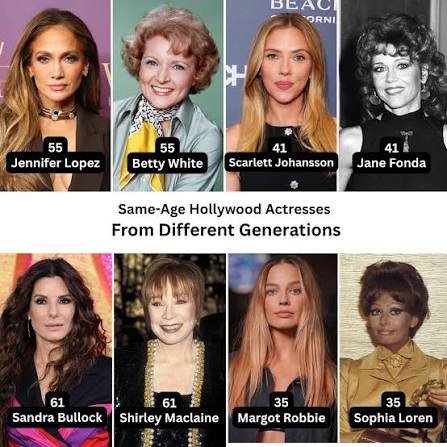
We no longer tell a 50-year-old woman that she must cut her hair, put on sensible shoes and quietly move into the background. Wonderful. Instead, we hand her a phone filled with faces that may have been filtered, filled, lifted, resurfaced, injected, professionally lit and digitally edited, often without any clear indication of which of those things happened. Now AI can create or enhance faces that muddy the visual waters even further. We can smooth skin with a tap before anyone else sees the photograph, and we can stare at ourselves magnified on a screen until a perfectly normal pore begins to look like a geological event.
When I was a kid, if I wanted to know what a 50-year-old looked like, I saw 50-year-olds. They were relatives and teachers and neighbors and women at Grandma’s beauty salon sitting underneath clouds of hairspray. Nobody was filtering them before they entered the grocery store. Nobody was zooming in on Aunt Bee’s forehead and making a video about the three things she needed to do immediately to fix it. We now see more faces in a week than previous generations probably saw in months, and yet I wonder if all that exposure has made us less familiar with what an ordinary aging face actually looks like.
And then there’s the language.
Once I started paying attention to the words we use around aging, I couldn’t stop noticing how aggressive they are. We fight aging. We combat wrinkles. We correct lines. We defy age, prevent it, erase it, reverse it and repair the evidence that it has happened. For Pete’s sake, apparently my bathroom cabinet is preparing for military action.
That’s where this gets complicated for me, because I love beauty.
I’m not standing outside the beauty world throwing rocks at it. I’ve spent more than 20 years working in different areas of beauty, and since October 2024 I’ve gone much deeper professionally into skin and holistic skincare. I love learning why skin behaves the way it does. I love researching ingredients and red light and hormones and minerals and all the strange little connections between what is happening inside the body and what eventually shows up on the outside. I like discovering something that makes my skin calmer or brighter or healthier. And when I look in the mirror and think, My skin looks really good today, I enjoy that feeling. I have no intention of throwing everything out of my bathroom and washing my face with creek water simply to prove that I have accepted aging.
But I don’t want to become afraid of my own face either.
That, I think, is the question hiding underneath this entire rabbit hole. Can I love beauty without being at war with my age? Can I take care of my skin without interpreting every line as something that went wrong? Can I enjoy the extraordinary tools and knowledge available to me without turning my 30-year-old face into a destination I’m forever trying to travel backward toward? Can I want to look vibrant at 54 without requiring myself to look 34?
Because I don’t actually want my 34-year-old face back.
I’ve already had it.
What I want is to understand and take care of the face I have now.
And that brings me back to Grandma.
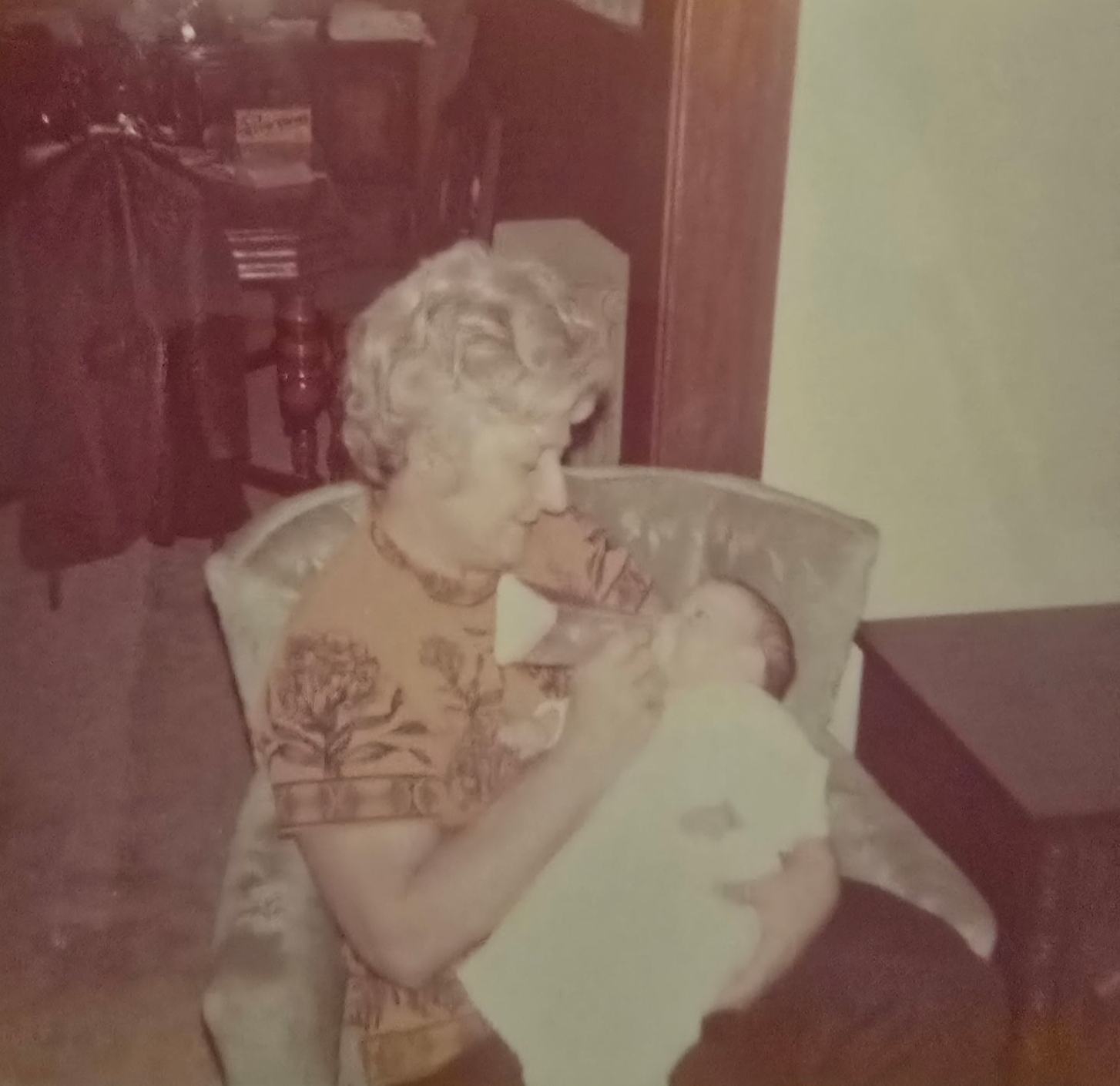
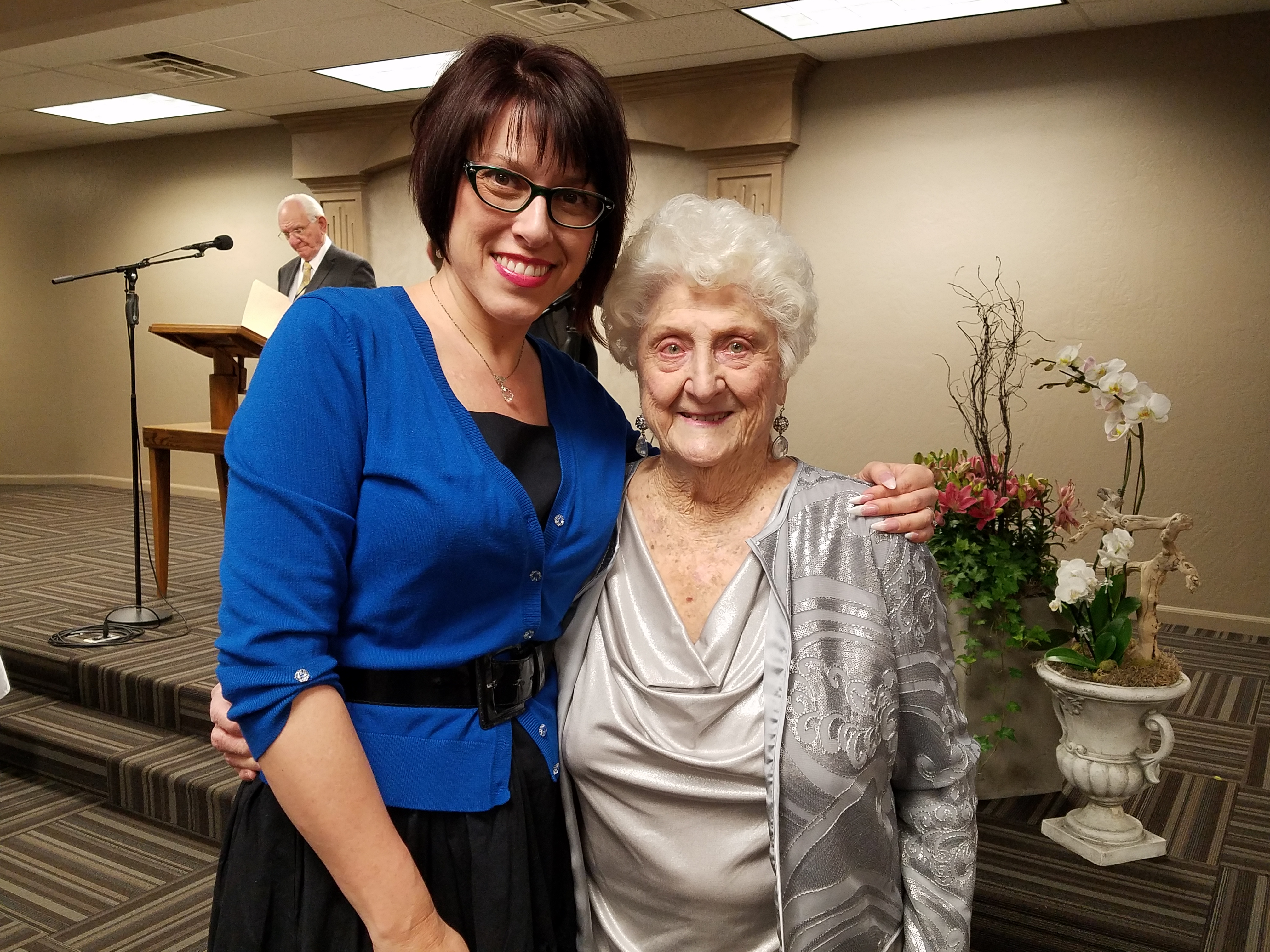
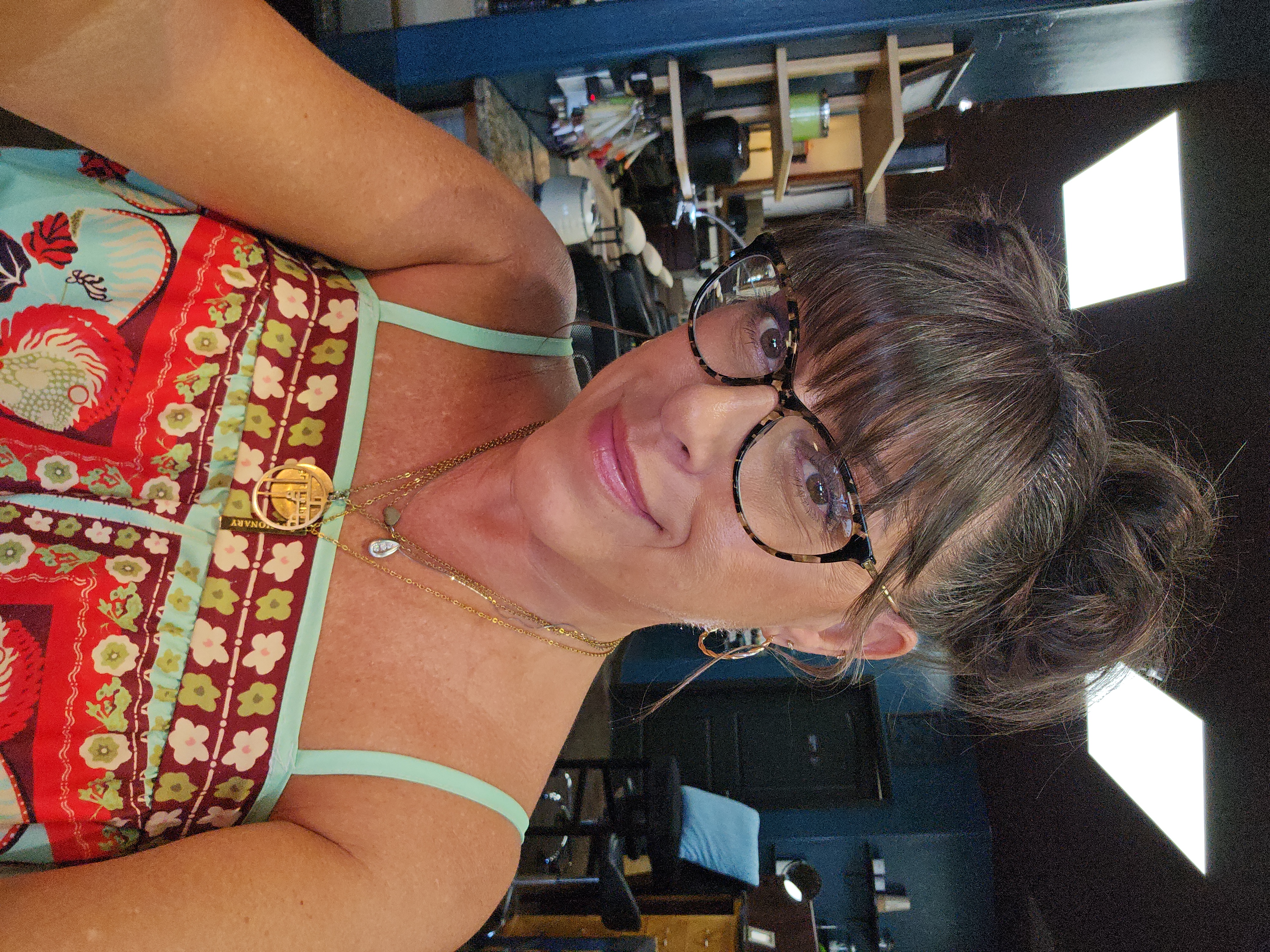
I found some of those photographs of her in her early 50s—the coiffed hair, the clothes, all of it—and put it beside a photograph of me at 54. Not as a before-and-after, and certainly not so anyone can decide which one of us did aging better. I want to look at those two women, one born in 1919 and one born in 1972, and see what happens when I stop asking which one looks younger.
 |  |  |
|---|
Because I’m beginning to think that’s the least interesting question I could ask.
Grandma loved beauty. She loved having her hair done, and she loved that weekly appointment. When she walked out of that salon with every curl exactly where she wanted it, she felt put together in the beauty language of her time. I love beauty too. My rituals look completely different from hers because my world looks completely different from hers, but perhaps we're not as far apart as I thought when I first started this ridiculous rabbit hole.
She wasn’t trying to look like my generation’s idea of 53.
She was trying to look like herself.
And maybe that’s what I want at 54, too.