What in the Dickens Happened to Chocolate?
What in the Dickens Happened to Chocolate?
From Grandma's yellow farmhouse kitchen to ancient cacao and modern Frankenstein foods, a rather winding investigation into what we've done to chocolate.
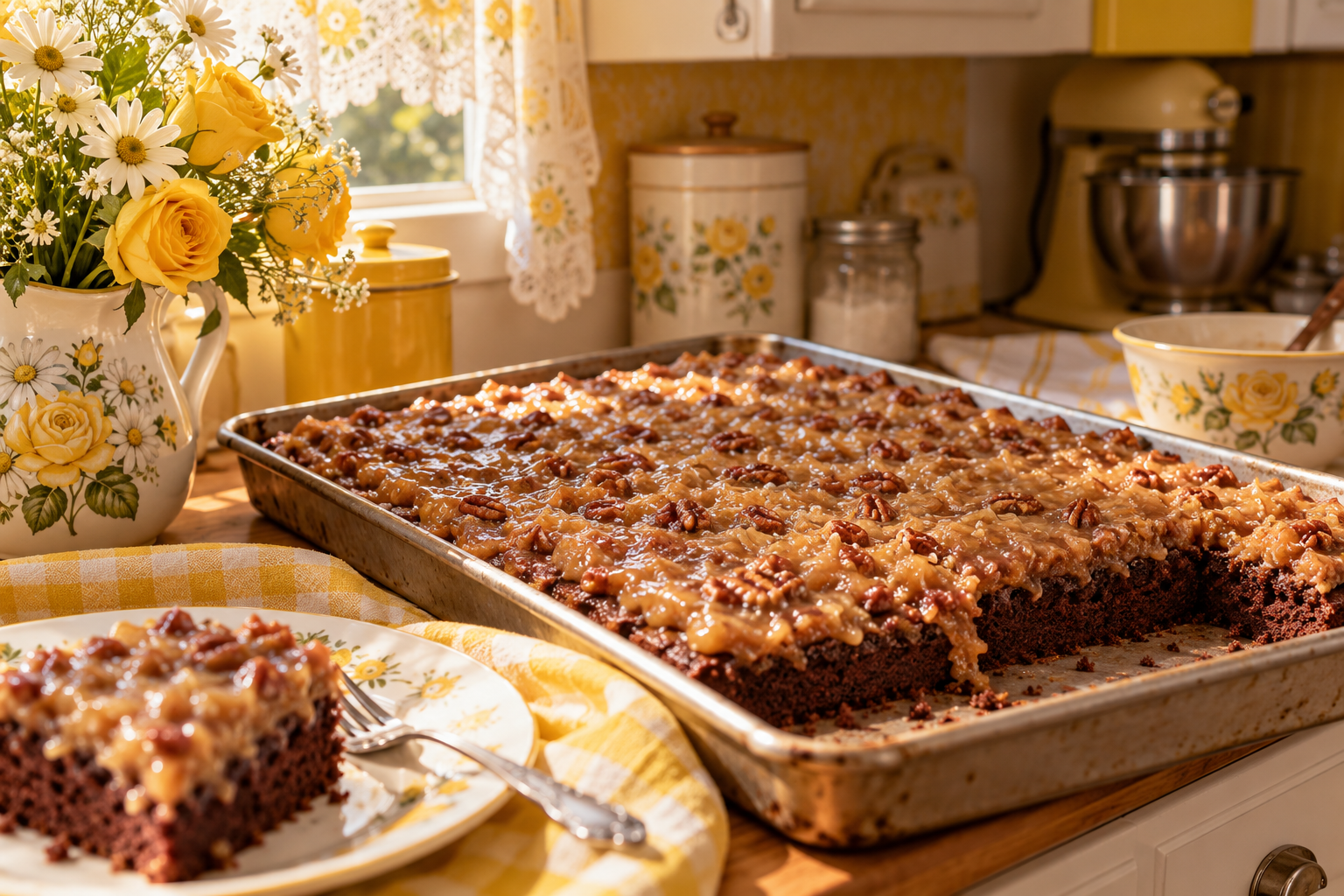
My grandmother had two kitchens in her farmhouse. There was a big one downstairs, but most of the time, when she baked, she used the little kitchen upstairs. And I do mean little. It had white cabinets and cheerful yellow accents, the sort of yellow that makes me think of daisies and yellow roses. I can still picture that kitchen, and I can still remember the German chocolate cake she made there. It wasn't one of those towering layer cakes you see sitting in bakery windows, decorated to within an inch of its life. Grandma made hers in a sheet pan, entirely from memory, with coffee and buttermilk in the batter. The chocolate flavor was rich without being overwhelmingly sweet, and over the top went this magnificent caramel glaze with crumbled pecans stirred right into it. Good grief, that cake was something. She didn't need a recipe sitting on the counter telling her what to do. She just knew how to make it, and somehow that makes the memory even sweeter.
She made an incredible chocolate silk pie, too, and there was always Brach's Bridge Mix in the house. Not just any assortment of chocolate-covered goodies. Brach's Bridge Mix. Apparently Grandma had certain standards when it came to chocolate, and I can't say I blame her. I have her German chocolate cake recipe now, and one of these days I intend to see whether I can make a version without wheat flour, which makes me itchy. Whether I can recreate that particular cake without turning the whole thing into an unfortunate kitchen experiment remains to be seen. But I love the idea of trying, not because I think I can improve upon what she made, but because some recipes are worth carrying forward, even if we have to find a slightly different way to make them.
Chocolate had a different sort of presence in our house growing up. Mom bought Little Debbie snack cakes and Zingers, and every once in a while, if we'd been particularly good, we might even be allowed to pick out a candy bar. That was a treat, mind you, not an automatic entitlement every time we wandered through a grocery store. But Mom was also quite creative in the kitchen. She made wonderful fudge, and her sheet-pan brownies—or cookie bars, depending on what you want to call them—were always a hit. And if Dad was around, you could pretty much count on a generous helping of ice cream landing on top. Not a dainty little dollop arranged for a photograph. A proper helping. That man loved his ice cream. He had it every single night, and apparently saw no reason why a perfectly good brownie shouldn't have some, too.
And then there was the potato fudge.
Yes, you read that correctly. Potato fudge. I don't know what possessed Mom to try that particular combination, but she did, and wouldn't you know it, it was actually very good. I suppose when you grow up around someone willing to put potatoes in fudge, you develop a certain appreciation for kitchen experimentation. Looking at some of the things I make these days, I suspect I inherited a bit of that adventurous streak. Although I do wonder what Mom would think of my chocolate bars with bacon in them. She might think it was a stroke of genius. Then again, she might wonder whether I'd finally lost my marbles.
When I think about chocolate growing up, I don't remember anyone discussing cacao percentages, cocoa flavanols, alkalization, or the nutritional consequences of processing. I remember Grandma's cake, Mom's fudge, Dad's ice cream, and the excitement of occasionally being allowed to choose a candy bar. Sometimes chocolate came from a mixing bowl, sometimes from a wrapper, and sometimes it was buried underneath enough ice cream to qualify as an entirely separate dessert. We enjoyed it. We didn't expect it to improve our circulation, make our skin glow, or add years to our lives. It was chocolate, for Pete's sake. That seemed like a perfectly sufficient reason to eat it.
I still love chocolate. That part hasn't changed. What has changed is how I think about it, and I suppose that was inevitable once I became more interested in what food actually does inside the body. These days, I'm more likely to be standing in my kitchen experimenting with cacao than unwrapping a candy bar. I love stirring cacao nibs into freshly ground peanut butter. I used to use chocolate chips, but somewhere along the way I started turning packages around and reading the ingredients. I noticed that some chocolate-flavored chips and coatings contained fats such as palm kernel oil rather than cocoa butter, although plenty of genuine chocolate chips have fairly straightforward ingredient lists. It wasn't that I'd suddenly decided every unfamiliar ingredient was dangerous. I simply realized that I'd spent most of my life enjoying chocolate without giving much thought to what chocolate actually was.
Good grief. Somewhere along the way, I became the woman investigating chocolate chips.
And once that question lodged itself in my brain, there was no getting rid of it. How did we get from a bitter seed growing inside a tropical fruit to Grandma's German chocolate cake, Mom's fudge, and an entire grocery-store aisle devoted to candy? How did one ingredient become so many different things, and why do we talk about all of them as though they're nutritionally interchangeable? More importantly, when somebody tells us chocolate is good for us—or terrible for us—which chocolate are they talking about? The cacao powder in my kitchen? A square of dark chocolate? A milk chocolate bar? A chocolate-flavored coating? Because those aren't necessarily the same thing, no matter how enthusiastically we lump them together.
Well, naturally, I had to investigate.
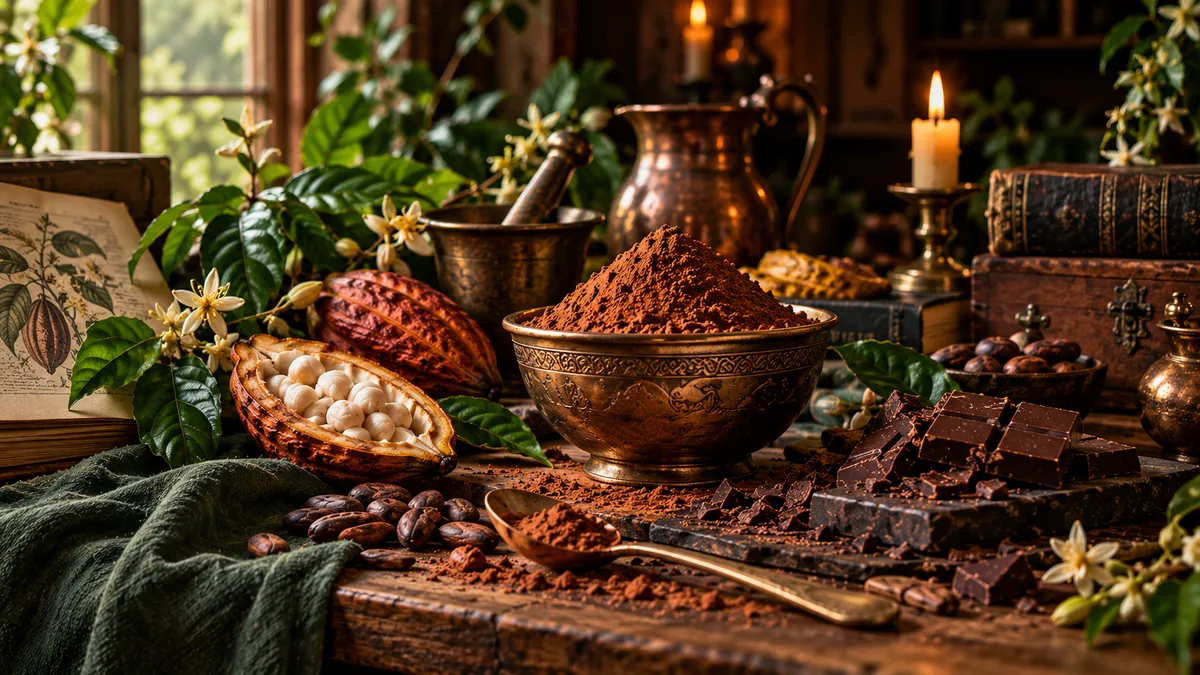
And wouldn't you know it, cacao has been keeping human beings entertained for thousands of years. Archaeological evidence from what is now Ecuador suggests that people were using cacao roughly 5,300 years ago. Five thousand three hundred years! That is an astonishing amount of history for something we now casually toss into a shopping cart beside the paper towels. Long before chocolate bars, candy wrappers, and television commercials, people had already discovered that the seeds inside the fruit of a tropical cacao tree were worth paying attention to. Later, in Mesoamerican cultures, cacao became woven into ceremonies, trade, and social customs. The Maya prepared cacao beverages, and cacao beans were valuable enough in parts of the region to serve as a form of currency. Imagine carrying your spending money around in the form of something you could also turn into a drink. Knowing me, I might have had a little trouble keeping the household budget intact.
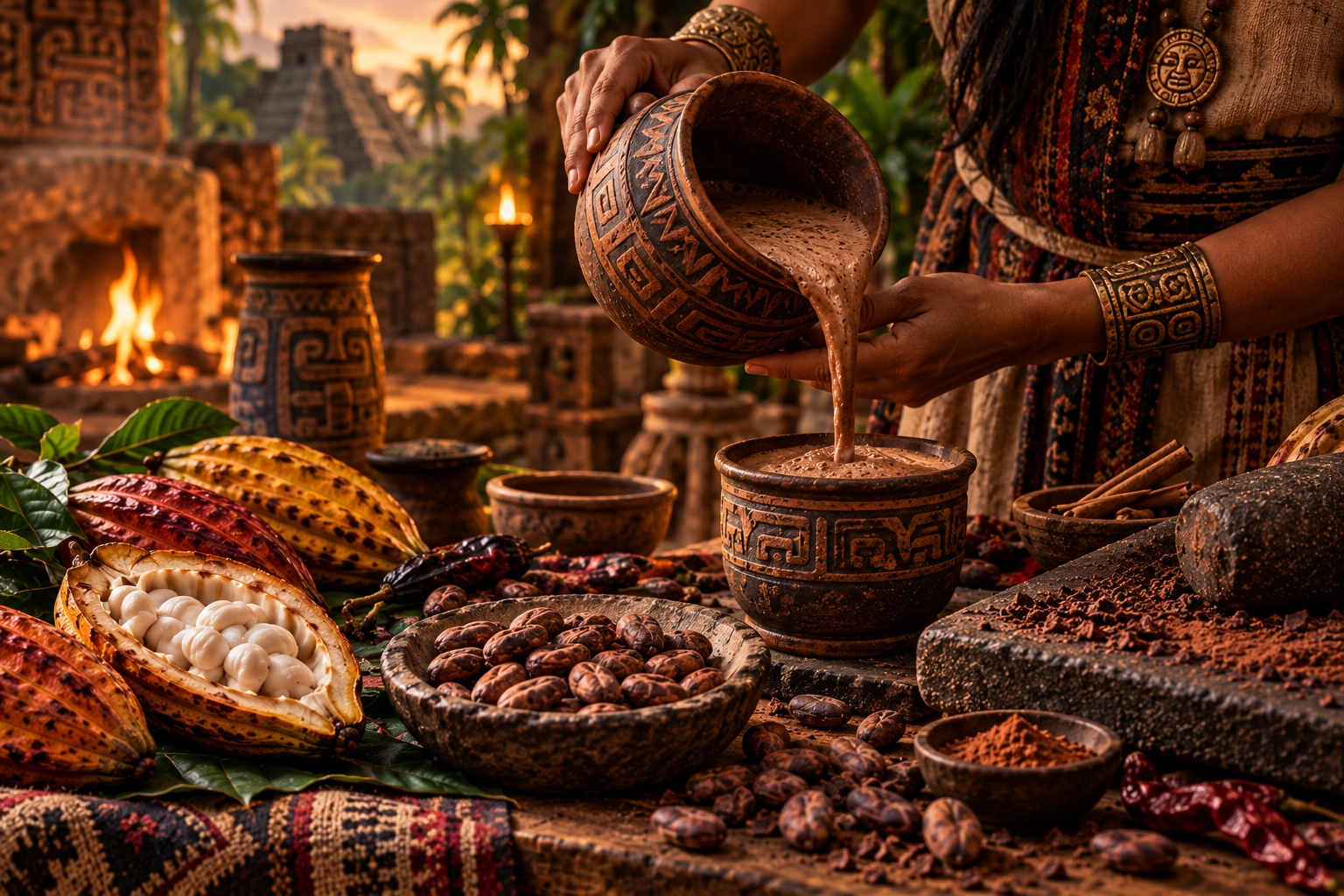
What fascinates me is how different those early cacao preparations were from the chocolate most of us recognize today. Cacao beverages could be bitter, frothy, and flavored with ingredients such as chili, flowers, or other seasonings. People poured the liquid between vessels to create foam, and that foam was an important part of the experience. This wasn't the sweet hot chocolate of my childhood, with marshmallows bobbing around on top and a generous squirt of whipped cream for good measure. It was something earthy, complex, and deeply connected to the cultures that prepared it. Cacao wasn't trying to disguise itself as dessert. It was allowed to taste like cacao.
Now, I don't want to pretend that everything people ate thousands of years ago was automatically healthier, wiser, or somehow morally superior to what we eat today. Human beings have always experimented with food. We've roasted things, fermented things, ground things, mixed things together, and discovered that certain ingredients become considerably more interesting when we combine them. My mother's potato fudge is proof that this spirit of experimentation is alive and well. But cacao's transformation from a bitter beverage into the chocolate we recognize today is a particularly fascinating example of what happens when an ingredient travels through different cultures, economies, and technologies.
When cacao made its way to Europe, sugar became an increasingly important part of its story. Chocolate was gradually transformed into sweeter drinks, and as sugar became more accessible and manufacturing techniques improved, new possibilities emerged. By the nineteenth century, advances in chocolate production were changing the ingredient itself. The cocoa press made it possible to separate much of the cocoa butter from the cacao solids, creating new ways to work with both. Other developments helped manufacturers produce smoother textures, more consistent flavors, and eventually the solid chocolate bars that would become familiar around the world. Milk chocolate entered the picture, confectionery companies expanded, and before long chocolate was no longer simply something you drank. It was something you could mold, wrap, package, ship, advertise, and sell in a thousand different forms.
I have to admit, part of me finds all of that rather marvelous. Imagine being the person who figured out how to turn a bitter tropical seed into a silky piece of chocolate that melts on your tongue. That required curiosity, experimentation, and a considerable amount of ingenuity. I'm not opposed to every change we make to food simply because it involves a process. After all, the kitchen itself is a little laboratory, whether we recognize it or not. Browning butter is chemistry. Baking a cake is chemistry. Making fudge is chemistry, and apparently adding mashed potatoes to it is chemistry with a mischievous streak.
But somewhere along the way, the word chocolate began describing products that could be remarkably different from one another. On one end of the spectrum, you have unsweetened cacao powder made from cacao beans. Then you have dark chocolate, milk chocolate, white chocolate, chocolate chips, chocolate-flavored coatings, filled candies, and all manner of confections. Some contain substantial amounts of cacao solids. Others contain relatively little. Some use cocoa butter as their primary fat, while certain coatings use other vegetable fats. Some have short ingredient lists, and others are more complicated. They're not all the same thing, even though we call them all chocolate.
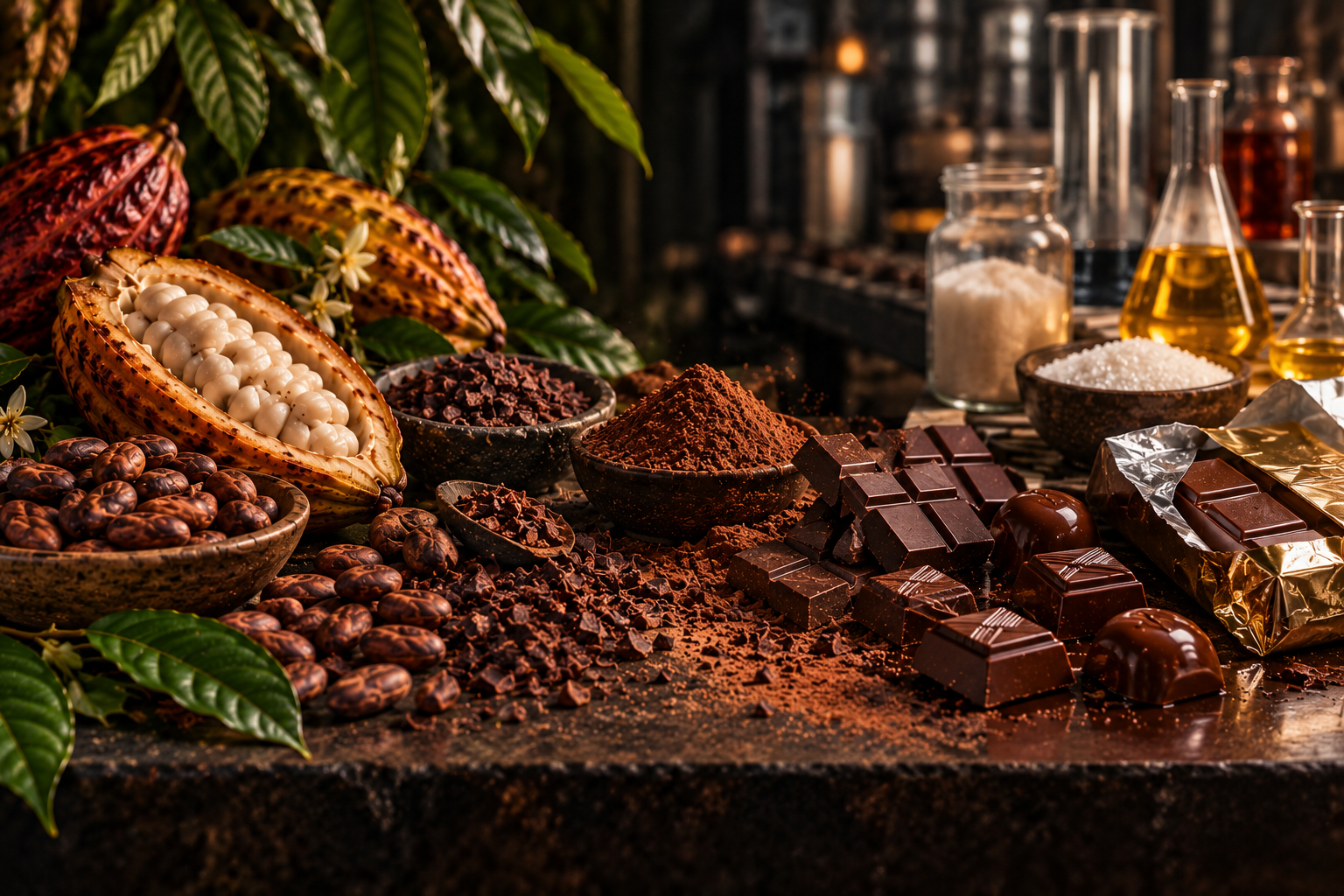
The cacao bean didn't suddenly become unhealthy. We kept changing the finished product.
That distinction matters, especially when we start hearing about chocolate's supposed health benefits. Because cacao itself contains some genuinely interesting compounds, and this is where my curiosity began pulling me in an entirely different direction. Cacao contains plant compounds called polyphenols, including a group known as flavanols. Researchers have been studying cocoa flavanols for their effects on blood-vessel function, particularly the endothelium, which is the delicate lining inside our blood vessels. Certain cocoa flavanols can help support normal blood-vessel dilation, an important part of healthy circulation. There has also been research into their possible relationship with cardiovascular health, although the findings are more complicated than the headlines sometimes suggest.
Wouldn't it be wonderful if the answer to heart health were simply to eat more chocolate? I can practically hear Dad volunteering to add a scoop of ice cream for good measure. Unfortunately, that's not what the research tells us. Studies investigating cocoa flavanols often use particular preparations and measured amounts that may be quite different from what you'd find in an ordinary candy bar. A chocolate bar can contain cacao and still be high in added sugar, and the amount of beneficial flavanols remaining after processing can vary considerably. Even the percentage printed on the front of a dark chocolate wrapper doesn't tell us exactly how many flavanols are present. It tells us something about the cacao content, which is useful, but it doesn't tell the entire story.
Cacao also contains fiber, minerals such as magnesium, iron, and copper, and naturally occurring compounds including theobromine, which is related to caffeine. Of course, how much of any of those things we actually consume depends on the product and the portion. A spoonful of unsweetened cacao powder isn't nutritionally equivalent to a candy bar, just as a homemade brownie isn't equivalent to a handful of cacao nibs. The ingredient matters, but so does everything we do to it afterward.
And then, because I apparently cannot investigate anything without eventually finding my way back to skin, I stumbled into research exploring whether cocoa flavanols might influence certain aspects of skin health. There have been small human studies looking at measures such as skin elasticity, wrinkles, and responses to ultraviolet exposure. Some results have been encouraging, but the research is still limited, and it would be a tremendous leap to claim that eating chocolate reverses skin aging. I can just imagine the advertisements if that were true. Forget your skincare routine, ladies, and head straight for the candy aisle! We'd have chocolate companies sponsoring birthday parties for women over fifty.
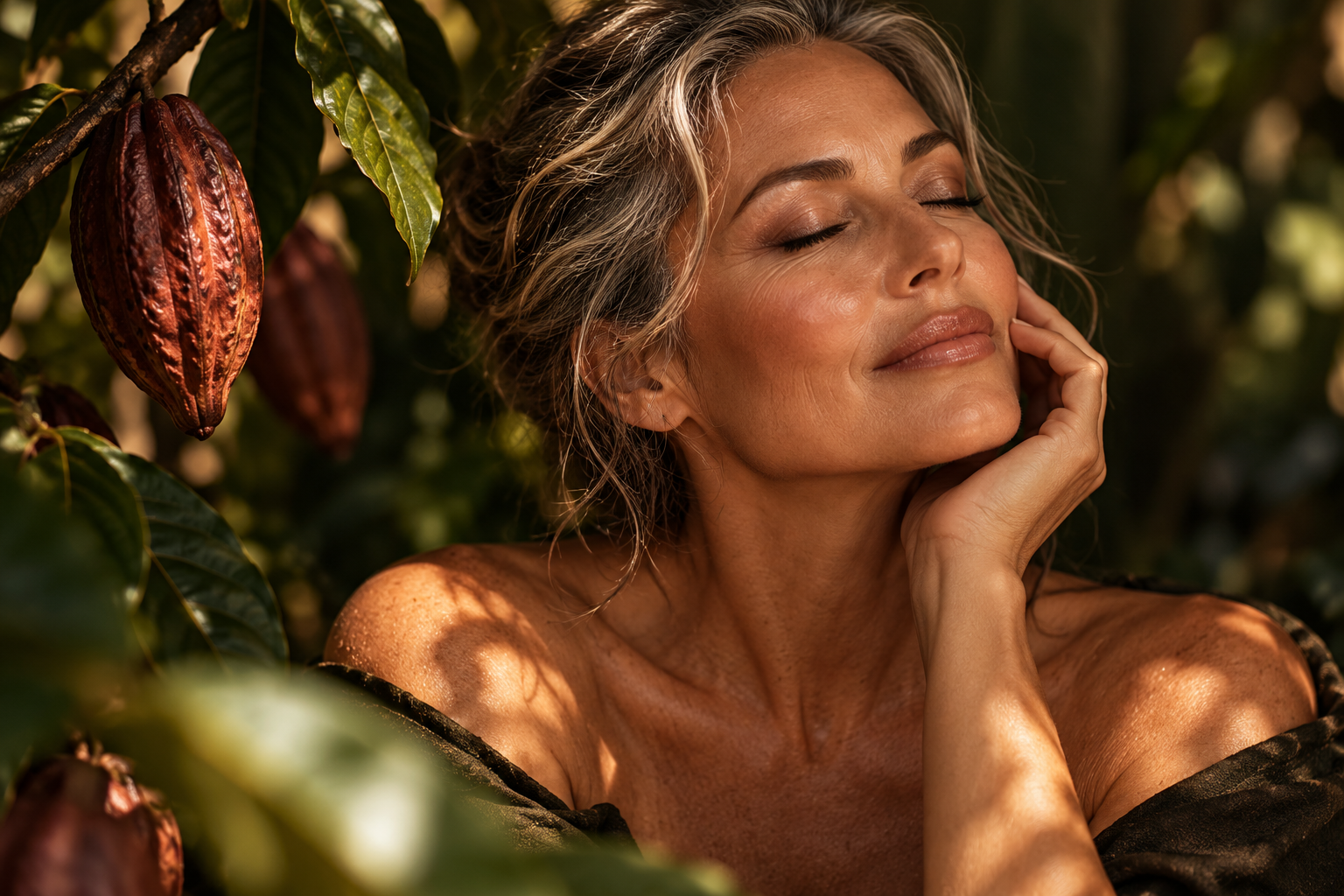
Still, I find the biological connection intriguing, because skin doesn't exist independently from the rest of the body. It depends on circulation to deliver oxygen and nutrients. It responds to inflammation, hormonal changes, environmental exposure, and the countless processes taking place beneath its surface. We spend so much time discussing what to put on our skin that it's easy to forget how much is happening inside it. And that's why I keep coming back to something I've said before: beauty is biological before it is cosmetic. The more I learn about the body, the more convinced I become that understanding how it functions is every bit as interesting as understanding which cream belongs on the bathroom counter.
But just when I thought I was beginning to understand cacao, I discovered that even cocoa powder has a story of its own. There is natural cocoa powder, and then there is Dutch-processed cocoa, which has been treated with an alkalizing agent to change its acidity, color, and flavor. Dutch processing can create a darker, smoother, less acidic cocoa that works beautifully in certain recipes. It can also reduce some of the naturally occurring flavanols. So even when two products begin with the same cacao bean, the way they're processed can affect what ends up in the finished powder.
And this is where things become a little less straightforward than I'd like. Because I enjoy a simple answer as much as the next person, but food rarely cooperates. Processing isn't automatically bad. Sometimes it makes food safer, more enjoyable, or more practical to use. Sometimes it changes the nutritional composition in ways we might want to understand. The important question isn't whether something has been processed at all. Almost everything we cook has been processed in some way. The question is what was done, why was it done, and what did it change?
Sugar is another part of the story, of course. Grandma used sugar in her cake, Mom used it in her fudge, and I'm fairly certain nobody in our family mistook either one for a bowl of vegetables. Sugar has been part of desserts for generations. But when a product contains a relatively small amount of cacao and a substantial amount of added sugar, it's reasonable to question whether the health research on cocoa flavanols has much to do with that particular treat. And when manufacturers reduce sugar, they sometimes use alternative sweeteners or sugar alcohols, which introduces another set of questions. Some sugar alcohols, especially in larger quantities, can cause digestive discomfort. Different sweeteners behave differently, and research into their broader effects is still developing. Declaring all of them wonderful or all of them terrible would be far too simple.
I found myself wondering whether we've made chocolate more complicated than it ever needed to be. Not because every modern ingredient is suspicious, but because we've become so accustomed to buying finished products that we sometimes forget to ask what they're actually made from. A cacao bean is a cacao bean. A chocolate bar is a recipe. And recipes can vary enormously.
That realization is part of why I enjoy making my own food. When I'm standing in my kitchen, I get to decide how sweet something should be, what kind of cacao to use, and which ingredients make sense for me. I don't have to rely entirely on the front of a package to tell me whether something is a good choice. I can experiment, taste, adjust, and occasionally create something that makes other people raise an eyebrow.
Which brings me to my chocolate protein bars.
Now, Grandma had her coffee, buttermilk, and pecan caramel glaze. Mom had her fudge, brownies, and that unforgettable potato experiment. Dad had his nightly ice cream. And apparently I have decided that chocolate needs browned butter, a little honey, protein powder, and bacon.
Yes, bacon.
Before anybody gets their knickers in a twist, let me explain. Browned butter develops this wonderful nutty, almost caramel-like aroma as the milk solids toast. Add cacao, and you get a rich chocolate flavor that works beautifully with a little sweetness. Then there's the salty element, which is where the bacon comes in. If you've ever enjoyed salted caramel with chocolate, you already understand the appeal. I'm simply taking the idea in a slightly more adventurous direction, which, considering the potato fudge in my family history, probably shouldn't surprise anyone.
I make these bars because I enjoy them, because they fit the way I prefer to eat, and because I like knowing what I've put into them. They're animal-based rather than strictly carnivore, since I use cacao and honey. They're also still a rich treat, not a magical health food just because I've added protein. Two cups of butter are not exactly trying to pass themselves off as a light afternoon snack. But I can cut the bars into small pieces, keep them chilled, and enjoy something that tastes the way I want chocolate to taste.
And if you're wondering how much bacon belongs in a chocolate bar, I have a fairly simple philosophy.
There's no such thing as too much bacon!
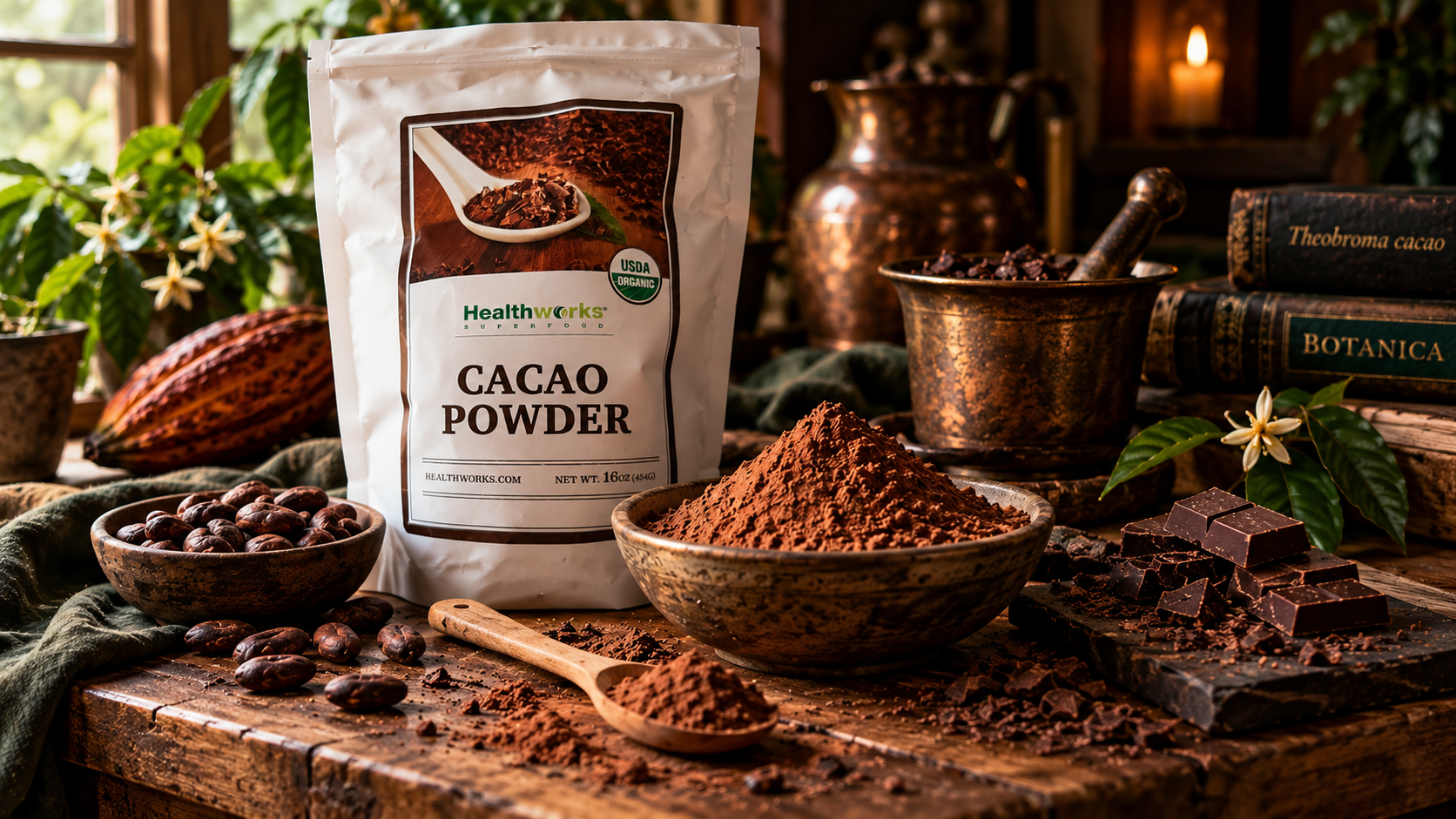
Of course, the more I learned about cacao, the more questions I discovered. Even the cacao powder I buy deserves a closer look. Cacao can contain cadmium absorbed from soil, and lead can be introduced through environmental contamination during growing, harvesting, drying, or processing. The amounts vary depending on the source and product, which is why sourcing and testing matter. And while I appreciate organic farming practices, an organic label doesn't automatically guarantee that a product is free from heavy metals.
Good grief. This whole adventure began with Grandma's chocolate cake, and somehow I've ended up wanting laboratory reports for my brownie ingredients.
I don't say that to frighten anybody away from cacao. I certainly haven't stopped using it. I simply think it's worth understanding the foods we consume regularly, especially when the questions are more complicated than a cheerful label on the front of a package might suggest. There's a difference between being curious and being afraid, and I have no desire to turn every trip to the grocery store into a chemistry examination. I just want to make informed choices without losing the pleasure of eating.
And then, because apparently five thousand years of chocolate history wasn't enough for one afternoon, I discovered that scientists and food companies are now exploring ways to make chocolate without growing cacao trees in the traditional way. Some are experimenting with other plants to imitate chocolate's flavor, while others are working on cultivating cacao cells in controlled environments to produce cacao-derived ingredients.
I had to read that twice.
We're now trying to make chocolate by growing cacao cells in a laboratory?
What in the tarnation are we doing?
I realize there are people who find this sort of innovation exciting. They'll talk about sustainability, changing climates, agricultural challenges, and the possibility of producing ingredients without relying on traditional farming. I understand those are real concerns, and I'm not dismissing the people trying to solve them. But I have to tell you, this is where my enthusiasm for human ingenuity runs straight into a brick wall.
I don't want Frankenstein chocolate. I want cacao from a cacao tree.
And perhaps this is where my faith and my fascination with the natural world come together most clearly. I believe God gave us an extraordinary creation, filled with plants, animals, and an astonishing variety of foods. The more I learn about the complexity of something as seemingly ordinary as a cacao bean, the more amazed I become by what already exists. There is an entire biological system behind that little seed, from the soil and the roots to the fruit growing on the tree. I find that infinitely more fascinating than the prospect of recreating one part of it in a laboratory.
Now, I'm not suggesting that every modern food technology is the same thing, or that we should throw out every useful innovation humanity has ever developed. After all, I've just spent several paragraphs admiring the chemistry of browned butter. But there's a difference, at least to me, between learning how to prepare the foods we've been given and trying to manufacture substitutes for them.
And I know not everyone will agree with me. That's perfectly fine. I'm not asking anybody else to make their food choices according to my convictions. But I know where I stand. If I have a choice between chocolate made from cacao grown on a tree and something engineered to imitate or reproduce it in a controlled facility, I'll take the tree, thank you very much.
Call me old-fashioned. I can live with that.
We've spent thousands of years learning how to turn cacao into something delicious. Maybe, instead of constantly asking how we can reinvent it, we ought to spend a little more time appreciating what was there in the first place.
And after all that wandering through history, chemistry, circulation, skin biology, manufacturing, and the future of food, I keep coming back to the kitchens I grew up in. I can still picture Grandma's little upstairs kitchen, with its white cabinets and cheerful yellow accents. I remember the sheet pan sitting on the counter and that rich chocolate cake covered in caramel glaze with crumbled pecans. I remember her silk pie and the Brach's Bridge Mix that simply had to be Brach's. I remember Mom's brownies, her fudge, the rather unexpected potato experiment, and Dad's generous helpings of ice cream. I remember how exciting it was to get to choose a candy bar, back when that was a special little privilege instead of something you barely thought about.
None of those memories require me to pretend the food was nutritionally perfect. And none of the things I've learned about cacao make those memories any less wonderful. If anything, understanding more about chocolate has made me appreciate the whole story a little differently. The ingredient itself is fascinating, the history is extraordinary, the science is still unfolding, and the ways human beings have transformed it are sometimes ingenious, sometimes excessive, and occasionally downright peculiar.
I don't want to become someone who looks at every piece of chocolate and sees only a list of ingredients to scrutinize. I want to understand what I'm eating without becoming afraid of it. I want to appreciate the things we can learn from science without forgetting the traditions, flavors, and memories that make food meaningful in the first place. And I want to keep experimenting in my own kitchen, even if some of those experiments involve ingredients that would have made Grandma look at me sideways.
Maybe I didn't need to give up chocolate. Maybe I just needed to understand cacao.
And perhaps figure out how to make Grandma's German chocolate sheet cake without the wheat flour.
Although I draw the line at putting bacon in that one.
I'm not completely unreasonable.
From My Kitchen: Animal-Based Chocolate Protein Bars
Rich. Salty. Sweet. High Protein. Absolutely Addictive.
These are my chocolate bars made with browned butter, cacao, honey, protein, and bacon. They're animal-based rather than strict carnivore because they contain cacao and honey, and I like keeping them chilled for a little treat whenever the mood strikes.
Ingredients
2 cups butter
¼ cup unsweetened cacao powder
¼ cup raw honey
1 scoop Equip Prime Protein, Salted Caramel
1 scoop Equip Prime Protein, Chocolate
Cooked bacon bits, to taste
Directions
Melt the butter in a saucepan over medium heat, stirring occasionally, until it turns golden brown and develops a nutty, caramel-like aroma. Watch carefully so it doesn't burn.
Stir in the cacao powder until fully combined.
Divide the browned-butter cacao mixture in half. Pour the first half into a silicone mold or parchment-lined pan and place it in the freezer to begin setting.
In a separate bowl, slightly warm the honey, then stir in the Salted Caramel protein powder and your desired amount of cooked bacon bits.
Add the Chocolate protein powder to the remaining browned-butter cacao mixture and stir until smooth.
Remove the pan from the freezer, spread the honey-protein-bacon filling over the first layer, and pour the remaining chocolate mixture over the top.
Freeze for at least two hours, or overnight, until firm. Cut into bars or small squares and store in the refrigerator or freezer.
I like cutting these into small squares because they're rich, and a little goes a long way.
And as for the bacon? Well, you already know how I feel about that.