The Woman That Tended Everything
This is the story of my grandmother—a memoir born from memories of a Kansas farmhouse, red geraniums, homemade pie, and a woman who quietly taught me what it meant to tend a life well.
When I think about my grandmother, my mind doesn't go first to her face or even to her kitchen. It wanders instead to the sidewalk behind the farmhouse outside Russell, Kansas. Memory has a curious way of choosing its own landmarks, and for reasons I have never fully understood, mine always begins there. The sidewalk wasn't remarkable by anyone else's standards. It was simply a narrow ribbon of concrete that slipped away from the back door and carried you through the ordinary life of the farm, but as a little girl I believed it connected everything that mattered. One direction led toward the garage and then the hen house and onto the rest of the farm ... another way took you past the old cistern with its heavy metal lid and towards the windmill that had faithfully pumped water for years before I was born. Beyond it stood the orchard where apples, pears, peaches, and apricots ripened one after another with the seasons, and just beyond that stretched the garden that seemed impossibly large to me then. I never thought of these as separate places. They belonged to one another in the same way the rooms of a house belong to one another, and somewhere along that sidewalk I learned that beauty could exist in the middle of ordinary work without anyone feeling the need to explain why.
What I noticed then, though I certainly couldn't have put it into words, was that my grandmother had quietly woven flowers into nearly every corner of that working farm. In the spring the lilacs announced themselves before you ever reached them, carrying their fragrance on the Kansas breeze. Peonies opened into blossoms so heavy they seemed almost too beautiful for the sturdy stems that held them. Hollyhocks stood like old friends along the edge of the garden, and when summer settled in for good, the brilliant red poppies around the windmill moved constantly in the wind, bringing unexpected color to a place devoted almost entirely to usefulness. Even the old cistern, with the pump spout, which most people would have considered little more than a concrete necessity, wore pots of cheerful red geraniums. Looking back now, I smile at the thought of my grandmother deciding that a water tank deserved flowers. That small act seems to explain her better than almost anything else I could say.
The flowers, however, never distracted me from what lay beneath the metal lid. Every so often Dad or Grandpa would lift it, and I had seen enough salamanders, spiders, beetles, and other mysterious little creatures clinging to those cool damp walls to know that I preferred keeping my distance. I usually walked around the cistern instead of beside it, convinced that whatever lived under there might decide to make an appearance at exactly the wrong moment. My grandmother, of course, seemed entirely untroubled by any of it. She saw a place that could be made more beautiful. I saw a place where creepy crawlies lived. We were looking at exactly the same spot, yet somehow seeing two entirely different worlds, and I find myself smiling now because I think both of us were right.
The farm itself never seemed especially busy to me, though looking back I can't imagine how it could have been otherwise. There was always something growing, something ripening, something waiting to be gathered before the weather changed. Grandpa had played baseball as a young man, but by the time I knew him his days were spent tending sheep, fixing machinery, and cheering for someone else from the comfort of his easy chair. Not only did Grandpa raise sheep for as long as I can remember, but every now and then there would be cattle, hogs, ducks or geese making far more noise than seemed necessary, while the chickens scratched contentedly inside their large fenced yard. By the time I was old enough to notice such things, the horses were gone. Grandpa had loved them, but feeding horses had become too expensive, and practical decisions were simply part of farm life. Nothing on the farm was sentimental. Animals had a purpose, gardens had a purpose, orchards had a purpose, and everyone worked because work was simply what the day required. Yet somehow, in the middle of all that practicality, my grandmother never lost sight of beauty. She refused to believe usefulness and beauty had to compete with one another. They belonged together just as naturally as the vegetables and flowers growing side by side in the garden.
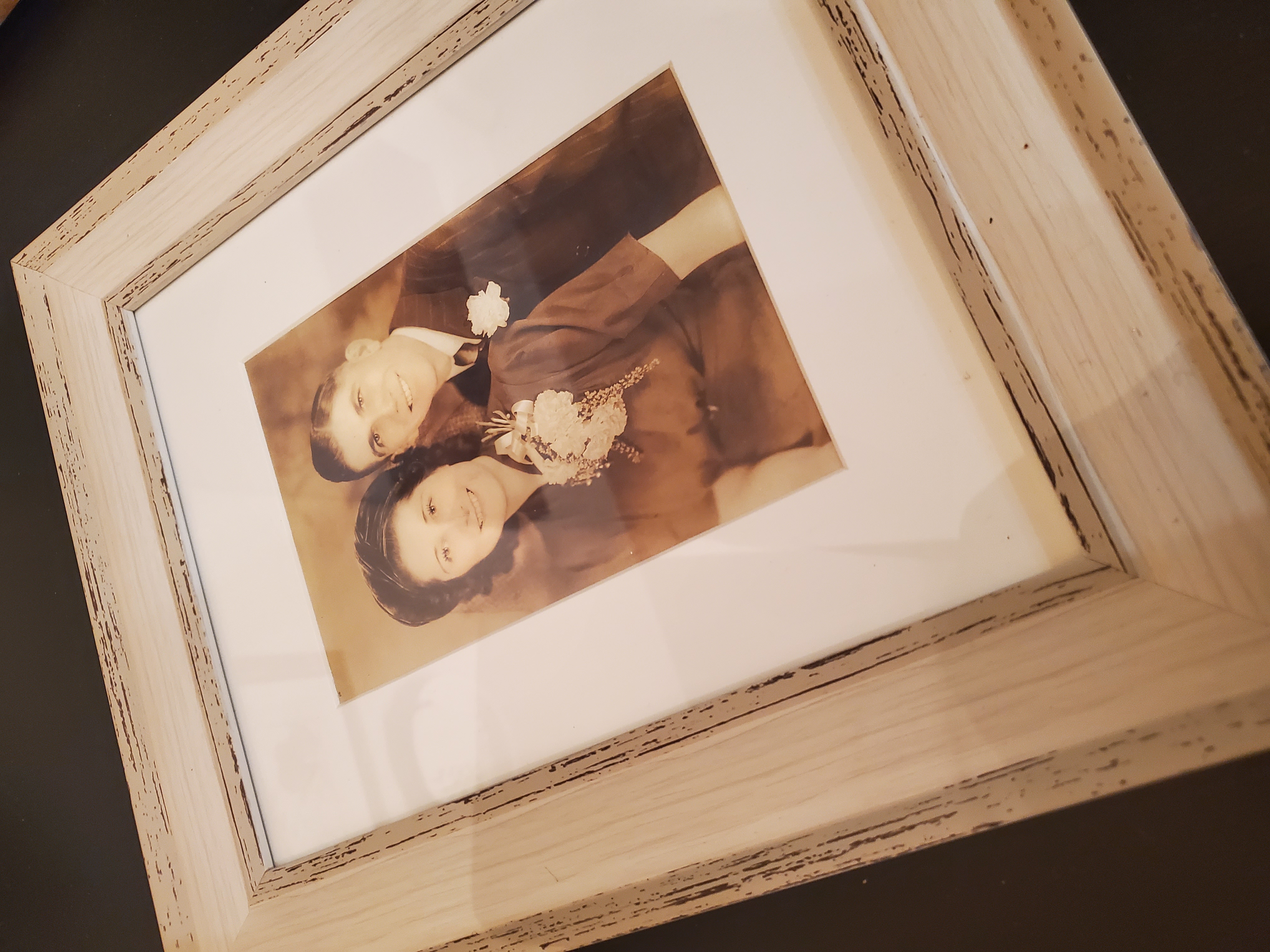
I don't remember ever wondering where Grandpa was because Grandma always seemed to know. The gravel driveway that was basically a giant circle, was unusually wide so combines, wheat trucks, and tractors could pass without difficulty, and somewhere beyond that stretch of gravel Grandpa was almost always working. To me the farm felt enormous. He could have been fixing a fence, checking sheep, working a field, or repairing machinery, yet if Grandma decided it was time to go into town she somehow knew exactly where to find him. She would step outside, look across the fields for only a moment, and head off with the quiet confidence of someone who understood both the rhythms of the farm and the man who had spent his life working it. As a little girl I assumed everyone possessed that mysterious ability. Only later did I realize it comes only after years of paying close attention to another person's habits, something my grandparents had been doing for one another for a lifetime.
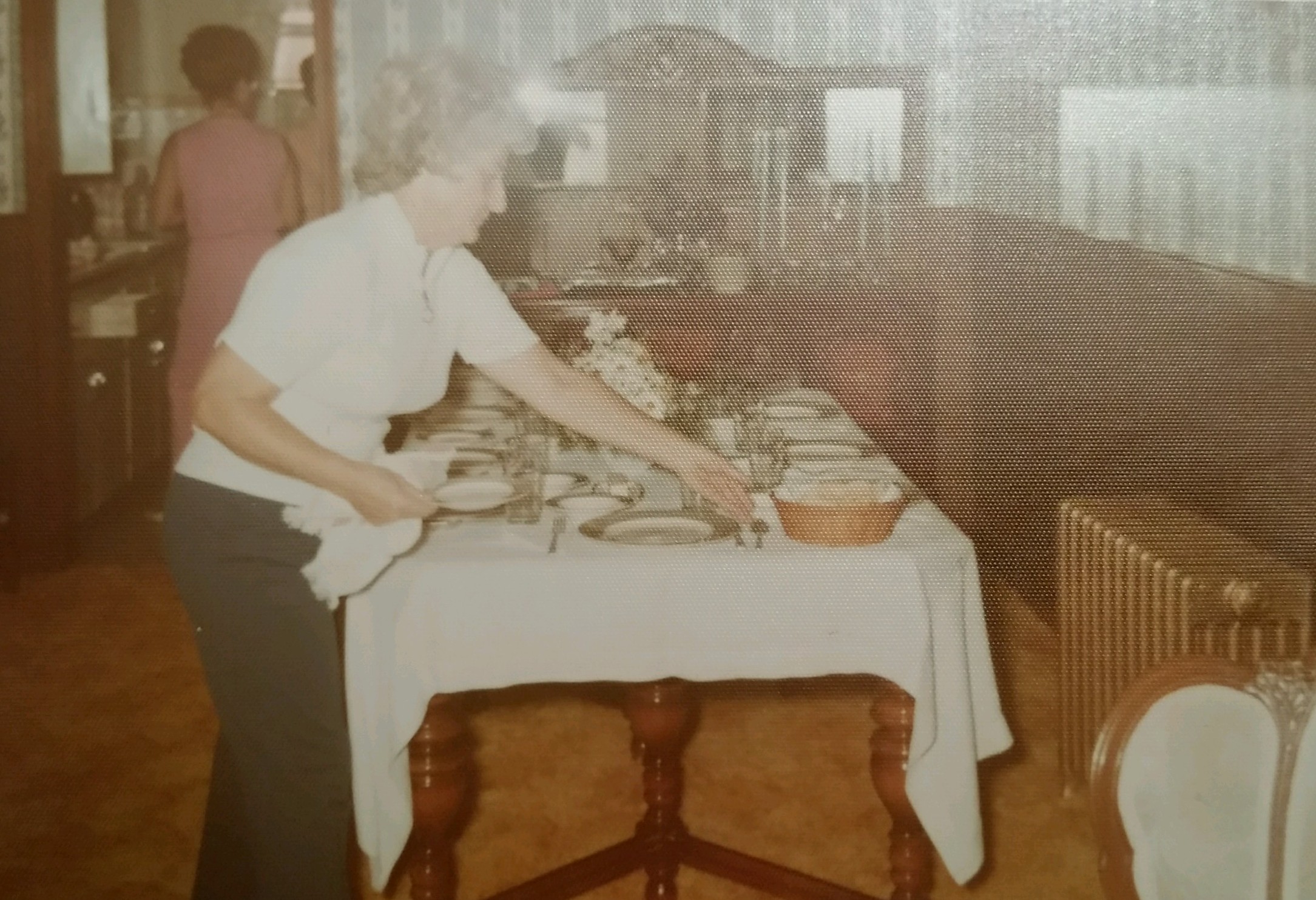
Inside the house, the rhythm changed completely. The screen door creaked open and shut throughout the day as people came and went, carrying in the smell of wheat fields, fresh-cut grass, or rain depending on the season. The kitchen seemed to exist in a constant state of gentle activity. Bread dough rested beneath a towel on the counter while coffee waited in the pot as though it had been expecting company all morning. Homemade noodles might be drying before they found their way into soup, vegetables from the garden sat waiting to be washed or canned, and somewhere, almost without fail, there was a pie cooling where no one seemed particularly tempted to disturb it before supper. My grandmother had a gift for baking that no recipe could fully explain. Her pies were the kind people still talked about years after they'd eaten them, and cakes appeared so regularly that I never considered them something reserved for special occasions. They were simply part of life, much like flowers in the garden or coffee on the stove.
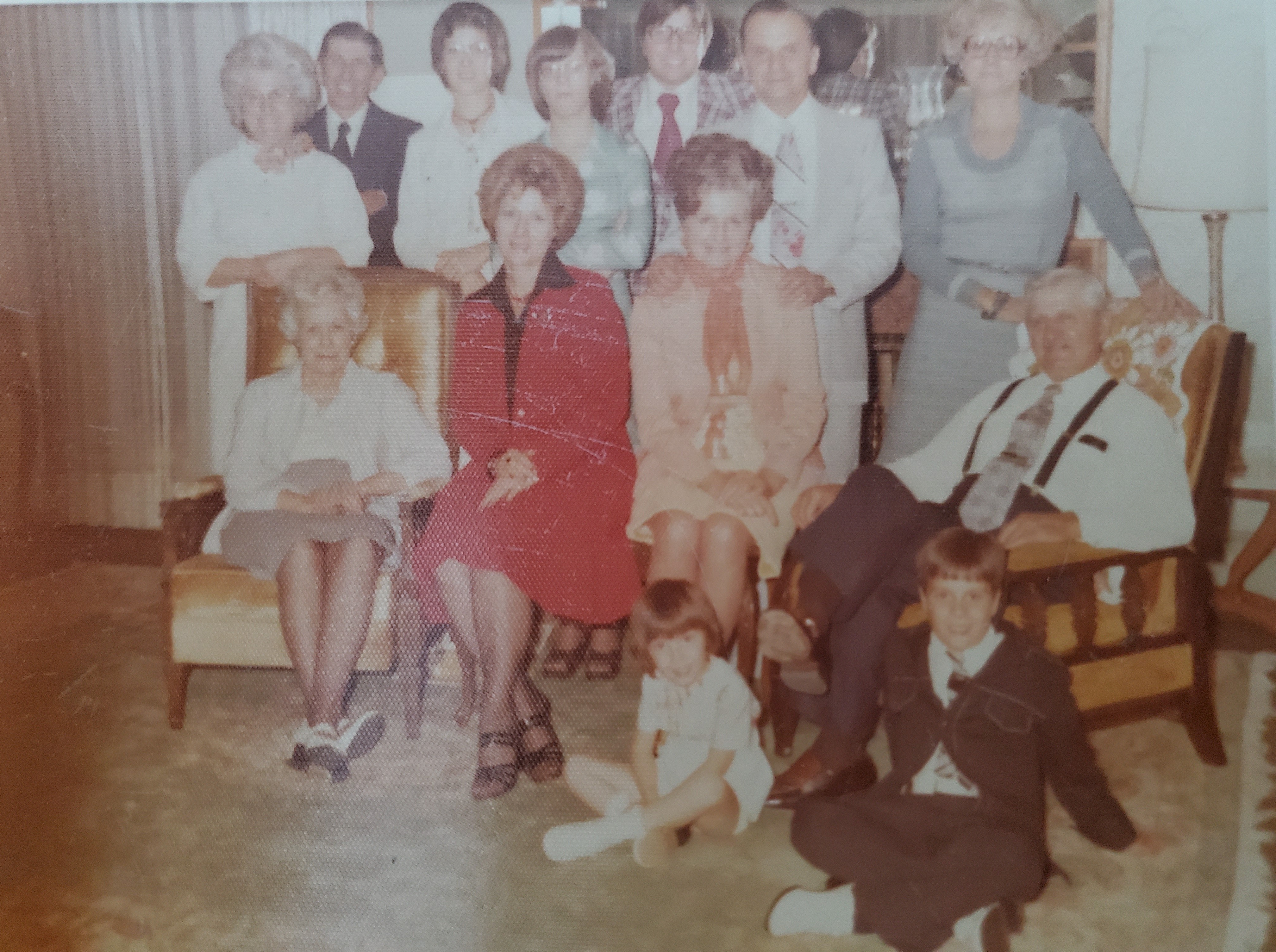
People simply arrived, and I don't remember my grandmother ever acting as though they had interrupted her day. There was no frantic straightening of the house or whispered apology that she wasn't expecting company. She lived in such a way that she was always ready. If someone stayed for supper, another plate quietly appeared at the table. If they stayed the night, fresh towels found their way into the bathroom and the bed was turned down as though it had been waiting for them all along. Traveling ministers often stayed for days, sometimes weeks, and occasionally even months. As a little girl, I thought every home worked that way. It never occurred to me that what I was witnessing was unusual.
Only years later did I understand that my grandmother wasn't simply feeding people because she enjoyed cooking or opening her home because she liked having company. She cooked because feeding people was one of the ways she loved them. Hospitality wasn't something she scheduled or prepared for; it was simply the atmosphere she lived in. She never seemed to draw a line between family, friends, neighbors, or those who happened to need a place to stay. If there was enough soup for six, somehow there was enough for seven. If there was one pie on the counter, everyone had a slice, even if hers became a little smaller. Looking back now, I don't think she would have described herself as hospitable. That word almost feels too formal for the quiet way she lived. She simply made room—for another chair at the table, another towel in the bathroom, another conversation over coffee, another person who needed to feel at home. Somehow there always was enough, because she never measured what she had by whether it was sufficient for herself alone.
Thursdays had their own familiar rhythm because that was Bible study night. Long before anyone arrived, the house was already preparing to welcome them. Thursday was cleaning day, and somehow housework never felt dreary in my grandmother's hands. She would put a record on the turntable—sometimes Engelbert Humperdinck, other times Glenn Miller—and before long the music drifted through the farmhouse while she dusted, swept, polished, and straightened for the evening ahead. I can still picture her moving from room to room with a dust cloth in one hand, quietly singing along now and then as brass horns or a familiar love song filled the house. Looking back, I realize she wasn't trying to impress anyone with a spotless home. She was simply preparing a place where people would feel comfortable, cared for, and welcomed.
By late afternoon the coffee was brewing, desserts waited in the kitchen, and chairs downstairs were arranged for friends who would soon begin arriving, greeting one another with the ease of people who had shared their lives for years. As a child, those evenings felt completely ordinary because they happened so often. Faith wasn't something my grandmother put on for Thursday nights or Sunday mornings. It was simply the current running quietly beneath everything she did. It lived in the conversations around the kitchen table, in the meals prepared for strangers, in the flowers she planted, and in the quiet kindness that greeted every person who crossed her threshold. The Bible study was simply one more expression of a life that had already been lived that way all week long.
Of course, not every Thursday evening unfolded exactly as planned. Family stories have a way of preserving the unexpected moments, and one of my favorites involves my grandfather's homemade beer. I couldn't tell you what happened to the project, only that bottles were tucked away in the closed under the stairway while they fermented, quietly minding their own business—or so everyone thought. On one particular Thursday evening, while the Bible study was underway, one of those bottles suddenly exploded. Then another. Before long the basement echoed with sharp pops and a foul smell that must have startled everyone in the room before they realized what was happening. It still makes me laugh because the story captures something I loved about my grandparents. They were deeply faithful people, but they were never solemn for the sake of appearing spiritual. Life happened. Sometimes it happened in the funniest possible ways. Even now I can't picture those Thursday evening gatherings without smiling at the thought of exploding beer bottles interrupting an otherwise peaceful Bible discussion.
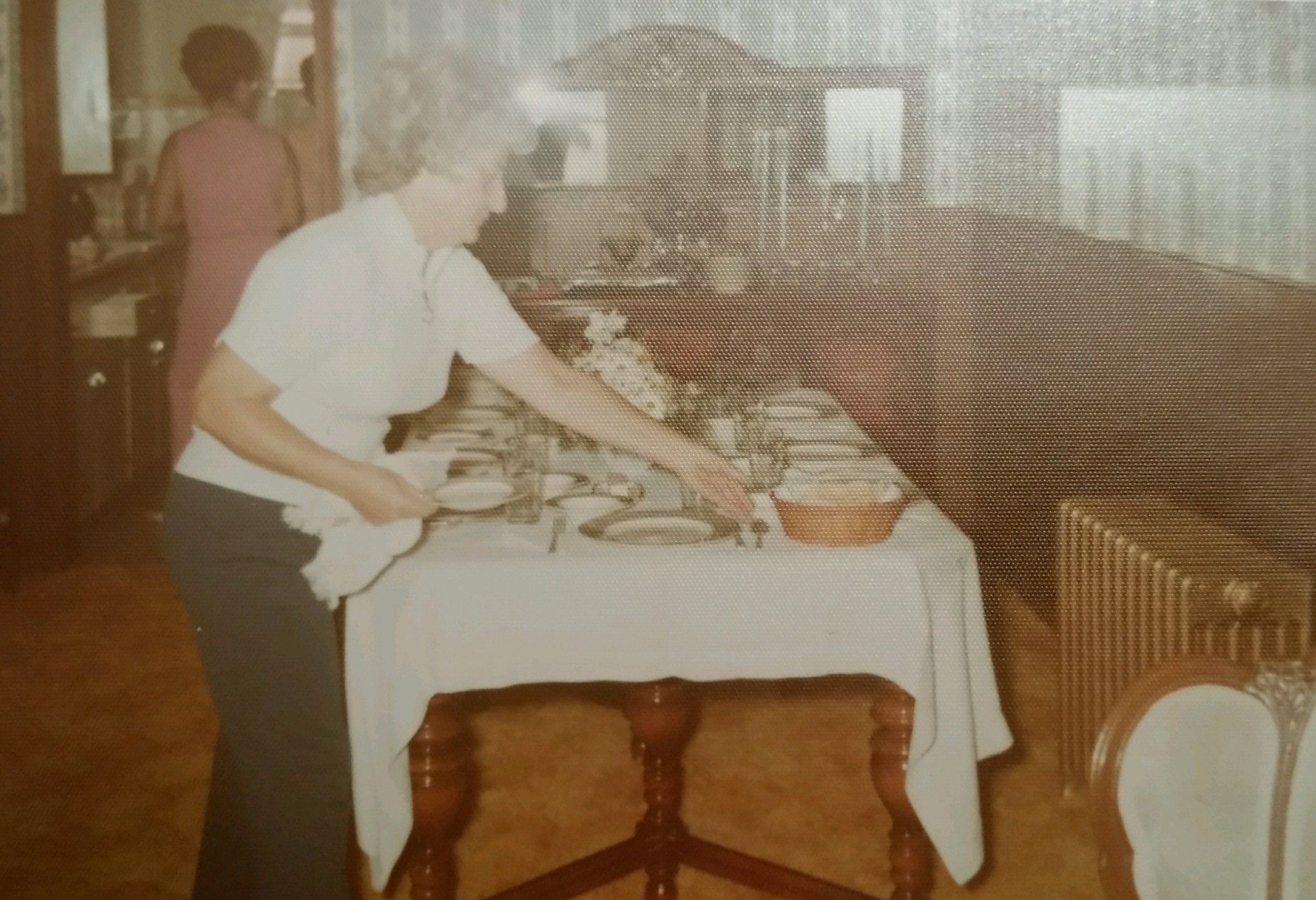
There were little rituals that belonged only to my grandmother, things I paid no attention to then because they seemed as ordinary as the sun coming up over the wheat fields. Looking back now, I realize those quiet routines were part of what made her who she was. She never wore blue jeans, at least not that I can remember. Even on the farm she wore neatly pressed polyester slacks with coordinated tops, clothes that somehow managed to look both practical and put together. At the end of the day, after supper had been cleared away and the dishes were finished, she would take her evening bath and slip into one of her familiar floral housecoats. It wasn't glamorous by anyone else's standards, but to me it was simply Grandma. It meant the work of the day was winding down and the farmhouse was settling into its evening rhythm. Grandpa would ease into his favorite chair, and before long there would be a bowl of freshly popped popcorn in his lap. Nearby sat a little glass dish with a lid, almost always filled with peanuts or mixed nuts for snacking while they watched television together. Looking back, I smile because I don't remember him ever sitting down empty-handed. If he wasn't enjoying popcorn, he was reaching into that little glass dish. After a lifetime of hard work, those quiet evenings—baseball on the television, something to snack on, a cold beer, and Grandma nearby—seemed to be all he really needed.
Every week Grandma went to the beauty shop to have her hair washed and set, and somehow it always looked exactly the way it was supposed to. I never remember seeing her looking disheveled or hurried. She wore simple jewelry that never seemed flashy, canvas shoes that were TG&Y's version of Keds, and just enough perfume that a hug lingered for a moment after she had walked away. Years later I would recognize the fragrance as Gloria Vanderbilt, but long before I knew its name I knew what it meant. It meant Grandma had just passed by. There are some people whose presence is forever tied to a scent, and even now I sometimes think fragrance is one of God's gentlest gifts for helping us remember people we love.
Her bathroom fascinated me almost as much as her kitchen. Children are naturally curious about the mysterious things that belong to grown women, and my grandmother's vanity held treasures that seemed impossibly sophisticated to me. There was always a jar of Pond's Cold Cream, a blue tub of Noxzema with that unmistakable clean scent, and scattered among them were the familiar pink containers of Mary Kay makeup. Those little pink compacts and lipsticks seemed so elegant sitting there on the counter, and she never treated them as though they were too precious for little hands to touch. Instead, she invited me into her world. Sometimes she would sit patiently while I proudly applied her makeup with all the confidence a little girl could muster, never mind that my artistic abilities were questionable at best. Then it was my turn. I would smear on foundation that was entirely the wrong shade for my skin, dust powder over my face, and swipe on lipstick as though I were preparing for the most important event of my young life. We both knew I looked ridiculous. Neither of us cared. The joy wasn't in the makeup itself. It was in the laughter that filled that little bathroom while we played at becoming grown-ups together.
It strikes me now that my grandmother never made beauty feel frivolous. She enjoyed it, certainly. She liked her Mary Kay. She appreciated having her hair done each week. She wore perfume and took care with her appearance before heading into town. But none of it carried the slightest hint of vanity. Beauty, as she practiced it, was simply another way of honoring the life she had been given. She cared for flowers because they delighted her. She cared for her home because it welcomed people. She cared for her appearance because it reflected a quiet sense of dignity. None of those things competed with hard work. They existed alongside it so naturally that I never thought one canceled out the other.
Going into town was its own little mystery to me. There was never any flurry of activity or dramatic announcement that she needed time to get ready. She would simply disappear for a few minutes, and somehow when she returned she looked polished and fresh, ready to climb into the car as though she had stepped out of the pages of one of the magazines lying on her coffee table. As a little girl it felt almost magical, like watching a fairy godmother who needed no wand because she had practiced the art of quiet elegance for so many years that it had become second nature. Only much later did I understand that what looked effortless was anything but. It was the product of small, faithful habits repeated over a lifetime until they became part of who she was.
Evenings on the farm often settled into familiar routines, especially when there wasn't company. Grandpa would claim his chair, and before long the television would flicker to life. On the weekends, it was usually with one of the old movies Grandma loved so much. I grew up meeting Doris Day, Esther Williams, Cary Grant, Rock Hudson, and so many others because Grandma loved introducing them to me. She would call and ask if I wanted to watch a movie with her. I'd jump on my bike and head over! Those actors felt less like distant Hollywood stars and more like old family friends who stopped by from time to time. Sometimes Grandma would ask if I wanted to go to the drive-in because the newest James Bond movie was playing. I would climb into the car wearing my pajamas without giving it a second thought. Looking back, I honestly couldn't tell you much about the movie itself. What I remember is sitting beside my grandmother as the summer night settled over the prairie, completely unaware that I was making one of those memories that would stay with me long after I had forgotten the plot of the film.
Some of my favorite memories happened around the dining table after dishes had long since been cleared away. Someone would suggest a game of Pitch, the cards would come out, and before long laughter would echo through the house. Grandma had a competitive streak that appeared at just the right moments, and whenever the opportunity presented itself she would triumphantly call out, "Shoot the moon!" with a grin that never failed to make everyone laugh. Those moments revealed another side of her that sometimes gets overshadowed by memories of pies and gardens and hospitality. She worked incredibly hard, but she also knew how to enjoy herself. She delighted in movies, games, grandchildren, and simple days spent together. The older I become, the more I admire that balance. She never rushed through life so quickly that she forgot to enjoy it.
As I look back now, what amazes me most isn't any single memory. It's the remarkable consistency of them all. There was never a version of my grandmother reserved for company and another for ordinary days. The woman who quietly planted geraniums around an old concrete cistern was the very same woman who welcomed unexpected guests with fresh coffee and homemade pie, the same woman who opened her Bible each morning before the day began, the same woman who laughed over a game of Pitch, and the same woman who patiently let a little girl cover her face in the wrong shade of Mary Kay foundation.
As a child, I assumed everyone's grandmother lived that way. Only much later did I understand that what I had been witnessing wasn't simply a collection of happy memories. It was the quiet faithfulness of a woman who understood that a beautiful life isn't built through grand gestures, but through thousands of ordinary acts of love repeated over a lifetime.
Years passed, as they always do, and the seasons of our lives changed just as surely as they had on the Kansas prairie. In 1989, my grandparents left the farmhouse that had been home for so many years and moved into town. I have often wondered what it must have felt like to leave a place where every path, every tree, every flower bed held the memories of a lifetime. Yet they carried on the way they always had—with quiet acceptance and unwavering faith. The farm, thankfully, never really left our family. A cousin purchased it and has cared for it ever since with the kind of faithful stewardship my grandparents would have appreciated. There is comfort in knowing those fields are still being tended by someone who understands their history.
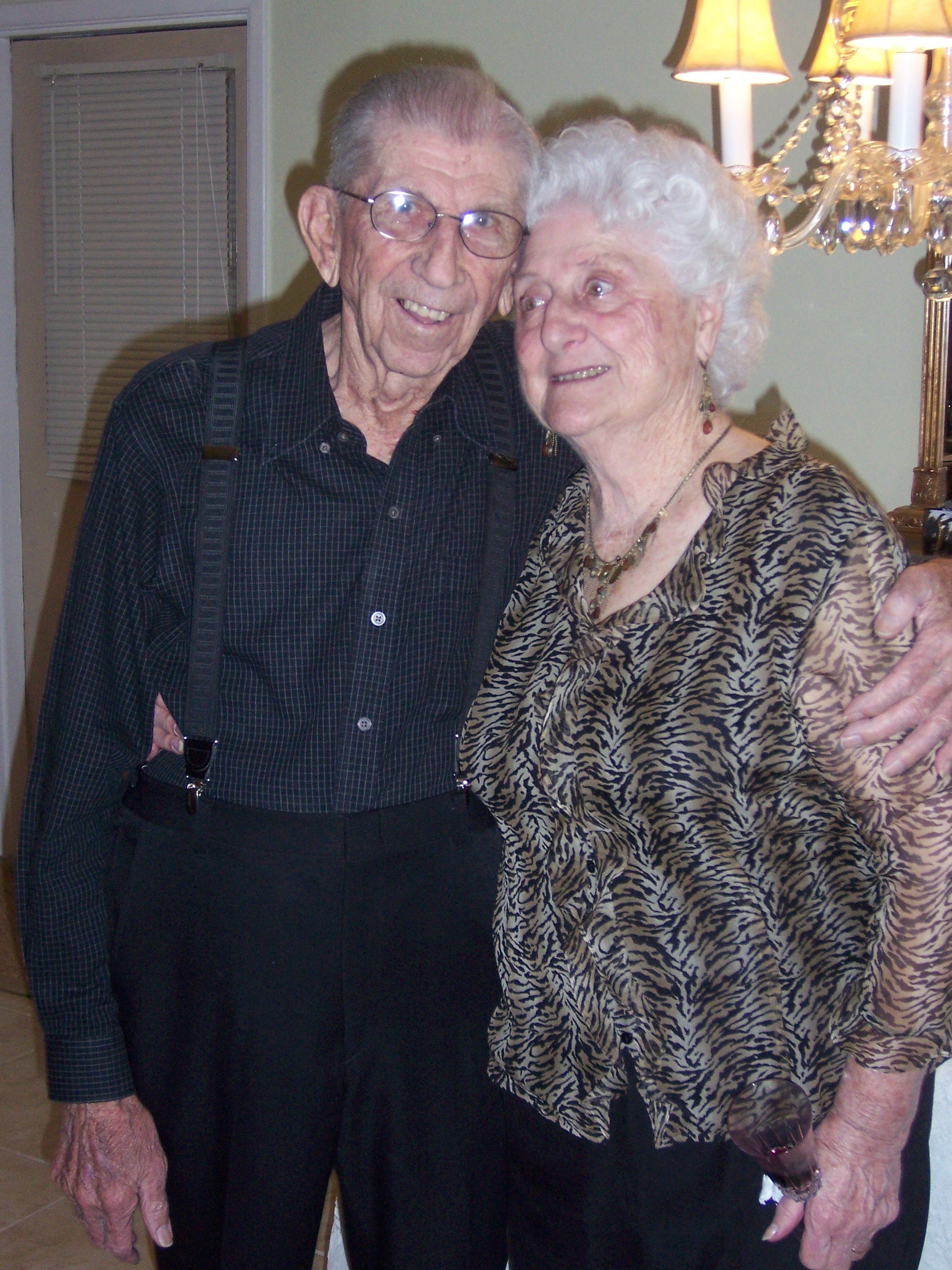
In 2000, another chapter began when they moved to Arizona. The landscape could not have been more different from the rolling wheat fields of central Kansas, yet my grandmother remained wonderfully unchanged. Home had never really been tied to a particular house or a stretch of land. Home was wherever she was. She still welcomed people. She still found beauty in ordinary things. She still began each day with her Bible and the Daily Text. Her faith didn't belong to Kansas any more than her kindness did. Both traveled with her.
When I think about beauty, I realize now that my education began long before I ever stepped inside beauty school. It began in my grandmother's bathroom and around her vanity. It began with jars of Pond's Cold Cream, the unmistakable scent of Noxzema, and those familiar pink Mary Kay compacts that seemed so glamorous to a little girl. She never shooed me away or told me not to touch anything. Instead, she welcomed me into her world. I proudly applied makeup to her face with all the confidence of a child who had no idea what she was doing, and then she would patiently let me cover my own face in foundation that was several shades too dark. We laughed more than we looked in the mirror, and somehow that made it perfect.
Even before I knew what a cosmetologist was, she trusted me with her hair. I can still remember carefully wrapping her hair around rollers, concentrating with complete seriousness, determined to make every curl just right. I smile at the thought of those tiny hands trying so earnestly to help my grandmother feel beautiful. She never corrected me or hovered nearby. She simply trusted me. At the time, it felt like a game. I had no idea those quiet afternoons were planting seeds that would shape the course of my own life. Looking back, I don't know many women who would hand their hair over to a little girl with complete confidence, but Grandma did.
Years later, when people asked why I became a beauty pro, I never thought to connect the answer to those moments. Now it seems impossible not to. Long before I learned about color, skincare, or nailcare, my grandmother had already taught me that helping someone feel beautiful was an act of love. Beauty was never about vanity in her eyes. It was about dignity. It was about taking care of what God had entrusted to you. It was another way of honoring life itself.
Time, of course, continued moving forward, and somewhere along the way our roles began to change. I don't remember the exact moment it happened. There wasn't a single day when I suddenly realized I was caring for the woman who had always cared for me. It happened gradually, the way most meaningful things do.
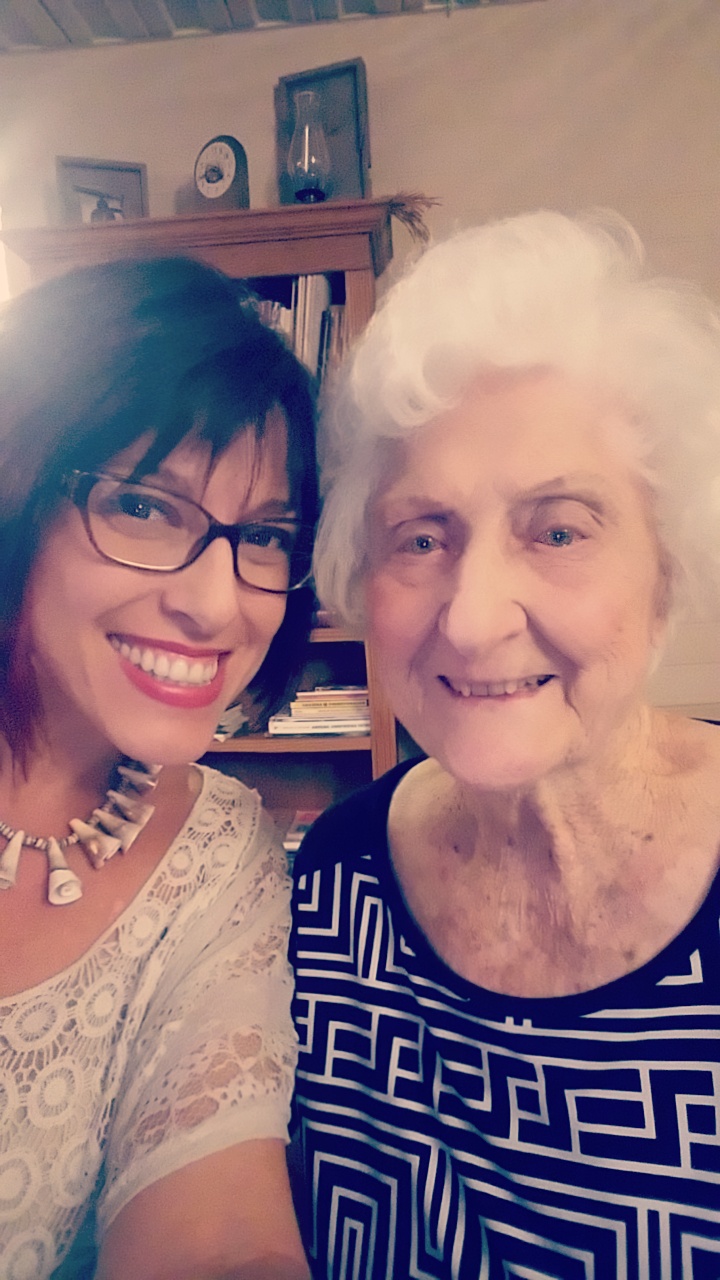
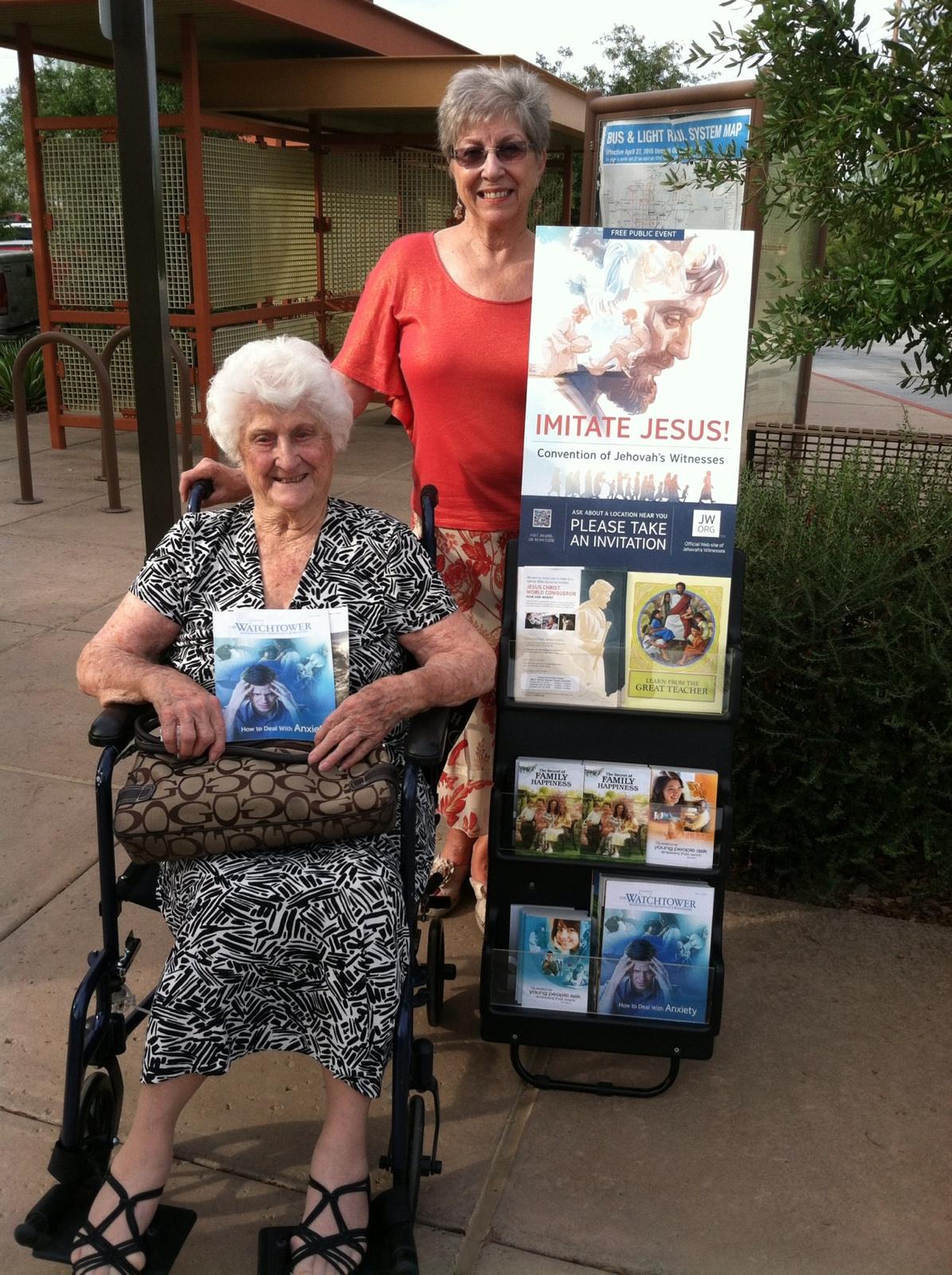
After Grandpa passed away in 2010, Grandma spent the remaining years of her life living with my aunt. Age had slowed her body, but it never seemed to diminish her spirit. She held onto her independence for as long as she possibly could. As long as there was something she was able to do, she did it. She continued making cakes and pies well into her nineties, rolling out pie crusts with the same quiet determination that had filled her farmhouse kitchen for decades. She remained faithful, continuing to do all she could in her service to Jehovah, even as the things she was able to do became fewer. She never measured her days by what she had lost. She simply kept offering what she still had.
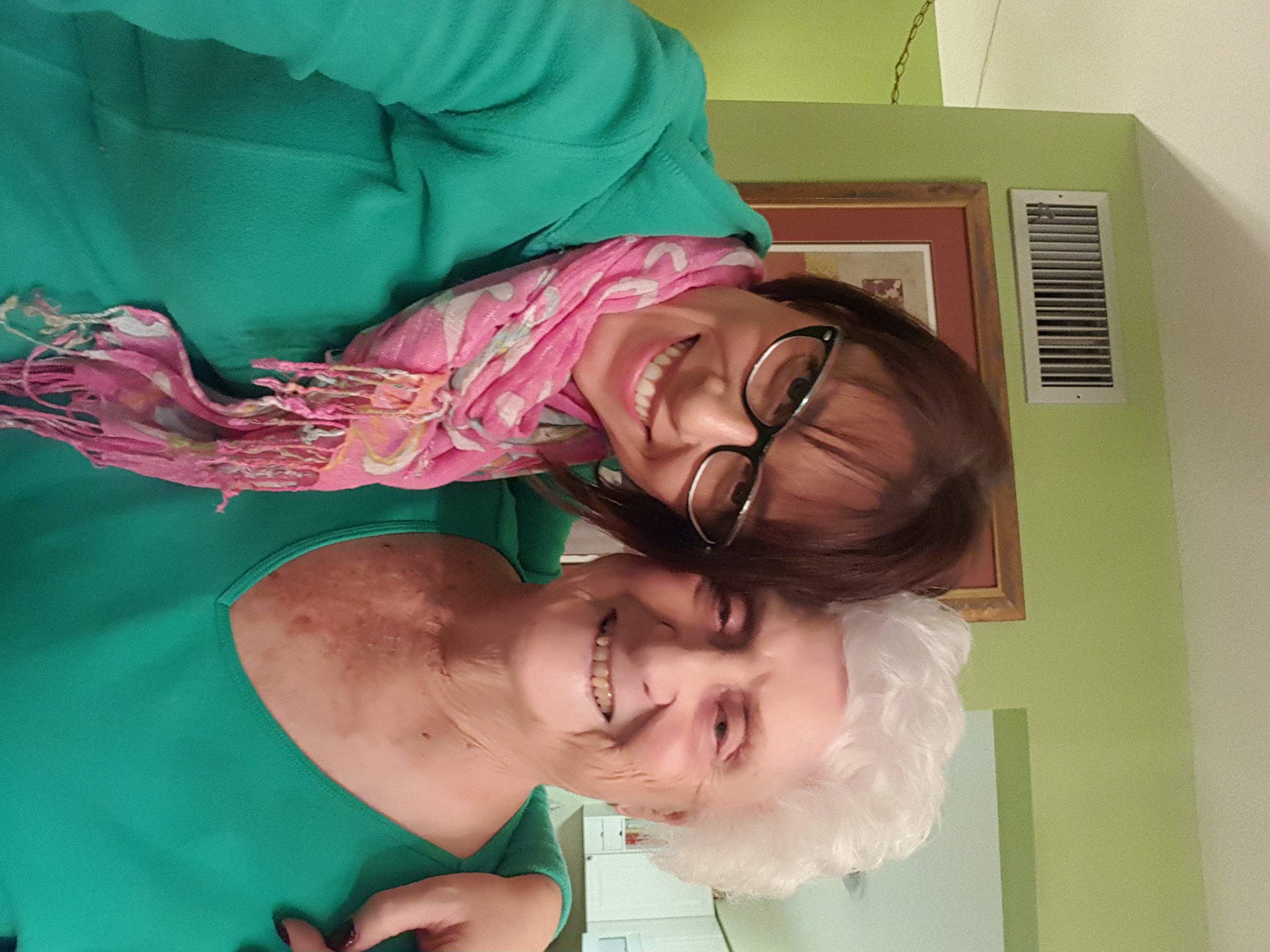
By then, it had become my privilege to care for her beauty needs. The little girl who had once rolled her grandmother's hair was now the woman who lovingly trimmed and shaped her nails into the soft almond shape she had always preferred before brushing on her favorite shade of mauve polish. Sometimes I helped with her hair. Sometimes I simply sat beside her while we talked. Those moments never felt like obligations. They felt like gifts.
I often found myself studying her hands as I held them in mine. They were no longer the strong hands I remembered from childhood. Time had softened them, and the years had written their story across every line. But I knew what those hands had done. They had planted flowers around a concrete cistern because she believed even practical things deserved beauty. They had kneaded bread, rolled pie crusts, canned peaches, gathered vegetables from the garden, folded little dresses, comforted grandchildren, welcomed strangers, opened the Scriptures, and reached across countless kitchen tables in quiet kindness. Holding those hands, I realized I wasn't simply giving her a manicure. I was caring for the hands that had spent nearly a century caring for everyone else.
One afternoon I took Grandma to one of her doctor's appointments. By then, filling out all the paperwork had become difficult for her, so I sat beside her and read each question aloud while she answered. It was a routine we'd settled into without much thought.
"Do you have high blood pressure?"
She answered.
I checked the box.
"Any allergies?"
Another answer.
Another checkmark.
Then I came to the question about arthritis.
"Oh no," she said matter-of-factly. "I don't have arthritis."
I stopped writing.
I slowly laid my pen on the clipboard and looked over at her.
"Seriously?"
She looked back at me, completely puzzled.
I reached over and pointed to what our family had always affectionately called her "scrubbing finger." Years of hard work had enlarged the middle knuckle until her index finger no longer pointed straight ahead. It curved off to the side as though it had chosen its own direction years before.
"Grandma," I said, trying not to laugh, "then why does your finger point due east?"
For just a second she looked at her own hand as though she had never really noticed it before. Then she burst into laughter.
"Oh," she said with a grin. "Well...maybe that is arthritis then."
We laughed until neither of us could speak.
That finger had spent nearly a century kneading dough, gathering vegetables, planting flowers, holding babies...It was the finger that had scrubbed floors, peeled potatoes, rolled pie crusts, canned vegetables, planted flowers, buttoned little dresses, held grandchildren's hands, and served countless meals around a kitchen table. Her hands had earned every line, every wrinkle, every swollen knuckle.
I see the evidence of a life well lived.
And somehow, even in that doctor's office, she reminded me that joy could still be found in laughing at yourself.
She lived just shy of one hundred and one years. That's remarkable, of course, but it isn't what I remember most. What stays with me is how faithfully she lived every one of those years. She never sought recognition. She never imagined anyone would one day write about her life. She simply tended what had been entrusted to her—her family, her home, her friendships, her flowers, and above all, her faith. Day after ordinary day, she chose faithfulness over fanfare, and somehow those ordinary days became an extraordinary life.
Some days I still wonder if I'll ever walk through that farmhouse again. Maybe one day I will. Maybe I won't. Life has a way of surprising us, and hope has a way of lingering longer than we expect.
It comforts me to know that the farm is still in our family, lovingly cared for by my cousin. There is something fitting about that. The land is still being tended by hands that understand its story, just as my grandparents would have hoped.
If I ever walk that familiar sidewalk again, I know exactly where my eyes will wander first. Toward the old cistern. Toward the windmill. Toward the place where bright red geraniums once softened a concrete water tank because my grandmother believed even the most practical things deserved beauty.
And whether those flowers are blooming there or not, I know this much: the woman who planted them never really left that place.
She lives on in the people who continue to care for the farm...and in those of us who carry what she quietly taught us.
I carry it every time I set fresh flowers on the table simply because they make a room feel happier. I carry it every time I welcome someone into my home before worrying whether everything is perfect. I carry it every time I help another woman feel beautiful. I carry it every time I remember that faith is lived not only in places of worship, but in kitchens, gardens, conversations, acts of service, and the ordinary rhythms of everyday life.
My grandmother never sat me down and explained any of those things.
She simply lived them.
And every day, in ways both large and small, I find myself tending the life she first showed me how to grow.