
The Minerals We Forgot
What trace minerals, fulvic acid, the gut-skin axis, and our obsession with hydration have to do with beauty from the inside out
Somewhere along the way, drinking water became a scheduled activity, and I have questions.
I was a kid in the 70s and 80s. We did not have water bottles. We certainly did not have 40-ounce insulated tumblers with handles, reusable straws, matching silicone accessories and little motivational sayings reminding us that we were falling behind on our hydration goals. We had the school water fountain. Remember that thing? You stood in line behind twenty other kids after recess, and when it was finally your turn, you leaned over that questionable little silver fountain and got approximately five or six sips before somebody behind you started yelling, “Hurry up!” If the water pressure was particularly bad, you also had the thrill of trying not to put your mouth directly on the spout that approximately 400 other children had already breathed and drooled on that day. Somehow, this was considered perfectly acceptable.

And that was pretty much it. Maybe you visited the fountain again after lunch. Maybe you got another drink before you went home if you were really living large. Nobody calculated our ounces. Nobody’s mother arrived at school carrying a giant tumbler because we’d forgotten ours on the kitchen counter. There were no lines on the side of a bottle informing us that by 2 p.m. we should have consumed another sixteen ounces or we were failing at hydration. We went outside. We rode bikes. We played on playground equipment that was roughly the temperature of the surface of the sun. Those metal slides in July probably removed several layers of skin, and yet somehow nobody was following us around yelling, “Tara! Have you had your electrolytes?”
Fast-forward a few decades and half of us can’t walk from the house to the car without bringing water. We’ll get all the way to the driveway and suddenly realize we’ve forgotten it. Where’s my water? Did you grab my water? Hang on, I left my water in the house. We’re going to Target. Target has water. There are drinking fountains at Target. There is probably an entire aisle at Target devoted to containers specifically designed to carry water. None of this matters. We need our water. Heaven forbid we leave home without it, because apparently we’re now approximately eleven minutes away from dehydration at all times.

And before anyone thinks I’m making fun of everybody else, please understand that I am very much included in this nonsense. I have an emotional-support water bottle too. Mine is my Frequense tumbler. It goes everywhere with me, and yes, I even have the frequency-charged straw. Because apparently simply drinking water wasn’t enough for me. My water needed accessories. I put SOURCE in it too, so by the time I’m finished preparing my water, you’d think I was doing something considerably more complicated than trying to stay hydrated.
Then there are those bottles with the little time stamps running down the side. Good morning! Keep going! You’ve got this! It’s 2 p.m., you’re still sitting somewhere around the 10 a.m. line, and now you’re being passive-aggressively judged by your own beverage container.
All of which eventually made me wonder: Were we all just walking around dehydrated in 1982 and didn’t know it?
The more I thought about it, the funnier the question became, because human beings obviously didn’t suddenly develop a biological requirement for a Stanley-sized beverage within the last twenty years. Our bodies have systems for regulating fluid balance. Thirst is part of that regulation. Our kidneys continuously adjust water and electrolyte balance, and we get water from food as well as beverages. Our individual fluid needs aren’t identical either; activity, temperature, diet, age, health and other factors all change the equation. There are absolutely circumstances where paying closer attention to fluids and electrolytes matters, but the human body is not operating according to the motivational lines printed on the side of a plastic jug.
And that’s when my question changed.
Instead of wondering whether I was drinking enough water, I started wondering why we had made water itself synonymous with hydration. Because once that water gets into the body, it enters a biological system considerably more sophisticated than pour water in here and hope for the best. Fluid balance involves the kidneys, hormones and electrolytes such as sodium and potassium. Minerals are involved in nerve signaling, muscle function, enzyme activity, energy metabolism and hundreds of other processes happening whether or not we remembered to bring our tumbler to Target.
Naturally, that sent me down another rabbit hole: minerals.
Minerals aren’t particularly glamorous. Nobody is holding a magnesium ion between two perfectly manicured fingers in a skincare commercial. We don’t give them nearly the attention we give peptides, retinoids, adaptogens or whatever ingredient the wellness internet has collectively decided is going to change our lives this month. Yet magnesium alone acts as a cofactor in hundreds of enzyme systems involved in things like energy production, protein synthesis, nerve and muscle function, and the movement of other ions across cell membranes. Zinc is involved in immune function, DNA and protein synthesis, cell division and wound healing. Iodine is required to make thyroid hormones. Iron is central to oxygen transport. Copper, selenium, manganese and other micronutrients all have their own jobs.
This is also where the word trace can fool us a little. A trace mineral isn’t called that because its job is insignificant; it means the body requires it in a relatively small amount. Small requirement, potentially enormous responsibility. The more I learned about that, the stranger it seemed that we could spend so much time discussing ounces of water while barely mentioning the tiny mineral players involved in the physiology happening underneath it all.
Which eventually brings me to the weird black stuff I put in my water.
SOURCE contains black fulvic mineral powder along with potassium carbonate, sea salt, sodium chloride and minerals including magnesium, iodine, iron, calcium, chromium, selenium, zinc, copper, manganese and molybdenum. Once I started trying to understand what fulvic actually meant, I disappeared completely, because now we weren’t just talking about a supplement anymore. We were talking about soil, organic matter, microorganisms, decomposition, minerals and this extraordinary chemistry that has been happening in the earth for an awfully long time without asking for our opinion.
Fulvic substances belong to a complex family of organic materials associated with the transformation of biological matter in the environment. Fulvic acid isn’t simply another name for trace minerals, nor is every fulvic material exactly the same. Its characteristics can vary depending on where the material originated and how it was processed, which becomes important when we start looking at research. A study involving one particular fulvic preparation doesn’t automatically tell us that every fulvic product will behave identically inside the human body. I don’t see that as a reason to dismiss the subject. I see it as a reason to pay closer attention to what was actually studied.
Maybe that’s the herbalist in me. Maybe it’s my faith. Probably both. But somewhere in the middle of reading about minerals and soil and fulvic substances, I kept coming back to something I’ve known since I was a little girl: we were made from the dust of the earth.
Genesis says that God formed man from the dust of the ground and breathed life into him, and the more I learn about the human body, the more beautiful that imagery becomes to me. Not because our bodies are literally a scoop of garden soil with a pulse—good grief, that would be a scientific stretch—but because the physical materials that make us are not separate from creation. Oxygen, carbon, calcium, phosphorus, potassium, sodium, magnesium, iron, zinc and copper are elements found throughout the natural world, and they are part of us too. We are living, breathing beings, yet the raw materials from which our bodies are built are remarkably earthly.
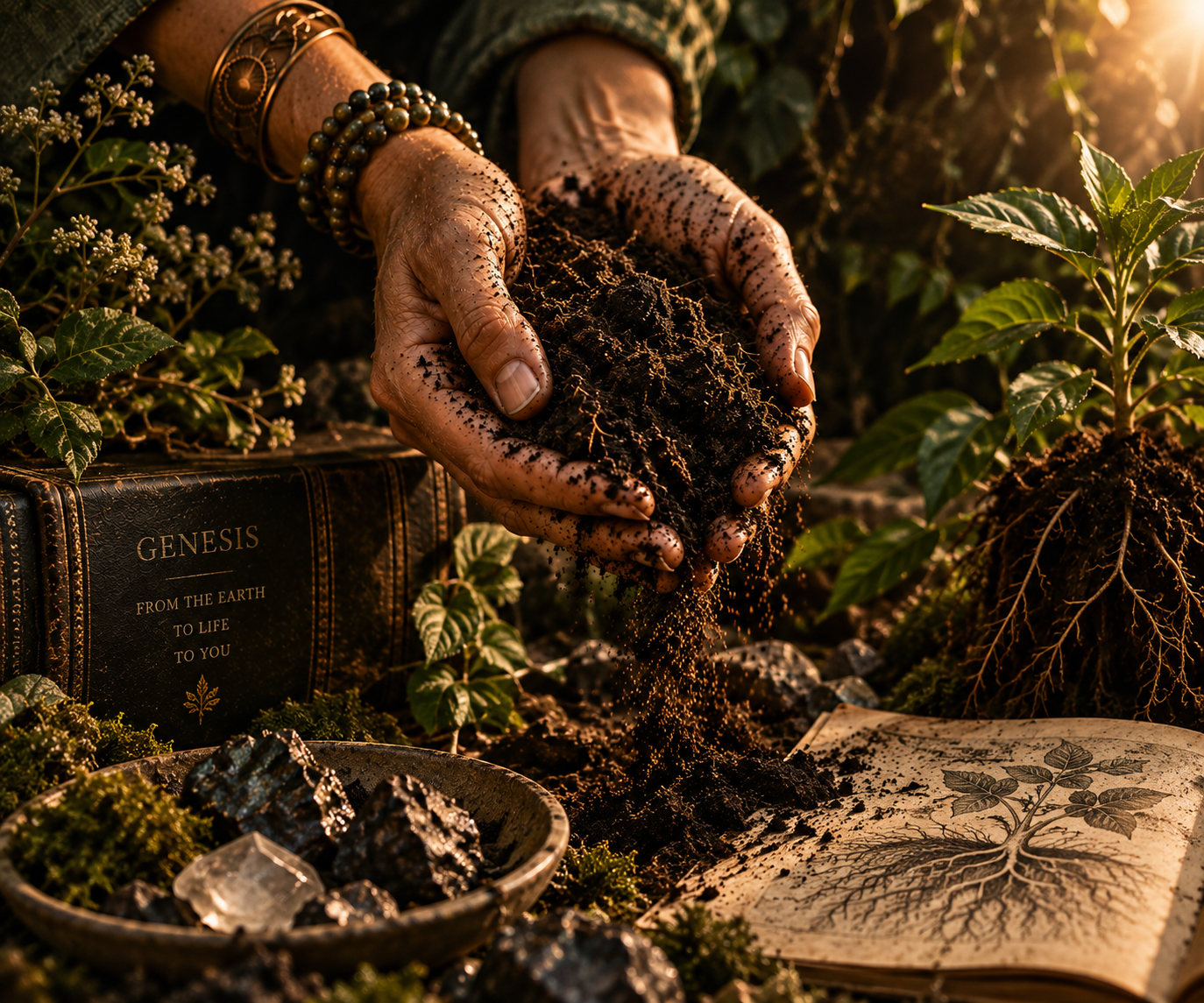
And here I am, thousands of years after those words were written, putting this strange black fulvic mineral material into my emotional-support water bottle and learning about the transformations of organic matter that take place in the earth. I don’t need to turn that connection into a scientific claim that it isn’t. Science can tell me what elements are present in the human body. It can study minerals, microorganisms, soil chemistry and fulvic substances. My belief that there is intention behind all of it belongs to my faith. But I don’t have to separate the wonder of one from the curiosity of the other.
In fact, I think that’s the part that gets me. We spend so much money trying to become healthier, more hydrated, more nourished and, yes, more beautiful. We formulate things. We extract them. We isolate them, encapsulate them, patent them, put them into beautiful little bottles and give them very sophisticated names. Meanwhile, some of the elements our bodies require have been beneath our feet all along.
There is something almost poetic about that to me.
From dust we were formed, and from the earth we are still nourished.
Maybe that’s also why this stopped feeling like an article about something I put in my water. The farther I followed the minerals, the more I kept coming back to the body itself. If minerals are woven into the ordinary workings of the human body—into enzymes and energy production, thyroid function, oxygen transport, nerves, muscles and fluid balance—then they aren’t sitting in some separate little “wellness” category. They’re part of the machinery. And once I started thinking about the body that way, it was only a matter of time before my brain wandered back to the thing I spend an awful lot of time thinking about anyway: skin.
Because of course it did.
The deeper I’ve gone into holistic skin, the less capable I am of looking at someone’s face as though it exists independently from the human being attached to it. For years, beauty trained us to look almost exclusively at the surface. Dry skin? Put something on it. Oily skin? Strip something off it. Breaking out? Attack it. Dull? Exfoliate it. Fine lines? Correct them. Then correct the correction with another correction, preferably one packaged in a tiny bottle that costs more per ounce than something they keep behind glass at the jewelry store.
Don’t misunderstand me. I love skincare. You will pry my skincare from my moisturized little hands.
But skin is an organ, not wrapping paper.
And once you really understand that, beauty gets a whole lot bigger.
Your skin shares a body with your hormones, immune system, nervous system, bloodstream and digestive tract. It lives through your sleepless nights with you. It experiences stress with you. It responds to hormonal shifts. It requires nutrients. It maintains its own barrier and its own microbial ecosystem. And increasingly, researchers are studying the ways the skin communicates indirectly with another enormous microbial ecosystem inside us: the gut microbiome.
The term for this is the gut-skin axis, and this is where I think the science becomes fascinating because we’re no longer talking about the vague wellness idea that “everything starts in the gut.” Researchers are studying a bidirectional relationship involving microbial metabolites, immune signaling, inflammatory pathways, intestinal and skin barrier function and other biological messengers. Changes in intestinal microbial communities have been associated with several inflammatory skin conditions, including acne, psoriasis and atopic dermatitis. That doesn’t mean the gut single-handedly caused those conditions, but it does tell us these systems are considerably less isolated from one another than we once imagined.
In other words, your intestines and your face aren’t sending each other text messages, but they aren’t strangers either.
And can we just appreciate for a moment how bizarre the microbiome is? We walk around every day carrying enormous communities of microorganisms on us and inside us, and most of the time we don’t give them a second thought. The gut microbiome isn’t simply a bucket containing “good bacteria” and “bad bacteria.” These organisms interact with what we eat, produce metabolites, communicate with the immune system and participate in an extraordinarily complicated biological environment. Some of the compounds produced by gut microbes can influence processes beyond the intestinal tract, which is one reason researchers are so interested in how changes in those microbial communities might affect the skin.
This is also where I try to resist the internet’s tendency to discover one interesting connection and immediately make it responsible for everything. Acne is a perfect example. Acne is not simply “toxins coming out through the skin,” nor is it automatic proof that somebody has a bad gut. Sebum matters. Hormones matter. Follicular keratinization matters. Inflammation, genetics and the skin microbiome matter. Researchers are increasingly investigating whether the intestinal microbiome is another piece of that puzzle, but human biology rarely hands us one tidy villain. That is terribly inconvenient if you’re trying to make a fifteen-second Reel, but much more interesting if you’re actually trying to understand the body.
This is also where I try to resist the internet’s tendency to discover one interesting connection and immediately make it responsible for everything. Acne is a perfect example. Acne is not simply “toxins coming out through the skin,” nor is it automatic proof that somebody has a bad gut. Sebum matters. Hormones matter. Follicular keratinization matters. Inflammation, genetics and the skin microbiome matter. Researchers are increasingly investigating the intestinal microbiome as another piece of that puzzle, but human biology rarely hands us one tidy villain. That is terribly inconvenient if you’re trying to make a fifteen-second Reel, but much more interesting if you’re actually trying to understand the body.
And this is where my original question about fulvic acid came wandering back into the room.
If the intestinal environment and the communities living there can influence processes that reach beyond the gut, including pathways connected to the skin, then I wanted to know what researchers had actually found about fulvic substances inside that environment. Not what somebody put on a sales graphic. Not what somebody repeated in a Facebook group. What had actually been studied?
That’s where the research gets especially interesting, but also where you have to keep your reading glasses on because not all studies are answering the same question. Researchers have investigated fulvic substances for antioxidant and inflammatory activity, interactions with other compounds and effects within the gastrointestinal environment. Experimental and animal research has also explored what happens to intestinal microbial communities and gut-related markers when particular fulvic preparations are introduced.
And that was the connection I had been looking for. Not “fulvic acid clears acne.” That would be jumping several chapters ahead in a book science is still writing. What interested me was that there is research underneath the conversation about fulvic substances and the gut. If the gut environment is one of the many systems capable of influencing what eventually shows up in the skin, then understanding what fulvic substances may be doing there becomes relevant to someone like me who looks at beauty from both the inside and the outside.
There’s a tendency in wellness to take preliminary research and immediately turn it into certainty. There’s an equal tendency on the other side to look at anything that hasn’t accumulated decades of large human trials and declare the entire subject nonsense. Neither position interests me very much. I’d rather know what researchers have actually found, what kind of study produced the finding, and what question they’re asking next.
That isn’t wishy-washy. That’s one of the things I’ve come to appreciate about science: “We found something; now we need to understand it” is not a disappointing answer. Sometimes that’s where the most interesting part begins.
The same thing applies to that enormous wellness word detox. Our bodies already have sophisticated systems for processing and eliminating substances, with the liver and kidneys doing a tremendous amount of that work and the gastrointestinal tract participating in metabolism, barrier functions and excretion. Fulvic and humic substances are chemically interesting partly because they can interact with other molecules and metals, which is one reason so many detoxification claims have become attached to them. But showing that a substance binds something under particular experimental conditions isn’t automatically the same as showing that swallowing a particular supplement will remove a clinically meaningful amount of that substance from a human body.
You’ll hear claims about heavy metals, microplastics, mold, parasites and all sorts of things. Some of those questions are being investigated. Some have more evidence behind them than others, and some have been carried considerably farther by marketing than human clinical research has taken them. I’m perfectly comfortable leaving those questions open while researchers continue doing the work. I don’t need fulvic acid to perform seventeen miracles before breakfast in order to find it fascinating.
After a while, I realized there was already plenty here to think about without asking one substance to explain everything. Minerals have established jobs throughout the body. The microbiome is far more involved in human physiology than most of us understood even a generation ago. The gut and skin communicate through measurable biological pathways. Nutrition, hydration, hormones, sleep, stress and immune function don’t exist in separate little rooms; they belong to the same human being. And that human being is the one whose skin we’re staring at in the mirror wondering why it suddenly decided to lose its mind.
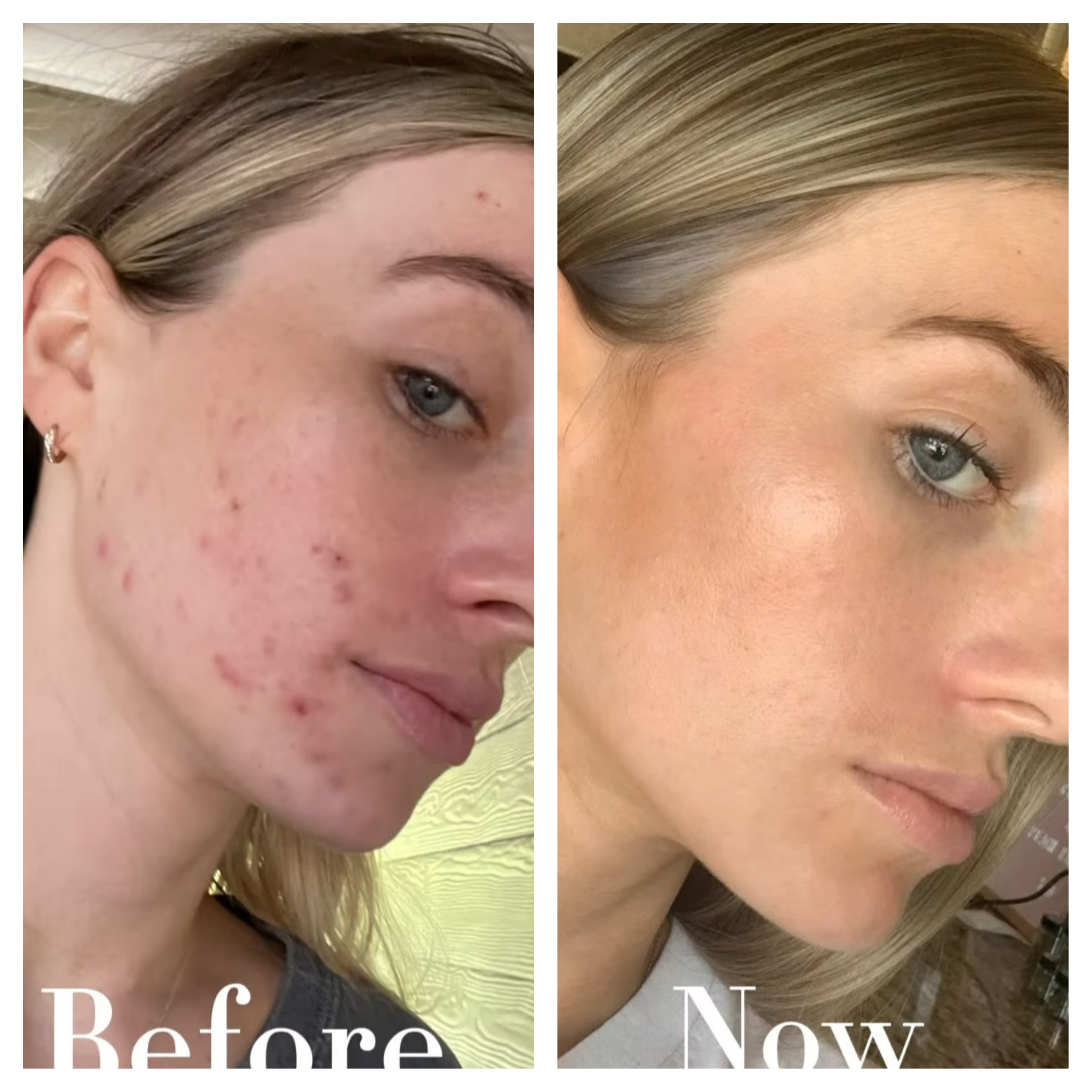
That’s also why the before-and-after photographs I have of skin transformations, including acne, mean so much to me. Most of the time, I’m not looking at those photographs wondering what happened in between. I know what happened, because I was part of the conversation. I may have recommended changes to their skincare routine, helped them simplify what they were putting on their skin, suggested they look more closely at nutrition or hydration, or encouraged them to consider what else was happening in the body instead of treating the breakout as though it existed only on the surface. Then they went home and actually did the work. They followed through, stayed consistent, and somewhere along the way their skin began to change.
What I can’t do—and honestly don’t feel the need to do—is look at a transformation where several things changed together and pretend that one single intervention deserves all the credit. Real people don’t live in laboratories where we change one variable at a time. If someone changes their skincare, begins paying attention to nutrition, supports hydration, gets more consistent with their routine and starts looking at their health more holistically, all while their skin becomes clearer and calmer, I’m interested in the whole story. That’s what those photographs represent to me. They’re not random observations of skin that mysteriously improved; they’re visual records of what can happen when someone follows through on a thoughtful plan and we stop treating the skin like an isolated surface disconnected from the person underneath it.
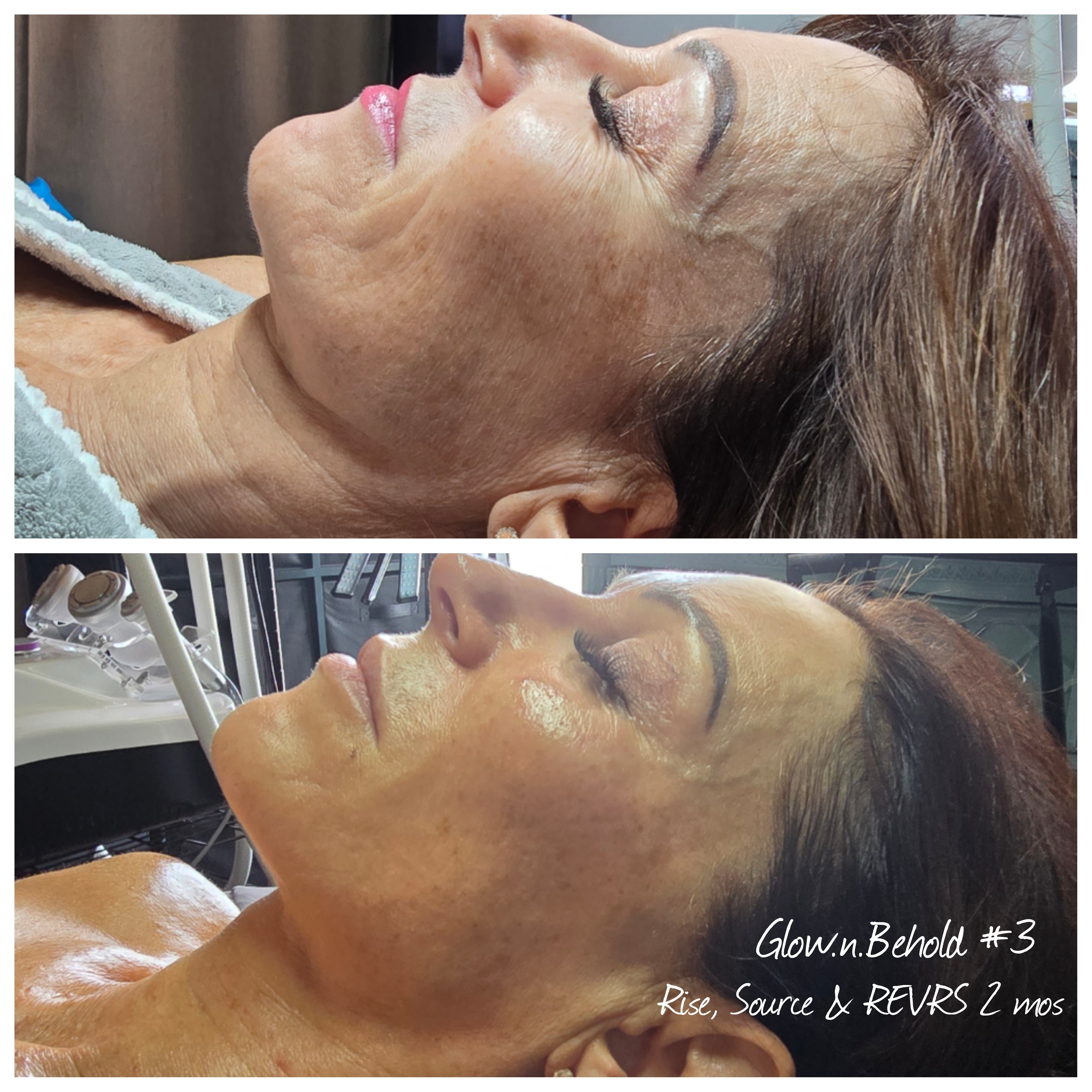
I can choose the right cleanser. I can support the skin barrier. I can help somebody stop exfoliating their poor face into next Tuesday. Those things matter enormously. But I don’t have to pretend the rest of the body disappears when somebody gets on my treatment table.
That may be one of the biggest shifts in my understanding of beauty. “Inside-out beauty” doesn’t feel like a cute marketing phrase to me anymore. It feels like a recognition of physiology. Skin participates in immune signaling. It requires adequate nutrients. It responds to hormones and stress. It has its own microbiome while existing in a body with another vast microbial community in the gut. Minerals such as zinc, magnesium, iron, iodine, copper and selenium have established physiological roles throughout that body, and both deficiencies and excesses can have consequences.
That last part is important too, because once wellness gets excited about something, our next instinct tends to be MORE! If a little is necessary, surely a lot must be spectacular. Except the body doesn’t work that way. More zinc isn’t automatically better zinc. More selenium isn’t automatically better selenium. Minerals can interact with one another, excessive supplementation can cause problems, and individual needs differ. The body, as it turns out, is not particularly impressed by our enthusiasm. It likes balance.
So after all of this—school water fountains, giant tumblers, minerals, the earth, microbes, intestines and acne—why do I personally put SOURCE in my water?
The answer is actually pretty simple. It’s part of my wellness routine. I like incorporating trace minerals. I’m fascinated by fulvic substances, and I want to keep following the research as it develops, particularly around the intestinal environment and microbiome. SOURCE fits into the larger Frequense system I’ve chosen to use, and yes, that is also why I have the Frequense tumbler and the frequency-charged straw.
We have officially come full circle to the straw.
The frequency aspect belongs in a different evidence category from things like magnesium physiology or clinical research on the gut-skin axis. Frequense describes its technology in terms of harmonic frequencies and bioenergetic support. That is part of what interests me personally and part of my own wellness practice. I’m comfortable saying that without pretending it has the same body of conventional clinical evidence behind it as the established biological roles of essential minerals.
Actually, I think I’ve become rather comfortable living in that place: somewhere between reverence and research. I can love herbs and still read the study. I can believe deeply in the intelligence of God’s creation and still ask what the evidence actually demonstrates. I can use something because it makes sense within my own wellness philosophy without needing to tell everybody else that they must use it too. And I can get excited about emerging research without turning promising into proven.
Maybe that’s why this particular rabbit hole feels so perfectly at home in The Alchemy of Beauty. I thought I was writing about trace minerals, and somehow I ended up writing about childhood water fountains, fulvic acid, the earth, microorganisms, intestines, acne, creation and a frequency-charged straw. Which, if you’ve spent any amount of time with me, is probably not surprising. Give me one innocent question and access to the internet and apparently this is what happens.
But underneath all those tangents, I think I finally figured out what I was trying to understand. The longer I’ve worked in beauty—and especially since moving professionally into holistic skin—the less interested I’ve become in separating beauty from the body that creates it. I still love a beautiful cleanser. I still love serums and masks and red light and all the lovely things sitting in my bathroom, and nobody needs to worry that I’m giving any of those up. I simply don’t believe the story begins there anymore.
Beauty begins much farther underneath the surface, in systems and processes we can’t see when we look in the mirror: hormones and nutrients, sleep and stress, immune signaling and microbial communities, water and electrolytes, and minerals required in amounts so small that we call some of them trace even though the work they participate in is anything but insignificant.
Which means I will probably continue carrying my emotional-support water bottle everywhere I go, despite apparently surviving my entire childhood on six hurried sips from a questionable elementary-school drinking fountain. The ridiculously fancy straw is staying too, and so is the weird black stuff I put in my water.
But I suspect I’ll think about all of it differently now.
What started as curiosity about hydration somehow brought me all the way back to the earth—to minerals, microbes and the strange beauty of realizing how connected the human body still is to the natural world it came from. And perhaps that is the part I had forgotten, long before I ever started wondering what was in my water.
Maybe the minerals were never really forgotten after all.
Maybe we forgot how close to the earth we still are.