My Skin Is Better at 54 Than It Was in My 30s. Here’s What Changed.
Here’s What Changed.
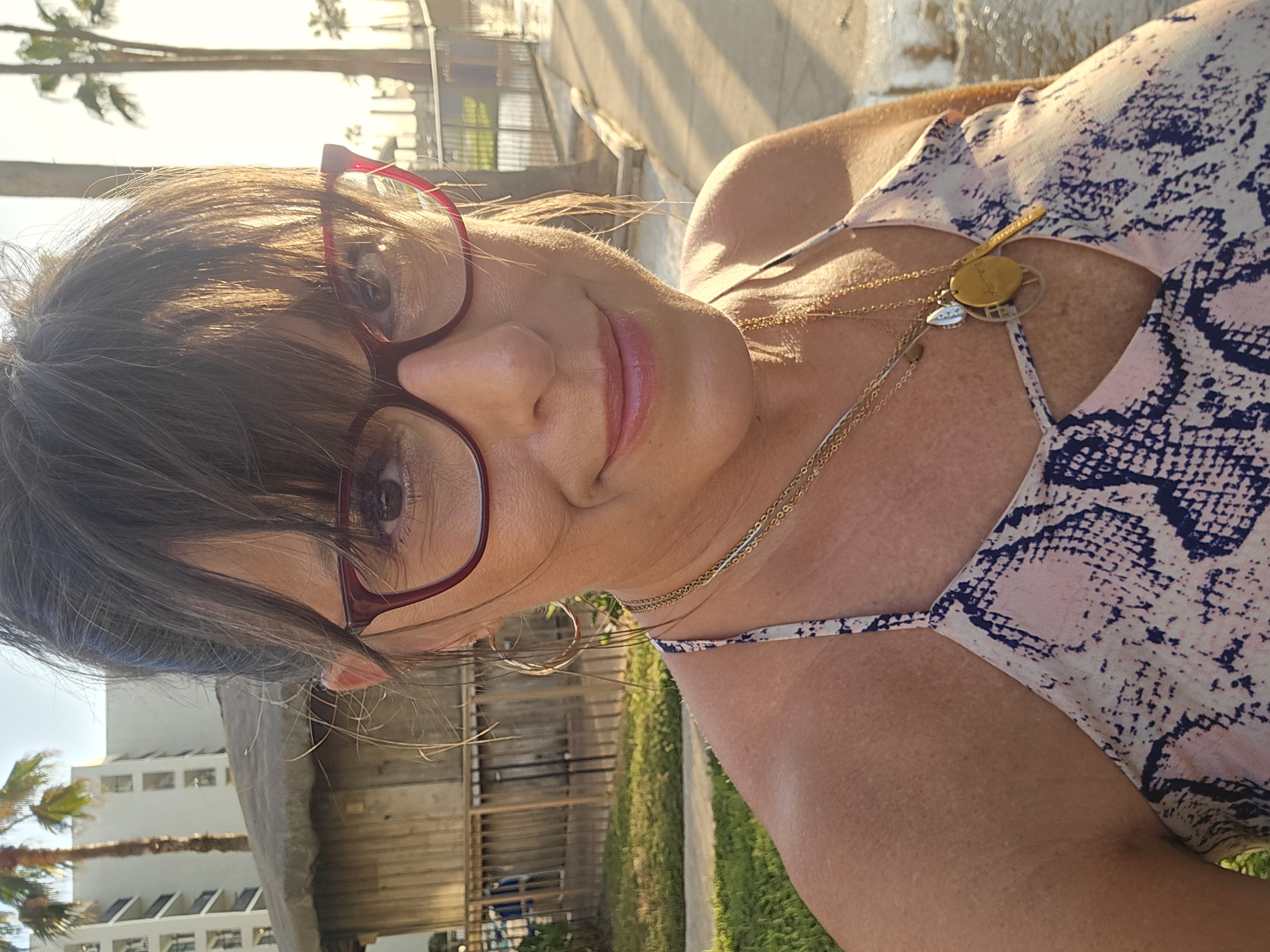
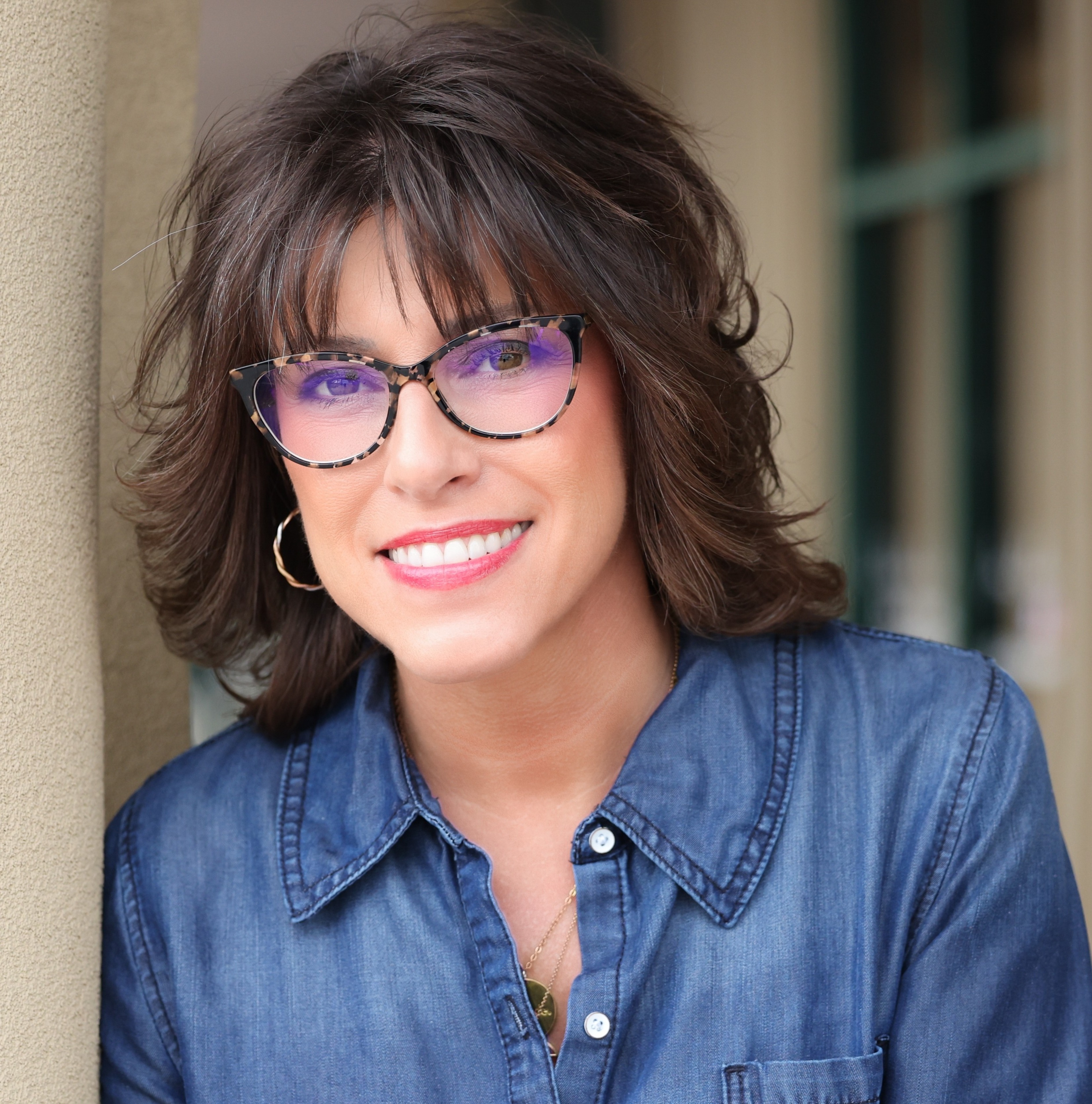
I turn 54 tomorrow, which is a slightly strange sentence to type because I'm not entirely sure when that happened. Obviously I understand how calendars work, and I've been present for all fifty-three years leading up to this moment, but there are still times when the number attached to my age seems to belong to somebody else. I'm not upset about turning 54. In fact, the older I get, the more interested I become in what happens when women stop treating aging like an emergency and start getting curious about what their bodies are actually doing. That particular thought could probably send me down an entirely different rabbit hole, and knowing me, it eventually will, but lately I've been thinking about something much more specific: my skin.
Here's the part twenty-five-year-old me absolutely would not have predicted. My skin is better now than it was in my 30s. I don't mean younger, because those are two very different things, and I'm not going to sit here at almost 54 and pretend I've discovered some secret portal back to 34. I have lived in this face for fifty-four years. It has spent time in the sun, laughed until it hurt, cried over people I loved, stayed up too late, survived stress, grief, hormonal changes, questionable decisions, probably not enough water on more days than I'd care to admit, and everything else that comes with actually being alive. There are signs of all of that on my face, and I'm surprisingly okay with them.
When I say my skin is better, I'm talking about something else entirely. It's clearer and calmer than it used to be, but even that doesn't quite explain it. I understand it differently now. I pay attention to it differently, and I'm much less likely to look at something happening on the surface and immediately declare war on it. That relationship took me a very long time to develop, because my skin and I have been negotiating with each other since long before I ever imagined I would work professionally in holistic skin.
I had blackheads when I was young, and I had acne on my back that bothered me enough that eventually my dad got involved. Dad was a contractor and a natural fixer, and if there was a problem in front of him, his instinct was to figure out what could be done about it. Apparently teenage back acne was no exception. At some point during what I will now refer to as the Great Back Acne Era, he made me a poultice using carrot, goldenseal, and echinacea and put it on my back. I don't remember exactly how he arrived at that particular combination, and I am absolutely not including this story so anyone leaves here thinking Tara has just handed out a homemade acne recipe. What I remember very clearly is that it turned my entire back orange.
And I mean orange. Not a subtle golden glow that might have inspired an expensive self-tanner thirty years later. I looked like the carrots had successfully completed their mission and claimed me as one of their own. Whether that poultice ultimately did anything remarkable for my acne has disappeared somewhere in the years between then and now, but the orange part has remained firmly lodged in my memory. I laugh about it now because there was something so completely Dad about the whole thing: there was a problem, he loved me, and by God, we were going to try something. It may not have been elegant, but there was a lot of love underneath those carrots.
Unfortunately, puberty eventually left and the skin problems did not politely leave with it. I continued having issues throughout my twenties and into my mid-thirties, although adulthood apparently gave my skin the confidence to become more creative about where it expressed itself. I would get pimples on my neck, my arms, my back, and occasionally my butt cheek, which just felt unnecessarily rude. There is something particularly offensive about discovering a pimple on your butt as a grown woman because at least a breakout on your face has the decency to participate in the traditional acne experience. A butt pimple feels personal, like my skin had surveyed all available real estate and deliberately chosen chaos.
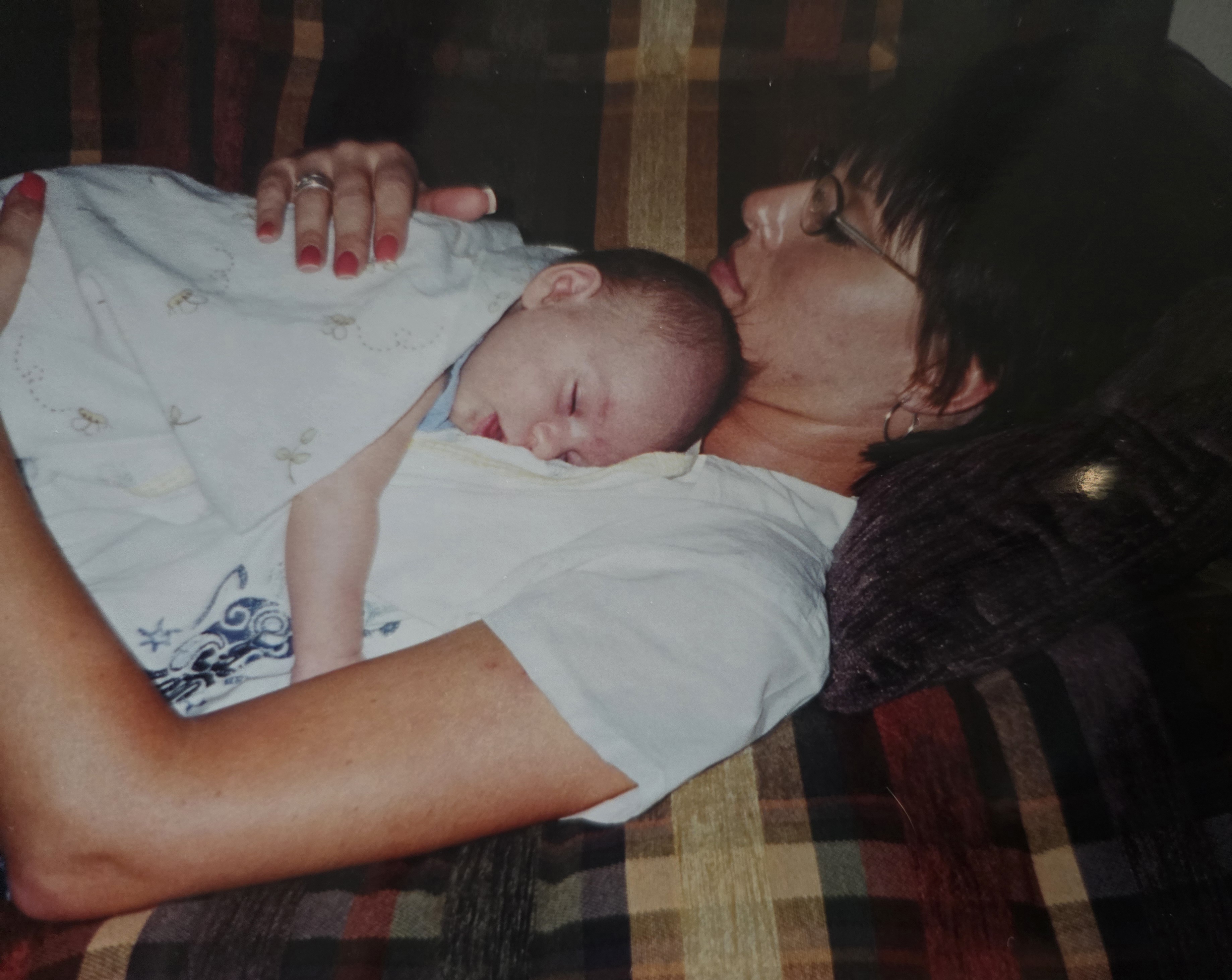
At the time, though, I wasn't thinking about any of this the way I do now. Something was happening on my skin, so naturally I thought the problem was my skin, and therefore the answer must belong there too. Clean it more thoroughly, dry it out, scrub it, put something on it, wait for it to go away, and then repeat the process the next time something appeared. I wasn't standing in front of the mirror wondering what I'd been eating or whether an ingredient in something I ate regularly agreed with me. I wasn't thinking about hormones or digestion or stress or inflammation or the countless other things happening inside a human body at any given moment. I just wanted the damn pimple to go away.
It's funny to look back on that now because the way I think about skin has changed so dramatically, but I want to be careful not to rewrite my own history with what I know today. I've spent more than twenty years in the beauty industry, but I have not spent more than twenty years working professionally with skin, and that's an important distinction to me. My professional journey into holistic skin didn't begin until 2024. Before that, I had decades of personal experience with difficult skin and an increasingly ridiculous number of questions about the human body, but I wasn't a skin professional. I never want the fact that I know more now to turn into pretending I knew it all along.
One of the things that began changing my perspective happened years before I entered skin professionally, when I had food allergy testing done. By then, like most people who have spent any amount of time paying attention to health, I had accumulated plenty of ideas about what I was supposed to eat. There were healthy foods and unhealthy foods, things everyone told us to eat more of and things we were supposed to avoid, and I genuinely thought I was making good choices. Then my results came back and I learned that some of the foods I had been eating regularly—the very things I thought were healthy for me—were foods I was sensitive to or, in some cases, allergic to. That was one of those moments when the neat little categories I'd built in my head suddenly became a lot less neat.
The word healthy started bothering me after that, or at least the way we tend to use it as though the human body has agreed to one universal rulebook. A food can contain all sorts of nutrients and still not be appropriate for a particular person. Something can be organic, expensive, enthusiastically recommended by half the wellness internet, and arranged beautifully in a bowl on Instagram, and your individual body can still say, “Absolutely not.” As I changed what I was eating and became more aware of the processed foods and ingredients I had come to recognize as problematic for me, I noticed changes in my skin too. I wasn't yet looking at skin through the professional lens I have now, but I was beginning to understand that what showed up on the outside of my body might not always be a story that began there.
That doesn't mean I now look at every breakout and blame food, and I don't want my personal experience turned into one of those sweeping wellness statements that travels around the internet until everybody is terrified of tomatoes. I'm not saying food sensitivities are the explanation for someone else's acne, nor am I saying everyone with skin problems needs to run out and have the same testing I had. I'm saying that in my case, changing what I was putting into my body coincided with changes I could see on my skin, and that experience made me more curious about the connection. It was one of many moments over the years that nudged me away from asking only, What can I put on this? and toward asking the much more interesting question, What else is going on?
I didn't know at the time how important that question would eventually become. Life kept moving, my body kept changing, and somewhere along the way I became the woman who cannot hear an interesting explanation about hormones, nutrition, ingredients, minerals, inflammation, metabolism, or the microbiome without opening another browser tab and accidentally giving herself three hours of homework. By the time I stepped into holistic skin professionally in 2024, I wasn't arriving with twenty years of professional skin expertise tucked neatly under my arm. I was arriving with something messier and, in some ways, more useful: decades of living in a body I had spent a very long time trying to understand.
Once I started studying skin professionally, something interesting happened. I began finding language for experiences I'd already lived through, and there is nothing quite like learning something at 52 or 53 and immediately thinking, Well, that information would have been handy twenty years ago. Things that had seemed random when I was younger began to look less random, although I am very careful now about the temptation to explain everything neatly in hindsight. Bodies don't work like murder mysteries where we discover the one guilty party in the final chapter and suddenly every clue makes sense. The more I learn about skin, the more I realize how many systems are constantly talking to one another, and how dangerous it can be to take one connection and turn it into the explanation for everything.
So What Am I Actually Doing Differently?
If you've made it this far, you may be wondering when I'm finally going to tell you what I actually do now, because “I learned to listen to my body” is lovely and all, but it isn't particularly helpful if you're staring at the 2011, 2021, and 2026 pictures thinking, Okay, Tara, something changed. And you're right. Something did. Actually, a lot of things did, and I think that's why I've resisted trying to reduce my skin now to one miracle product or one perfect routine. My skin has changed as I've changed what I eat, paid more attention to the foods and ingredients my body doesn't tolerate well, learned more about hydration and minerals, become more intentional about what I put on my skin, and started looking at beauty as something supported from the inside and the outside instead of something I could simply smear onto my face.
But I also don't want to dance around something simply because I'm afraid mentioning a product will suddenly make this feel like an advertisement. Over the last few years, I really have watched my skin change, and one of the more noticeable shifts for me came after I started incorporating Frequense products into my routine. RISE, SOURCE, REVRS, FACE and Rose Glaze Oil have all become part of what I personally use, although not all for the same reason and certainly not because I believe five products are responsible for everything you see happening in my skin. I was already changing. My diet had changed, my understanding of my body was changing, and eventually my professional understanding of skin changed too. But when I look at photographs of myself across these last few years, I can see a glow and a quality to my skin that wasn't there before, and I would be leaving out an important part of my own story if I pretended I hadn't noticed it.
And here's where I want to be precise about the word “reversing,” because beauty marketing has made that word mean all kinds of ridiculous things. I'm not reversing my chronological age. I'm not becoming 34 again, and none of these products has stopped the biological process of aging. What I mean when I say I've watched the look of my skin reverse in certain ways is that some of the things I associated with my skin looking older, duller, or less healthy have improved. To my eye, my skin looks brighter, more hydrated, more vibrant and simply more alive than it did several years ago. That's the glow-up I'm talking about. I don't need to pretend I've discovered immortality to be excited about what I see in the mirror.
My topical routine matters too, but this is also where I'm going to disappoint anyone hoping I'll hand over a universal shopping list. I don't believe everybody should use the same cleanser, toner, serum and moisturizer simply because they work for me. I currently use Skin Script's Honey Brightening Cleanser, for example, because it works for my skin. FACE and Rose Glaze Oil are also part of my routine, and I use red light regularly. But the longer I work with skin, the less interested I become in telling a stranger on the internet that the answer to her skin is automatically the same collection of bottles sitting in my bathroom. Skin needs context.
What I can tell you is that the biggest difference between the woman in those older photographs and the woman I am now isn't that I finally found the right jar. I stopped expecting the jar to do all the work. I started paying much more attention to what was happening inside my body, what I was eating, what I wasn't tolerating, whether I was actually hydrated, whether I was getting the minerals and nutrients I needed, how I was sleeping, what stress was doing to me, what I was putting on my skin, and how all of those things might be interacting. Some of that has come from personal trial and error, some from what I've learned professionally since 2024, and some of it I'm still researching because apparently I have accepted forty-seven open browser tabs as a permanent personality trait.
That is probably the least satisfying answer for anyone hoping the secret to my skin at 54 was going to be one clickable bottle, but it's the most truthful one I have. There wasn't one thing. There was a progression of things, and Frequense has become a meaningful part of that progression for me. If you're curious about exactly what I use, I'm happy to show you; I've linked the things I personally use where they make sense. But I would rather tell you why something has a place in my routine than convince you that buying my routine will somehow give you my skin. I don't think that's how bodies work, and I definitely don't think that's how good skin care should work.
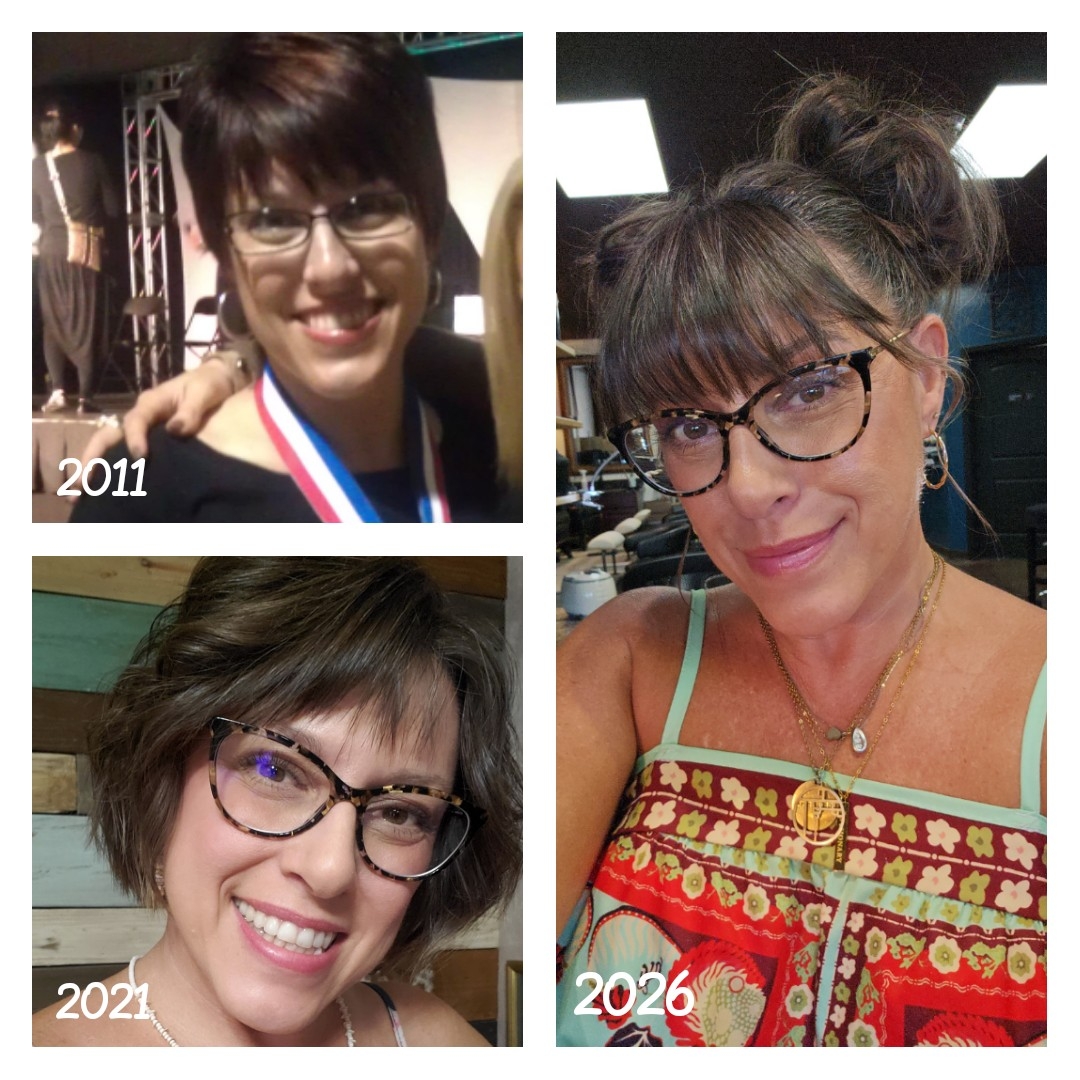
Maybe that's part of why turning 54 has me thinking about this so much. Technically, my skin has aged twenty years since my mid-thirties, and if I believed everything we're sold about aging, that should automatically mean it has gotten worse. Yet when I look at it now, I would choose this skin over the skin I had then without hesitation. It isn't because I've found one magical serum, one perfect supplement, one food plan, one device, or one secret that I can package into a tidy little list and hand to everyone reading this. A lot has changed between that woman and this one, and I suspect the answer lives somewhere in the accumulation of those changes rather than in any single one of them.
And maybe that's the rabbit hole I actually want to go down here. Not How do you get my skin at 54? because I don't think that's a particularly useful question. I want to know what changed in me between then and now. What did I stop doing? What did I start doing? What have I learned about food, hormones, stress, sleep, hydration, skincare, light, nutrients, aging, and my own particular body that younger Tara simply couldn't have known? Which things can I reasonably say mattered, which things do I merely suspect played a role, and which things am I still completely curious about?
Because when I stand in front of the mirror now, I don't see a woman who somehow beat aging. I see a woman whose skin has aged right along with her and, strangely enough, seems happier for it. Maybe some of that is because I'm finally giving it more of what it needs. Maybe some of it is because I've stopped doing things it never particularly liked in the first place. And maybe the biggest difference isn't something I can photograph at all. At 34, I mostly wanted my skin to behave; at 54, I want to understand what it's trying to tell me.
That's a very different relationship.
And it only took me about forty years, one orange back, a few rogue butt pimples, and seventeen thousand rabbit holes to get here. 😂