I Didn't Invent the Beauty Alchemist. I Finally Recognized Her.
I Didn't Invent the Beauty Alchemist. I Finally Recognized Her.
For most of my adult life, I have been absolutely terrible at answering what should be a very simple question: “So, what do you do?” Depending on when someone met me, I could have given them a completely different answer, and every one of those answers would have been true. I could say I was a reflexologist, or a nail artist, or an herbalist, and eventually I could add body contouring, permanent makeup, paramedical tattooing, holistic skin care, nutrition, and a handful of other things to the list. The problem was that the minute I started listing all of them, I sounded like one of those people who couldn't decide what she wanted to be when she grew up, which was funny because I never actually felt that way. In my head, everything connected perfectly. I could see how one thing had led to another and why learning about one part of the body made me curious about another, but trying to explain that to somebody standing in front of me at a cocktail party was another matter entirely. Usually somewhere around the third or fourth certification their eyes would start to glaze over, and I'd realize I probably should have just said, “I work in beauty and wellness,” and left it at that.
Except even that never felt quite right.
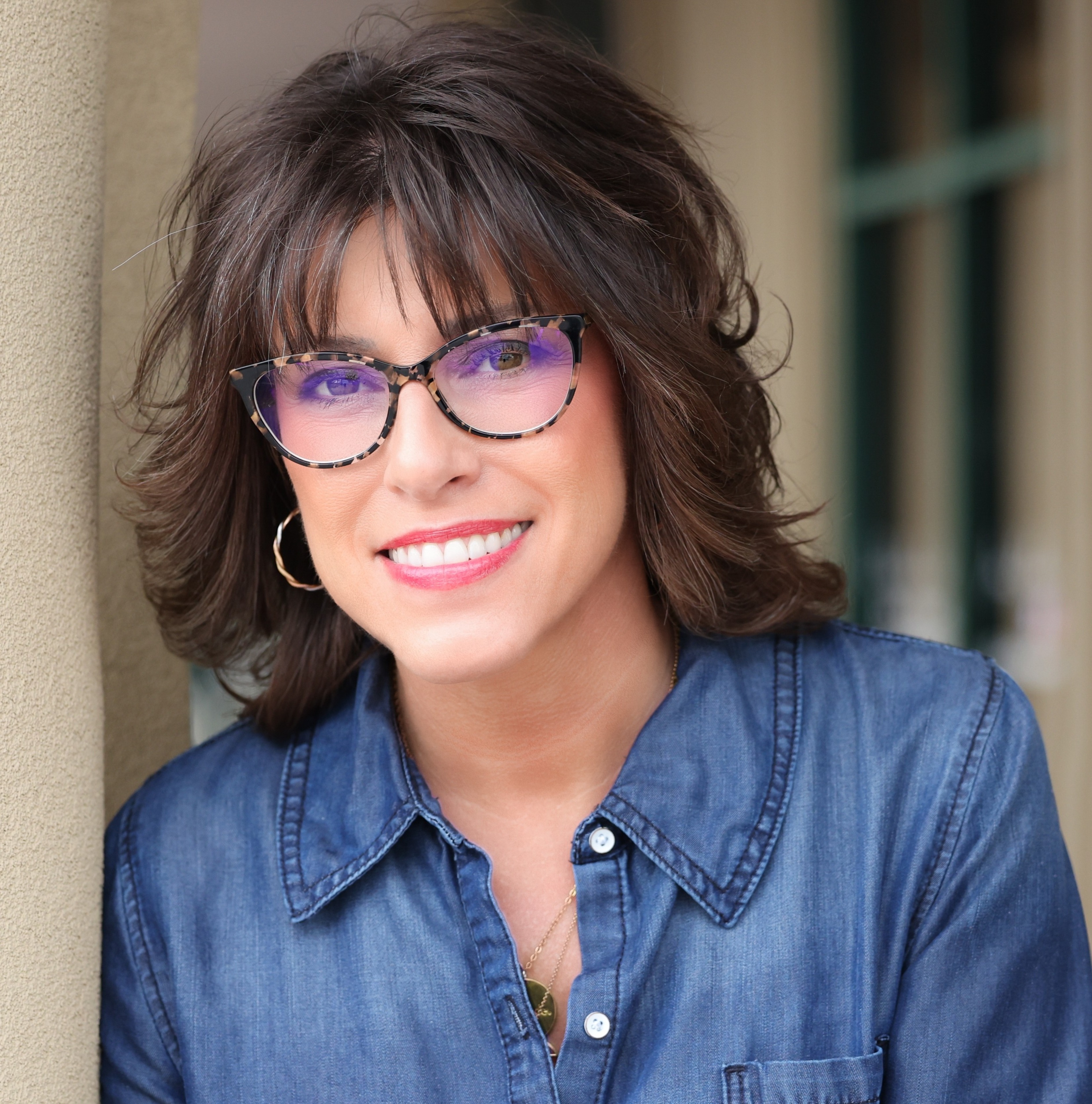
Last fall, I came up with the words Beauty Alchemist, and there was something about them that I immediately loved. They felt different, certainly, and maybe a little mysterious, but they also felt strangely familiar, as though I'd stumbled across a name for something I'd been trying to explain for years. I played with it. I used it here and there. I started incorporating it into my branding, then would pull back a little and look at it again, because calling yourself a Beauty Alchemist is not exactly the same thing as saying you're an accountant. Nobody asks an accountant what an accountant is. Beauty Alchemist required an explanation, and after spending years earning very real certifications in very specific things, giving myself a title I'd essentially made up felt a little bold, even for me. So I flirted with it for a while. I tried it on and walked around in it, much like a dress you absolutely love but aren't entirely sure you have the nerve to wear out of the house.
Sometime in late winter or early spring, though, I stopped trying it on and simply started wearing it.
There wasn't a particular morning when I woke up and made some grand declaration about who I was going to be from that point forward. It was much quieter than that. I think I finally stopped worrying about whether the title made sense to anyone else and realized how completely it made sense to me. For the first time, I had found something broad enough to hold all these seemingly unrelated pieces of my life without forcing me to choose which one mattered most. Herbalism belonged there. Reflexology belonged there. Skin belonged there. Nutrition belonged there. Nails belonged there. All those years of reading and researching and wandering happily down rabbit holes that sometimes had absolutely nothing to do with whatever I had originally intended to learn belonged there, too. I hadn't invented a new version of myself at all. I had finally found a name for the woman who had apparently been showing up for work for more than twenty years.
Although if we're going to tell that story properly, I suppose we have to go back a little farther than beauty school, because beauty school wasn't actually where any of this started.
My mom and I became certified reflexologists in the early 2000s, which seems considerably less random now that I've spent so much time writing about my family and remembering Great-Aunt Elizabeth practicing reflexology on my dad's side decades before Mom or I ever became certified ourselves. At the time, though, I wasn't thinking about family legacies or inherited curiosity or any of the things I can see so clearly looking backward. I was simply interested. That has been the dangerous phrase of my entire life, by the way: I'm interested. In my world, being interested in something rarely means reading one article and moving along. It tends to mean reading the article, finding another article that disagrees with the first article, wondering why they disagree, buying a book, taking a class, and occasionally ending up with a certificate before I've quite figured out how I got there.
Beauty school was different because that was something I'd wanted for a long time. Years earlier, after we'd moved down to the Valley from Flagstaff, one of my girlfriends decided she was going to beauty school for nails and wanted me to go with her. I wanted to. I really wanted to. Unfortunately, we'd just moved, and I had this inconvenient responsibility called needing to work, so dropping everything and going back to school simply wasn't an option. Instead, I became her guinea pig. She needed hands to practice on and I had ten perfectly good fingers, so she tried everything on me while she was learning, and after she became licensed I continued going to her to have my nails done. I loved walking into that salon. There was something about the whole environment that appealed to me—the creativity, the conversations, the energy, the fact that people were working with their hands and creating something while talking and laughing across a table—and every time I went in, I thought about how much fun it looked and how badly I wanted to be on the other side of that table.
I just had to wait until life made room for it.
That finally happened in 2004, when I was thirty-two years old. I left the world of construction and office management and went back to beauty school to become a nail technician, and I was the oldest student in my class. I suppose that could have bothered me, but I had waited too long to care very much about whether I was arriving on someone else's preferred schedule. I was just happy to finally be there, and I was incredibly fortunate to have an instructor who didn't teach us simply to reach for whatever came premixed in a bottle. She taught us how to create. We learned to mix our own colors and build our own palettes, to understand the products we were working with and manipulate them to get what we wanted rather than assuming we needed to go buy something new every time a client asked for a shade we didn't have. Looking back now, I can see why I loved that so much. I had grown up surrounded by people who made things, repaired things, reused things and figured things out with whatever they had available, so of course the idea that I could create what I needed instead of simply buying it made perfect sense to me. Apparently I was practicing a form of alchemy long before it ever occurred to me to call it that.
My instructor also talked about the nail artists at the very top of the industry, the people competing and teaching and pushing the craft forward, and she told us that if we ever had an opportunity to learn from people at that level, we should take it. Two of the names I heard were Tom Holcomb and Tom Bachik, who were involved in creating Entity Beauty, and I remember being immediately intrigued by the idea of a product line created by nail artists for nail artists. It sounded perfectly logical to me. If some of the best nail artists in the world had helped create these products, surely using them would make everything easier.
That was adorable.
I ordered the product and promptly discovered that I sucked at using it. I was still such a new nail artist, and the consistency wasn't what I was accustomed to, and no matter what I did I couldn't seem to make it behave the way I thought it was supposed to. This was probably a perfectly normal problem for someone who had barely begun her career, but I have never been particularly good at shrugging my shoulders when I don't understand why something isn't working. So I called the help line. Then I called again. And again. I asked about consistency and application and what I was doing wrong and why this was happening and how I could make that happen, and eventually a woman named Jeteca, bless her heart, must have realized that the easiest way to stop hearing from me was to get me into a room with somebody who could actually show me what I was trying to understand. She told me there was going to be a training in Los Angeles and that I really ought to take it.
The training was not cheap, particularly for someone who had only been licensed for about eight months, and I remember talking it over with my husband at the time before deciding that if I had the opportunity to learn directly from people my instructor had spent so much time telling me about, I needed to go. So I bit the bullet, spent the money, and went to Los Angeles, where I discovered very quickly that I had wandered into something much bigger than a simple product class. It was a bit of a baptism by fire. There were a lot of people in that room, and not everybody was there for the same reason. Some genuinely wanted to learn, some seemed to be there to critique, and some were watching awfully closely because they were clearly interested in taking concepts home and turning them into something of their own. Then there was me, eight months into my career and probably still trying to figure out whether my product consistency was right, suddenly surrounded by people with years of experience while being taught by some of the very people I'd heard about in school.
I was trying to absorb everything I possibly could, which is probably why I was so confused when Tom Holcomb became oddly preoccupied with my paperwork. He told me I hadn't filled everything out, so I apologized and told him I would. Then he came back to me again because apparently I still hadn't filled it out, and I remember thinking that I absolutely had. I had completed every piece of paperwork in the folder that applied to me. The only things I'd left blank were the application to become an educator and the application for the competition team, and those obviously didn't apply because the requirement was that you had to have been licensed for at least two years. I had been licensed for eight months. Finally, after he asked me again, I explained that to him, probably with the slight exasperation of someone who couldn't understand why this man was making such a big deal about two forms I wasn't qualified to fill out anyway.
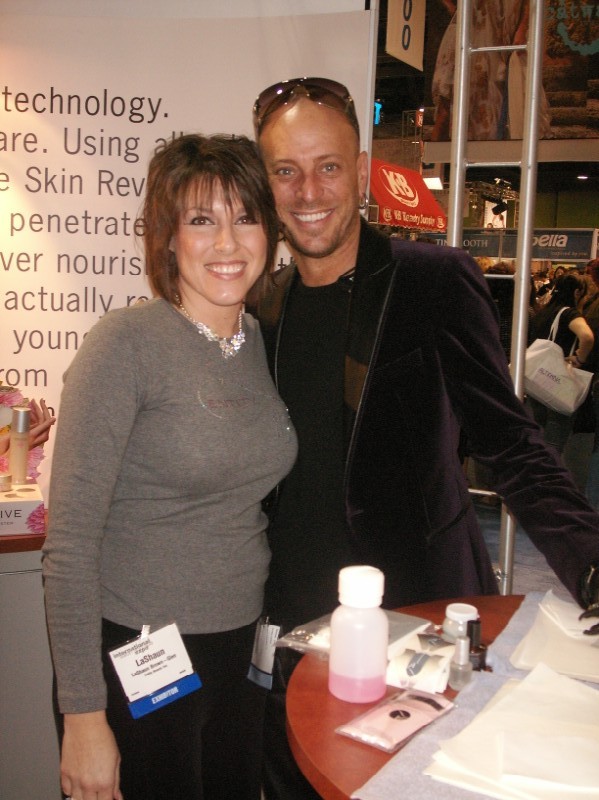
He looked at me and said, “Shut the f#*&$ up.”
Then he yelled for Tom Bachik.
Tom came over, and Holcomb told him I'd only been licensed for eight months. I don't know exactly what I expected to happen next, but it certainly wasn't for the two men my instructor had talked about as being among the best in the industry to ask whether I wanted them to mentor me, travel with them, and compete.
There are plenty of things in my life that I have researched half to death before making a decision.
That was not one of them.
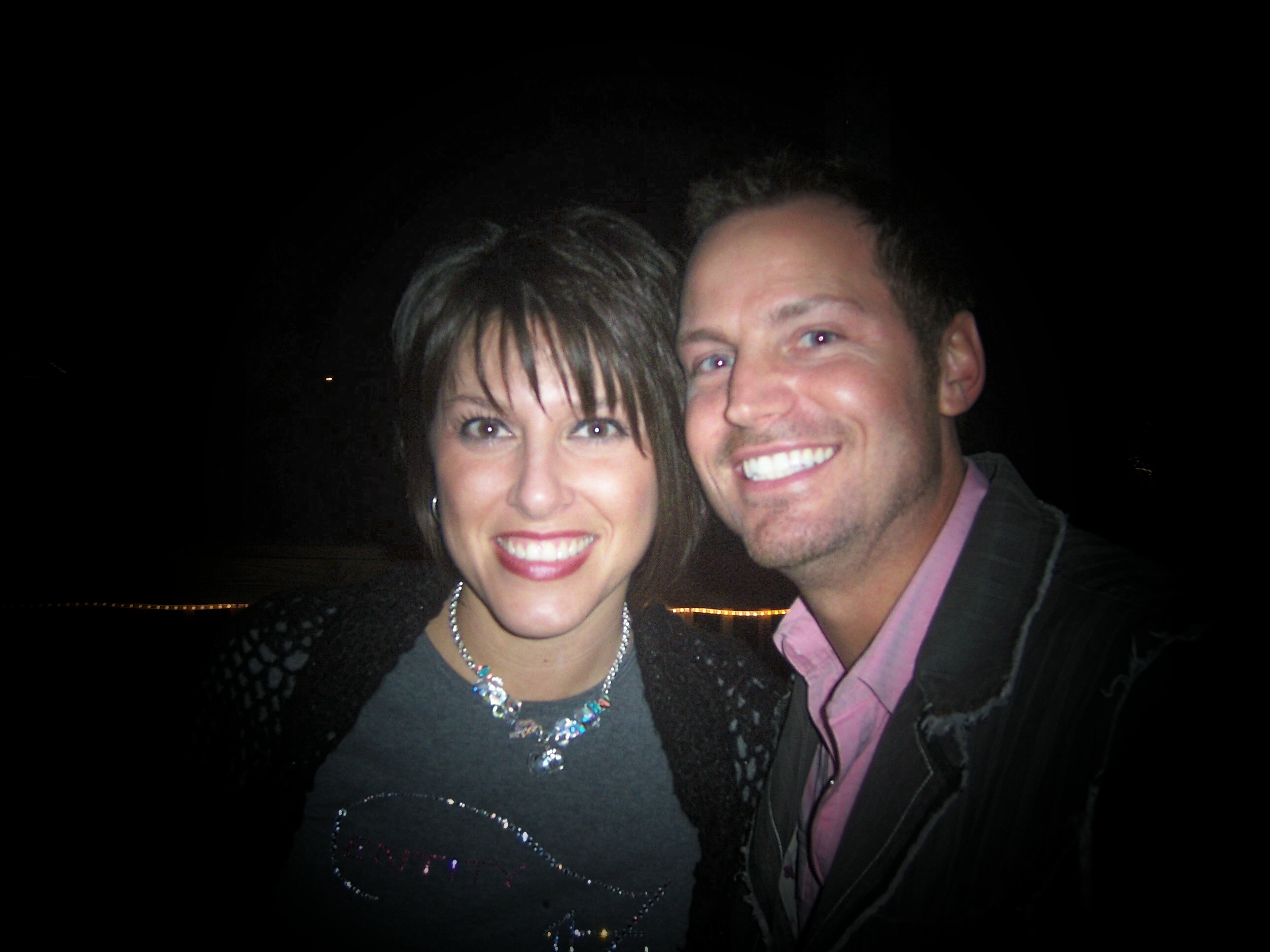
I said yes, and that yes changed the trajectory of those early years of my career. I became part of the competition team, traveled and competed, won trophies and awards, and had the kind of access to extraordinary artists and mentors that I couldn't possibly have planned for when I walked into beauty school at thirty-two years old. I was unbelievably fortunate, and I've always thought of that period of my life as one of those magical right-place-at-the-right-time things that occasionally happen when the stars line up just right.
The older I get, though, the more I realize that being in the right place at the right time usually requires getting yourself into an awful lot of places first. If I'd decided I was too old to go back to beauty school, I wouldn't have been there. If I'd decided the Entity product was too difficult and put it away, I wouldn't have kept calling. If I hadn't kept calling, Jeteca wouldn't have suggested the training. If I had looked at the price and decided I wasn't experienced enough to justify spending that kind of money on myself, I wouldn't have gone to Los Angeles. And if I hadn't gone to Los Angeles, two pieces of paperwork I wasn't technically qualified to fill out would never have mattered at all.
At the time, I didn't see any of that as a pattern.
I was just following whatever came next.
Which, as it turns out, is pretty much how the rest of my career happened too.
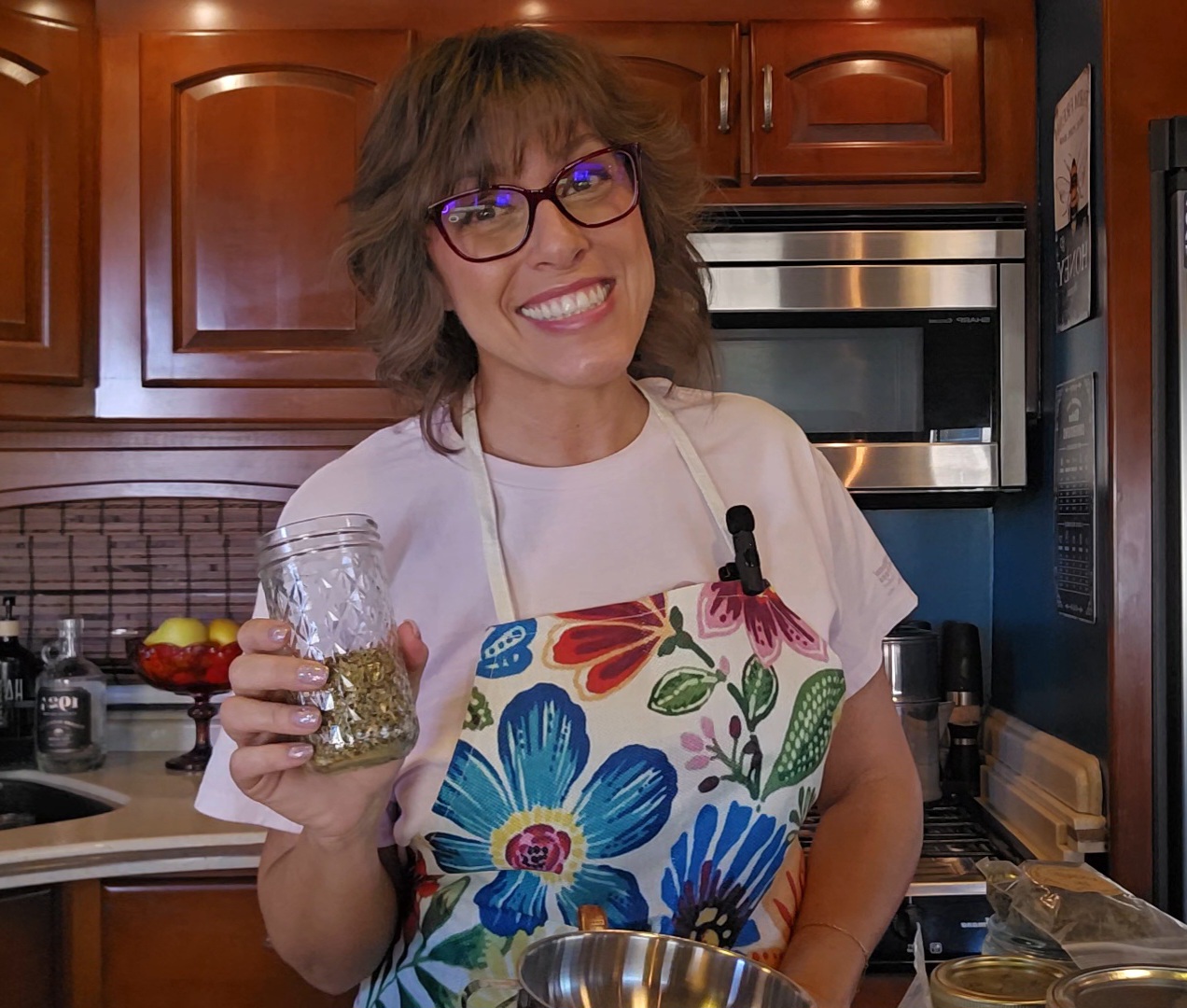
Reflexology had actually come before nails, and herbalism came several years later, somewhere around 2010 or 2011. Neither one felt like a career change to me, although I imagine from the outside it might have looked a little questionable. What did feet have to do with fingernails, and what did either one of those have to do with herbs? To me, the connection wasn't particularly complicated. I was interested in people and in how the body worked, and I had grown up in a family where natural wellness wasn't considered especially unusual. My mom and I had become reflexologists together, my great-aunt Elizabeth had practiced reflexology decades before us, and herbs and natural remedies had been woven through both sides of my family in one form or another for as long as I could remember. Becoming an herbalist didn't feel like I had suddenly veered off the road. It felt more like I'd spotted an interesting side road and thought, Well, I wonder where that goes. Anyone who has traveled with me knows this is not always the most efficient way to reach a destination, but you do tend to see some interesting things along the way.
For quite a few years, nails remained the center of my professional world while all of these other interests continued accumulating around the edges. I read. I researched. I took classes. I learned things because I wanted to know them, sometimes without any particular plan for what I was going to do with the information afterward. I've never been especially good at learning only the things immediately required of me. If something catches my attention, I want to understand it, and if the answer to one question introduces me to another subject I know nothing about, well, there goes the afternoon. Or the week. Or, apparently, the next six years of my professional life.
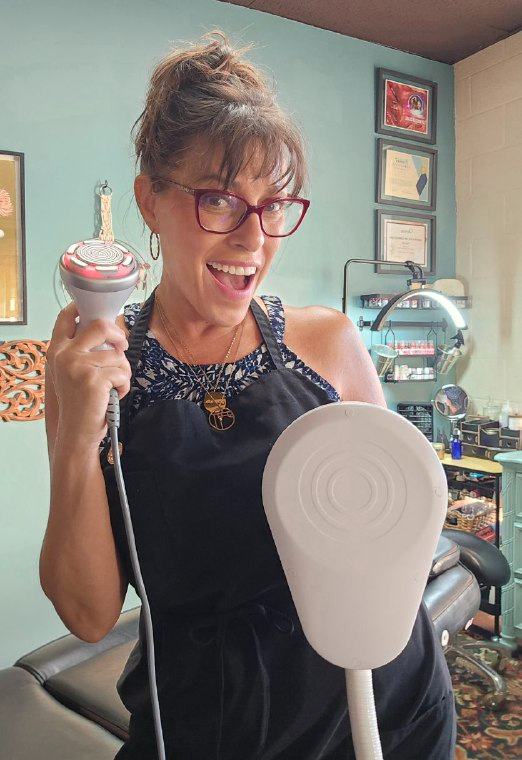
In 2020, I became certified in body contouring, and that's where one of those innocent little questions started a chain reaction I couldn't possibly have predicted at the time. As I worked with radiofrequency, I began noticing changes in scars and stretch marks. The texture could improve. The skin could become smoother as collagen production was stimulated, and that fascinated me because I wasn't only looking at whether somebody lost an inch here or tightened something there anymore. I was watching skin change. But while I could see improvement in the texture, there was another part that wasn't changing with it.
The color.
Now, there are probably people capable of noticing something like that and simply thinking, Huh. Interesting.
I have never been one of those people.
If the texture could be improved, why couldn't the color? Was there something that could be done about that too? And if there was, how did it work? Those questions led me to scar camouflage, which immediately intrigued me because here was something designed specifically to address the piece I couldn't address with what I already knew. The problem was that I couldn't simply wake up one morning and announce that I was going to start tattooing scars. Scar camouflage falls under paramedical tattooing, and before I could specialize in that, I needed the foundation of permanent makeup. So in 2021, off I went to learn permanent makeup first.
That meant learning brows and lips and all the foundational skills that came with it, which wasn't necessarily the destination I'd originally had in mind. I had gone looking for an answer about scars, remember. But the answer was apparently located on the other side of an entirely new skill set, and by this point in my life I probably should have recognized what was happening. Instead, I learned permanent makeup and then moved into the specialty training I had been interested in from the beginning: paramedical tattooing, including scar camouflage and areola reconstruction. Suddenly I wasn't simply thinking about how something looked on the surface. I was thinking about tissue and pigment and healing, about what happens after trauma to the skin and what can be restored, softened, blended, or made to feel a little more whole again.
And then, because apparently the universe knows better than to give me an answer without attaching another question to it, one of my scar camouflage courses introduced me to a product designed to help remodel scars.
Well.
Now we had my attention.
The company wasn't approaching scars only as a color problem. They were looking at the skin itself—its condition, its healing, its texture—and they had an entire skin care line along with a certification in holistic skin care. I had started this whole adventure because radiofrequency was smoothing scars and stretch marks but wasn't correcting their color, and somehow I had arrived at a place where I was no longer asking only, How do I camouflage this? I was asking, What does this skin actually need in order to function better?
That was a much bigger question.
So naturally, I signed up.
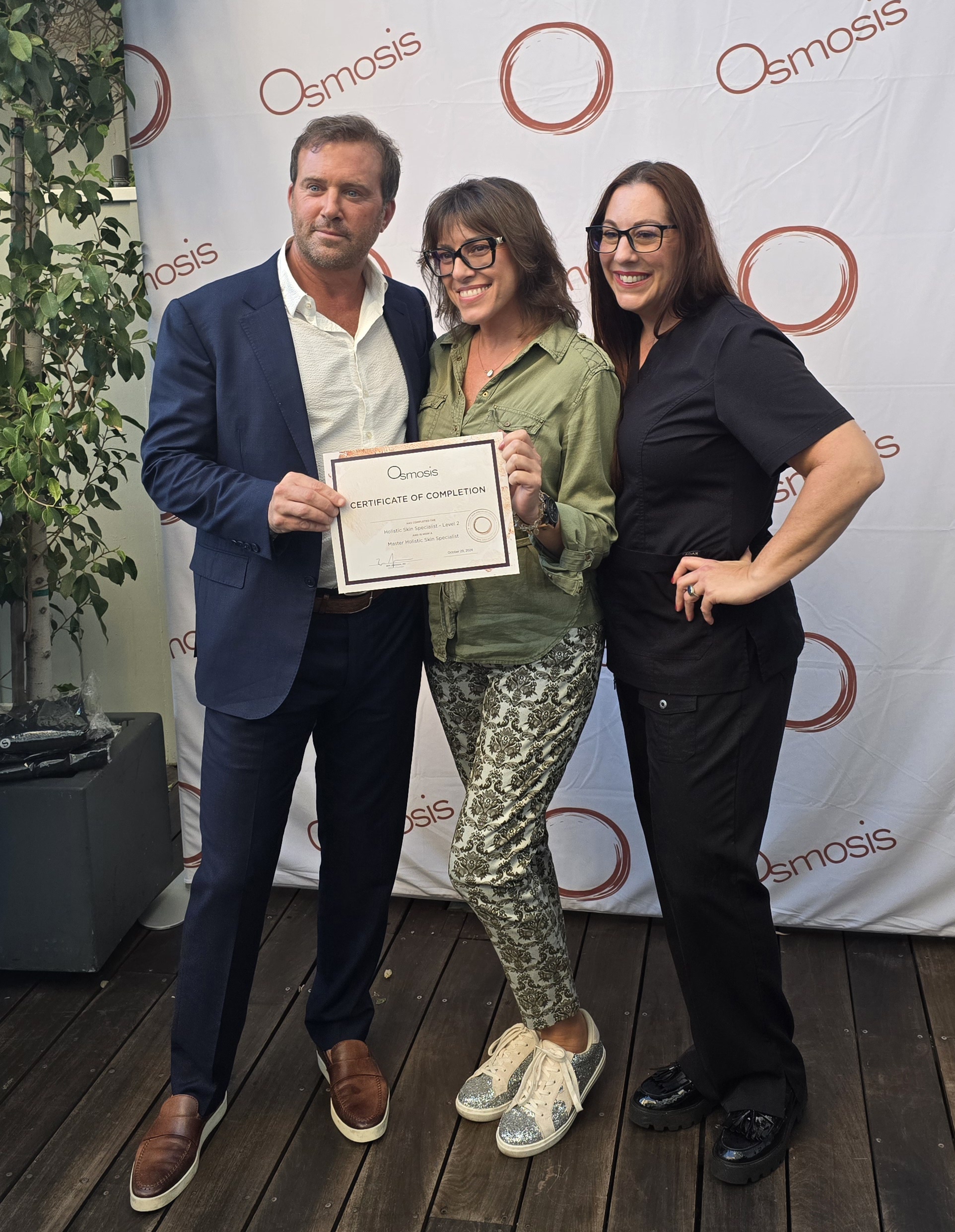
In 2024, I became a certified holistic skin care expert, and I absolutely loved it because it gave me a completely different way of looking at something I'd already been working with for years. Instead of looking at skin as simply the surface we see in the mirror, I started looking at all the things happening underneath and around it, the things that influence how skin behaves, responds and heals. Suddenly I wasn't thinking only about what we could put on the skin. I was thinking about the person attached to it, which sounds ridiculously obvious when I say it that way, but the beauty industry has a funny habit of dividing people into parts. Here's your skin. Here's your weight. Here's your hair. Here's your nutrition. Here's your stress. Here's your hormones. We put everything into its own tidy little category as though the body has agreed to honor those boundaries.
Of course, it hasn't.
The deeper I went into holistic skin care, the more interested I became in everything that could influence what we see on the outside. Nutrition mattered. Hydration mattered. Stress mattered. Sleep mattered. Hormones and inflammation and what was happening throughout the body mattered. I had spent years interested in many of those things already, so this wasn't some dramatic discovery that nutrition existed. It was more like watching a collection of puzzle pieces I'd been picking up for years begin to fit together in a way I hadn't quite seen before. I had gone looking for a way to improve the appearance of a scar and somehow ended up asking much bigger questions about what helps create healthy skin in the first place, how the body supports healing, and why two people can seemingly do all the same things on the outside and get completely different results.
And naturally, once I started asking those questions, I needed to know more.
Nutrition had interested me for years anyway, so this wasn't exactly a shocking development. I had been reading about food, herbs, supplements and wellness long before holistic skin care gave me a professional reason to connect those dots. But now the questions were becoming more specific, and I wanted a stronger foundation underneath what I already knew. So in 2025, I became certified as a nutritionist.
If you're beginning to notice a pattern here, congratulations.
It took me considerably longer.
Nutrition opened another enormous door because there is no such thing as learning “nutrition” and then being finished. The human body apparently did not receive the memo that I would eventually like to complete my education and simply enjoy what I've already learned. One answer led to another question, new research led somewhere else, and by 2026 my studies had expanded into GLP-1 nutrition and peptides, areas that fascinated me because once again they sat at the intersection of so many things I had already spent years thinking about: metabolism, body composition, nutrition, aging, recovery, skin, wellness and how dramatically the body can respond when we begin understanding its signals instead of treating every concern as though it exists in its own little box.
Somewhere in the middle of all of that, however, there was teeth whitening.
And teeth whitening deserves a moment because it may be the best evidence I have that I was never intentionally trying to collect certifications.
The woman I had originally trained with in body contouring also taught teeth whitening, and at the time I very deliberately decided not to take the course. I already did enough things. I did not need another feather in my cap. In fact, during COVID, I encouraged one of the nail technicians working alongside me to take the certification instead. She did, she started offering teeth whitening, and I thought this was an excellent arrangement. When somebody wanted their teeth whitened, I had someone to send them to, she had another service to offer, and for once I had successfully encountered something new without personally enrolling in a class about it.
I was very proud of this brief period of personal growth.
Eventually she retired, although for a while she was still going to do teeth whitening occasionally, so I continued referring people to her. Then I discovered that she wasn't really doing it anymore and the people I was sending her way were simply being turned away. Well, that wasn't what I wanted either. So I did what seemed perfectly reasonable: I contacted another woman I knew, who was also a permanent makeup artist and happened to teach teeth whitening, and asked if I could start sending those clients to her instead.
Problem solved.
Except she responded with something along the lines of, “Why don't you just get certified?”
And apparently I had no good answer for that.
So in 2023, despite my earlier determination that I absolutely did not need another feather in my cap, I became certified in teeth whitening.
Of course I did.
The funny thing is that when I lay all of this out chronologically, it can look like I've spent twenty-some years collecting certifications, which makes me sound either extraordinarily ambitious or slightly incapable of leaving well enough alone. The second explanation may contain some truth. But I never experienced any of it as changing careers or trying to accumulate letters after my name. Most of the time I was simply standing in front of something I didn't completely understand yet. A client needed something. A treatment accomplished one thing but not another. A smoother scar made me wonder about its color. Learning to camouflage the color made me curious about the skin itself. Skin sent me deeper into nutrition, nutrition opened still more doors, and apparently somewhere along the way teeth whitening staged a hostile takeover despite my best efforts to avoid it.
What I finally realized was that I hadn't been changing directions at all. I had just kept following the questions farther than I used to.
And that brought me back to those two words I'd been cautiously trying on since last fall: Beauty Alchemist.
Maybe the reason the name had felt simultaneously strange and familiar was that I had been looking at it backward. I thought I was naming where I wanted my business to go next, when really I had stumbled across a name for the way I had already spent most of my adult life looking at beauty and wellness. I have never been particularly interested in putting either one into a tidy little box, probably because the human body has been equally uninterested in cooperating with those boxes. Skin doesn't exist independently of nutrition. How we look isn't completely separate from how we feel. Healing, aging, stress, sleep, nourishment, hormones, movement and all the other wonderfully complicated things happening inside a person don't politely stay in their assigned lanes simply because it would make our certifications easier to organize.
What has always fascinated me is what happens between those lanes. Why does something work? Why doesn't it work for everyone? What are we missing when we look only at the surface? What changes when we understand another piece? Sometimes those questions have led me into a classroom, sometimes into another service I could offer, and sometimes into fourteen browser tabs at an hour when any reasonable person would have gone to bed. I am almost always convinced I'm only going to look up one more thing, and at this point everyone involved should know better.
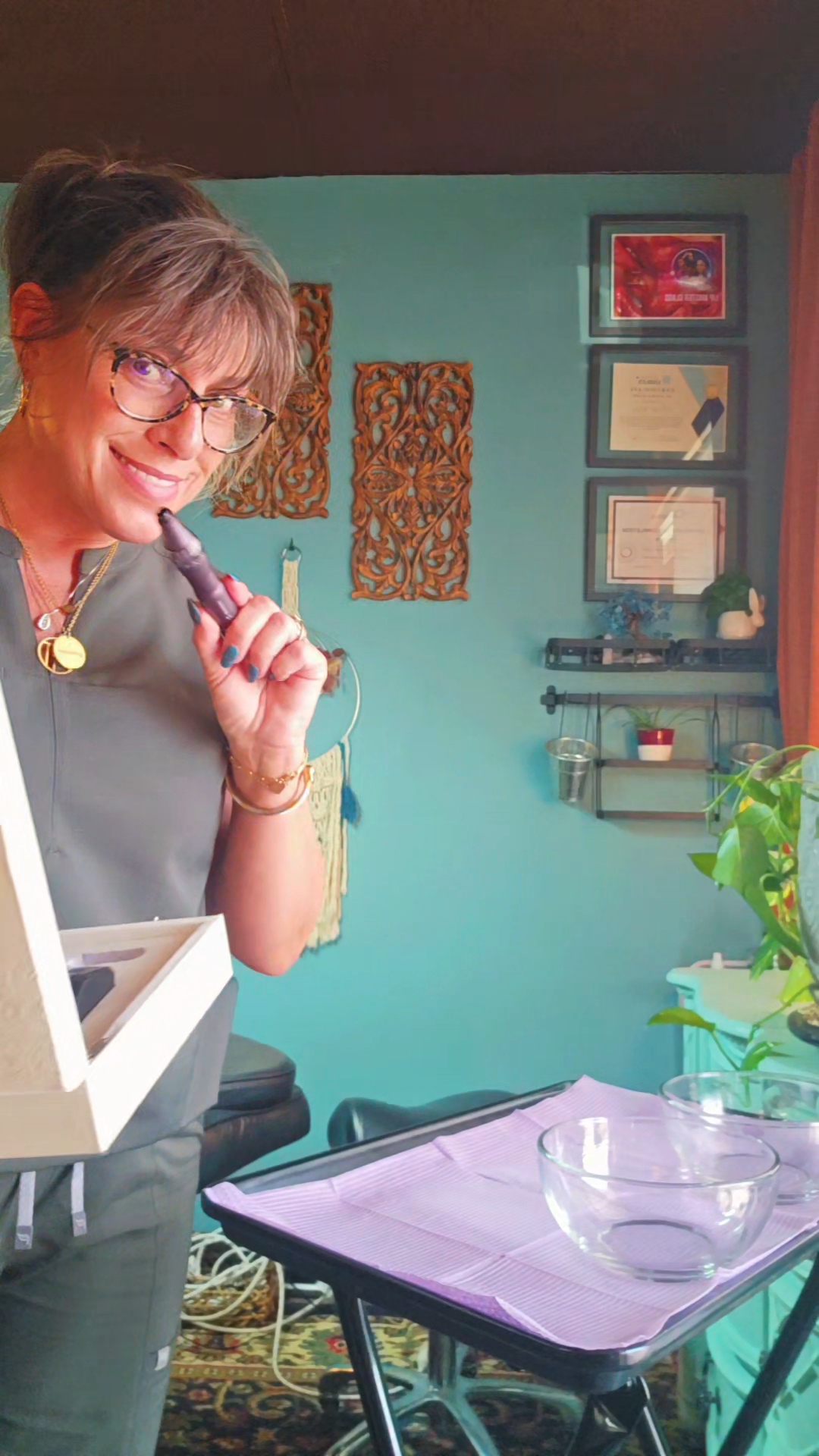
That was the part I hadn't understood when I first started calling myself a Beauty Alchemist. An alchemist, at least as I think of the word, isn't someone with one magical ingredient or one perfect answer. She's interested in what happens when seemingly separate elements come together and become something more useful than any one of them could have been alone. Suddenly the name didn't feel audacious anymore. It felt almost embarrassingly obvious.
And there was something freeing about that, too. I've reached an age where I no longer feel particularly compelled to make every piece of myself fit neatly inside a box somebody else labeled. I can love beauty and wellness. I can be fascinated by skin and herbs and nutrition and peptides. I can follow a perfectly innocent question on Tuesday and have three books arriving at my house by Friday. There will always be another question, and probably another class. I would love to promise there will never be another certification, but after the teeth-whitening incident, none of us should believe me.
Maybe that's what I've finally recognized more than anything. Curiosity has always been part of this, and after writing about my family these past several weeks, I understand much better where some of that came from. But underneath the curiosity has always been the desire to be useful. When someone trusts me with a question or a concern, my instinct is to wonder what might help. That doesn't mean I need to know everything or be everything to everyone. It means I can keep learning, keep asking better questions, keep understanding where my knowledge ends and someone else's expertise should begin, and keep paying attention to the connections that fascinate me so much in the first place.
When I look backward now, I can see her long before I had a name for her. She was there when my mom and I studied reflexology. She was there when thirty-two-year-old me finally sat down on the other side of the nail table and discovered that if the color I wanted didn't exist, I could learn how to make it. She was definitely there when I annoyed a help line often enough to somehow end up training in Los Angeles with some of the best nail artists in the world. She was there when a smoother scar made me wonder about its color and when that question eventually sent me looking beneath the surface altogether. And she was probably laughing somewhere in the background when I announced that I absolutely did not need to learn teeth whitening.
For years I thought I'd taken a rather winding route to get here.
Now I'm not so sure I was wandering at all.
I didn't invent the Beauty Alchemist last fall.
I just finally recognized her.